Industry Secret: Exposing Fake Private Molds and Finding a True custom flashlight oem
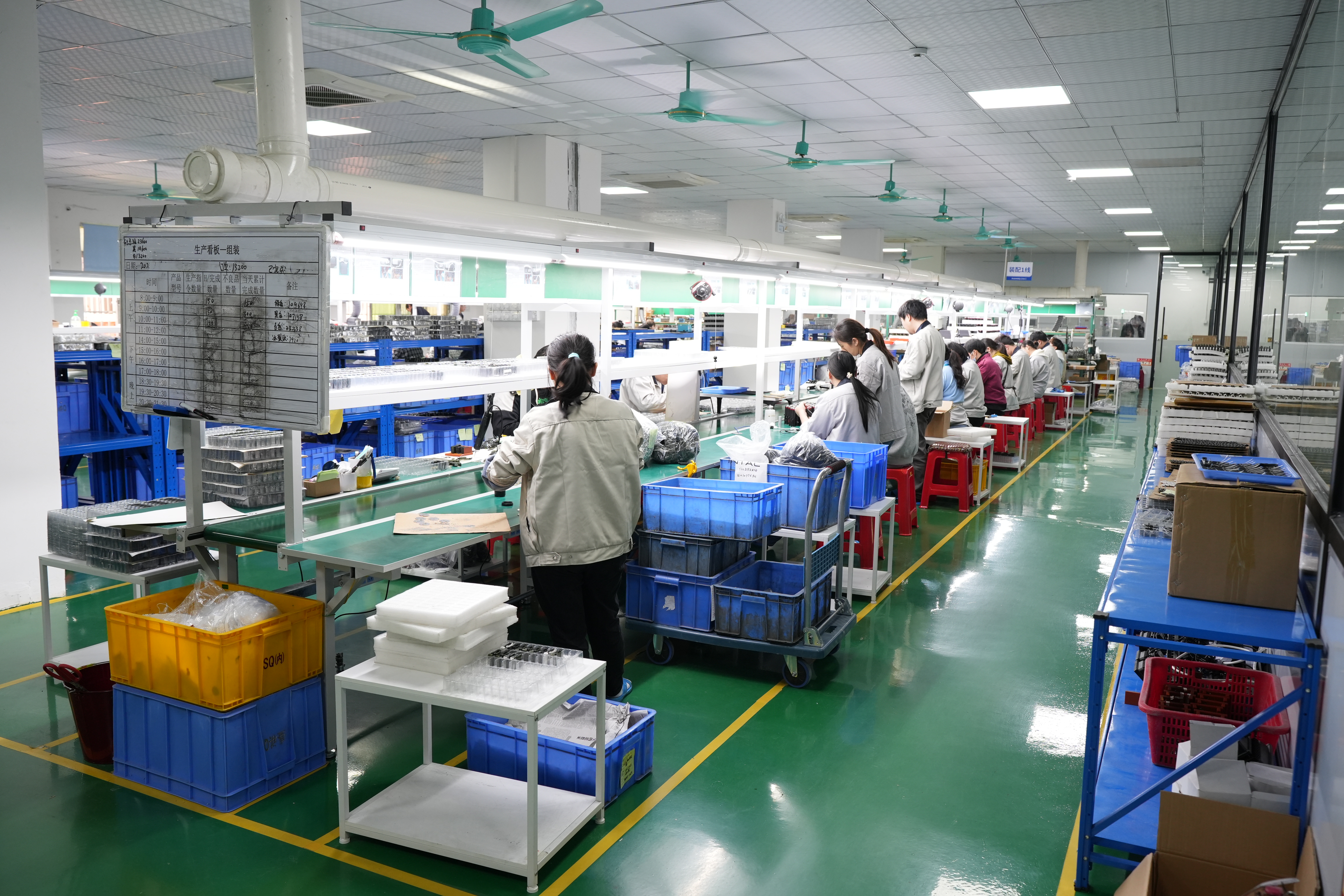
Welcome to the laboratory. I operate as the Chief R&D Engineer for Shengqi Lighting. Within the tactical gear and outdoor illumination sectors, brand directors are frequently seduced by trading companies offering "customization." In reality, this so-called customization usually amounts to nothing more than laser-etching a corporate logo onto a generic, mass-produced cylindrical housing. This illusion of exclusivity is a fatal strategic error.
When your flagship illumination tool shares the exact internal micro-electronics, thermal bottlenecks, and external geometries as a dozen competing brands, you instantly sacrifice your pricing authority. To command a premium market valuation, you cannot rely on off-the-shelf components. You must manipulate photons, conquer thermodynamics, and forge a unique structural identity. This document serves as an empirical blueprint. It dissects our internal optomechanical workflows, demonstrating exactly how a verified custom flashlight oem transitions a raw concept into an indestructible, proprietary instrument.
I. The "Public Mold" Trap: Why Your Brand Needs True Customization
The B2B sourcing landscape is heavily saturated with "public molds." These are preexisting housing designs owned by generic assembly houses, openly sold to any buyer willing to meet a minimum order. Procuring a public mold forces your brand into a devastating race to the bottom, where your only competitive differentiator becomes a price discount. Furthermore, public molds are notoriously engineered with vast tolerances to accommodate cheap, standardized internal components, leading to loose optical alignment and frequent hydrostatic failures.
To establish an impenetrable market moat, visionary brands must collaborate with an authentic Private mold flashlight factory. A private mold guarantees market exclusivity. More importantly, it allows our engineers to calculate the precise ergonomic topography—such as specifying aggressive tactical knurling for gloved operations or refining the center of gravity to minimize wrist fatigue during prolonged deployment. By executing true Industrial Design (ID), your instrument becomes instantly recognizable and completely immune to low-tier commoditization.
II. Beyond the Sketch: Optical Engineering and TIR Simulation
A stylized exterior sketch might secure initial investment, but flawed optics will guarantee consumer rejection. A raw LED diode scatters light chaotically. Governing this photonic emission requires rigorous mathematical simulation.
Ray-Tracing and Reflector Geometry
As an elite Custom LED flashlight manufacturer, we do not guess at beam profiles. Our optical engineers deploy advanced ray-tracing software to predict exactly how photons will interact with the internal geometry. Depending on your operational requirements, we calculate the precise parabolic curvature for deep-dish Smooth (SMO) reflectors to maximize long-distance throw, or we engineer micro-textured Orange Peel (OP) surfaces to deliver a homogenous, shadow-free floodlight ideal for everyday carry (EDC) and mechanic bays.
Total Internal Reflection (TIR) Architecture
When your design demands extreme miniaturization without sacrificing output, standard metallic reflectors consume too much volumetric space. In these scenarios, we engineer custom TIR (Total Internal Reflection) optics. These solid-state polymeric lenses utilize both refraction and internal reflection to capture virtually 100% of the LED’s emission. We might tailor the TIR matrix to compress the light into a strict 15° hotspot or scatter it across a 60° tactical spill, ensuring the output perfectly matches your target demographic's use case.
III. The Thermal Bottleneck: Managing Heat in High-Lumen Designs
The most frequent complaint among brand directors attempting to launch high-output models is catastrophic thermal degradation. A prototype might shine brilliantly at 3000 lumens, but within forty seconds, the chassis becomes blisteringly hot, and the microcontroller aggressively throttles the output down to a dim glow. This occurs because the thermal energy cannot efficiently evacuate the semiconductor junction.
To resolve this thermodynamic bottleneck, we implement Thermo-Electric Separation. Rather than mounting the LED on standard fiberglass boards, we utilize Direct Thermal Path (DTP) pure copper substrates. The LED's thermal pad is soldered directly to the copper core, enabling instantaneous heat transfer. Concurrently, our industrial designers calculate geometric heat flow, milling deep convective cooling fins directly into the unibody aluminum chassis. Paired with our proprietary Advanced Temperature Regulation (ATR) firmware, we ensure your instrument sustains its peak tactical output without incinerating its own circuitry.
IV. From Concept to Physical Prototype in Days
A primary reason brands avoid private mold development is the fear of crippling lead times. Waiting months to hold a physical sample severely delays the Go-To-Market (GTM) strategy.
Elite Flashlight OEM ODM Manufacturers obliterate these delays through massive capital infrastructure. By utilizing our rapid 3D prototyping labs and advanced multi-axis machining facilities, our engineering division bridges the gap between digital CAD files and physical reality at unprecedented speeds. We could output high-fidelity SLA resin prints or CNC-milled aluminum prototypes within a strict 3 to 5-day window. This velocity allows your brand managers to empirically verify tactical grip tolerances, pocket clip tension, and optical thread alignment long before committing capital to mass-production steel injection molds.
V. Intellectual Property: Protecting Your Brand's DNA
The most severe anxiety surrounding offshore R&D is the threat of intellectual property (IP) theft. Developing a breakthrough optical design only to find a generic trading company selling identical clones three months later is an unacceptable operational risk.
Integrity is the foundation of our engineering ethos. As your dedicated private mold partner, Shengqi Lighting executes legally binding Non-Disclosure Agreements (NDAs) prior to receiving any initial design documentation. When we engineer a custom chassis or a proprietary PCB layout for your brand, that specific tooling is physically segregated and securely archived within our facility. We guarantee absolute market exclusivity; your brand's DNA will never be repurposed, displayed in public catalogs, or supplied to competing entities.