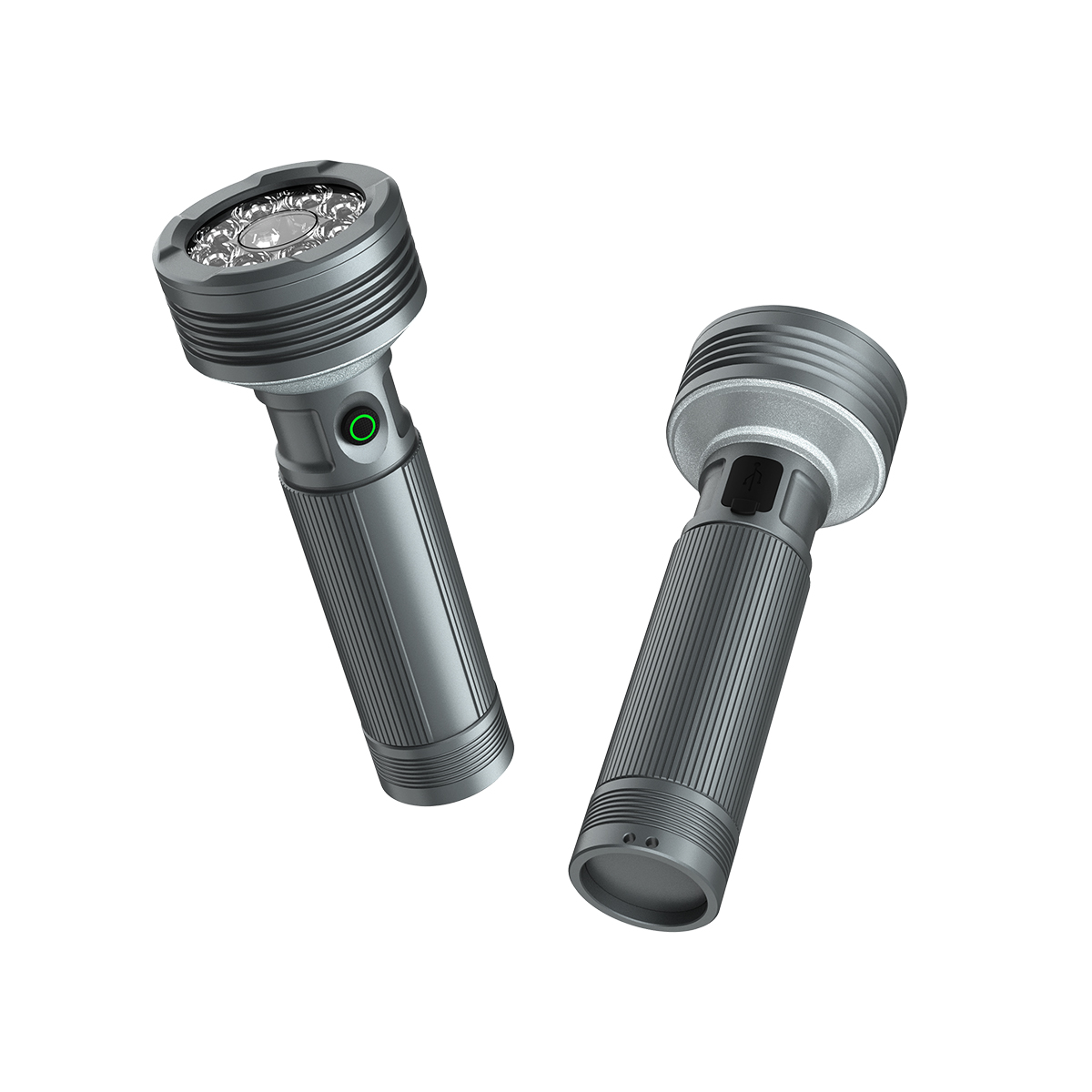
6253 3500LM POWERFUL FLASHLIGHT - TELESCOPIC FOCUS RECHARGEABLE 26650 CAMPING OUTDOOR LIGHT

F5 3 COLOR TEMP CAMPING LANTERN 5200MAH - 2-WAY CHARGING MAGNETIC BASE LED TENT LIGHT

F6 3 COLOR TEMP RECHARGEABLE CAMPING LANTERN - 2-WAY CHARGING MAGNETIC BASE LED TENT LIGHT
LED Camping Light Manufacturer for Outdoor Programs
Camping lighting should make a shared outdoor area easier to use without adding unnecessary weight, glare or operating complexity. SHENGQI LIGHTING develops LED camping light platforms for brand owners, distributors and project buyers that need a clear path from product definition to sampling and production. The right configuration depends on where the light will be placed, how people will carry it, how long each operating mode must remain useful and which charging method fits the intended market.
A camping lantern is not simply a flashlight with a diffuser. Area lighting, beam control, hanging or standing stability, user interface, thermal behavior and battery management have to work as one system. Buyers comparing a portable lantern with a directional flashlight platform or a hands-free headlamp platform should begin with the actual campsite task rather than a single headline specification.
Define the Camping Scenario Before Selecting Features
Product selection becomes more reliable when the intended use is specific. A family campsite may need comfortable table and tent illumination. A hiking kit may prioritize low carried weight and simple controls. A vehicle emergency kit may need dependable storage behavior and a visible warning mode. A commercial rental program may place more emphasis on durable controls, cleaning and consistent replacement parts.
The sourcing brief should state the user group, target markets, expected operating environment, approximate duty cycle and preferred power source. It should also identify whether the product will be carried in a pack, hung inside a tent, placed on a table or mounted to another surface. These details guide the optical layout, housing geometry and accessory plan more effectively than asking for the “brightest camping light.”
Key Criteria for Comparing Camping Light Platforms
- Area illumination: Review useful light distribution, glare control and the balance between near-field comfort and wider campsite visibility.
- Portability and placement: Confirm packed size, carrying method, handle geometry, hanging points, base stability and any compatible mounting accessories.
- Power and charging: Define the approved cell system, charging interface, low-battery indication and required operating modes before discussing runtime.
- User interface: Check whether mode order, memory behavior, lockout and indicators are understandable for the intended user.
- Mechanical requirements: Agree on environmental, impact and ingress targets, then verify them against the final configuration and test method.
- Emergency functions: Warning modes or device-charging outputs should be included only when they support the real use case and can be validated.
Compact task lighting may also overlap with an EDC flashlight. Spare charging cables, cells, mounts or carrying parts can be planned through the lighting accessories range when the program requires a coordinated kit.
Brightness, Runtime and Thermal Performance Must Be Reviewed Together
A useful comparison needs more than an initial lumen value. The LED, optic, driver, battery, housing and thermal path determine how output changes during use. Two products with similar starting output can provide different beam distributions and different output-over-time behavior. Buyers should request the operating mode, test conditions, battery configuration and runtime endpoint used for every performance claim.
For area lighting, visual comfort can matter as much as peak output. A lower mode may be more appropriate inside a tent, while a higher mode may be useful for short outdoor tasks. Prototype review should therefore include beam appearance at realistic distances, control sequence, charging behavior and stabilized performance rather than relying only on a component data sheet.
OEM and ODM Customization for Camping Light Projects
Customization can begin with an existing platform or a more extensive product brief. Depending on project scope, the review may cover optics, output modes, charging interfaces, indicators, colors, surface finishes, branding, packaging and accessories. SHENGQI LIGHTING's OEM and ODM services support the process from requirement review and sample development through production preparation.
Every change can affect another part of the system. A different cell may change runtime, charging or thermal margin. A new diffuser can alter transmission and visual distribution. A revised housing or handle can affect assembly and durability. For that reason, customized samples should be approved as complete configurations, and any later substitution should pass documented change review.
Manufacturing, Verification and Change Control
A repeatable camping light program needs defined incoming checks, controlled assembly, functional inspection and traceable acceptance criteria. The manufacturing overview explains the broader production context, while the quality management approach outlines how requirements and verification are connected.
Before mass production, the buyer and manufacturer should agree on the approved sample, critical materials, inspection items, packaging configuration and any market-specific documentation. Product claims should match the tested final unit and stated conditions. This evidence-based approach is more dependable than applying one performance statement to every model in a category.
Information to Include in a Camping Light RFQ
A useful request for quotation should include target application, sales markets, estimated quantity, required delivery window, preferred power and charging system, expected modes, environmental targets, branding, packaging and accessory needs. If the program has a benchmark product, identify which characteristics should be matched and which should be improved. Photos, sketches and a prioritized requirement list can reduce interpretation during evaluation.
Send these details through the project inquiry page. The team can then identify a suitable platform, flag requirements that need testing and define the next sample or engineering step.
Frequently Asked Questions About OEM Camping Lights
Can SHENGQI LIGHTING customize an LED camping light?
Yes. The available scope depends on the selected platform, quantity, target market and technical requirements. Typical discussions may include modes, optics, charging, colors, branding, packaging and accessories. Final feasibility should be confirmed during project review.
How should buyers compare camping light brightness?
Compare the complete product under stated test conditions. Review total output, light distribution, glare, operating mode and stabilized performance together. An initial lumen value alone does not show how comfortably or how long a campsite area will be illuminated.
What determines camping light runtime?
Runtime depends on battery configuration, driver behavior, LED load, thermal regulation, selected mode and the endpoint used by the test method. Request an output-versus-time result for the approved configuration instead of assuming that battery capacity alone determines runtime.
What should be approved before mass production?
Approve the final sample, specification, critical materials, user interface, performance evidence, branding, packaging and acceptance criteria. Any later component or process change that could affect performance should be reviewed before production continues.