Stop Hemorrhaging Margins: The Hidden Cost of Defective Batches When bulk buying flashlights
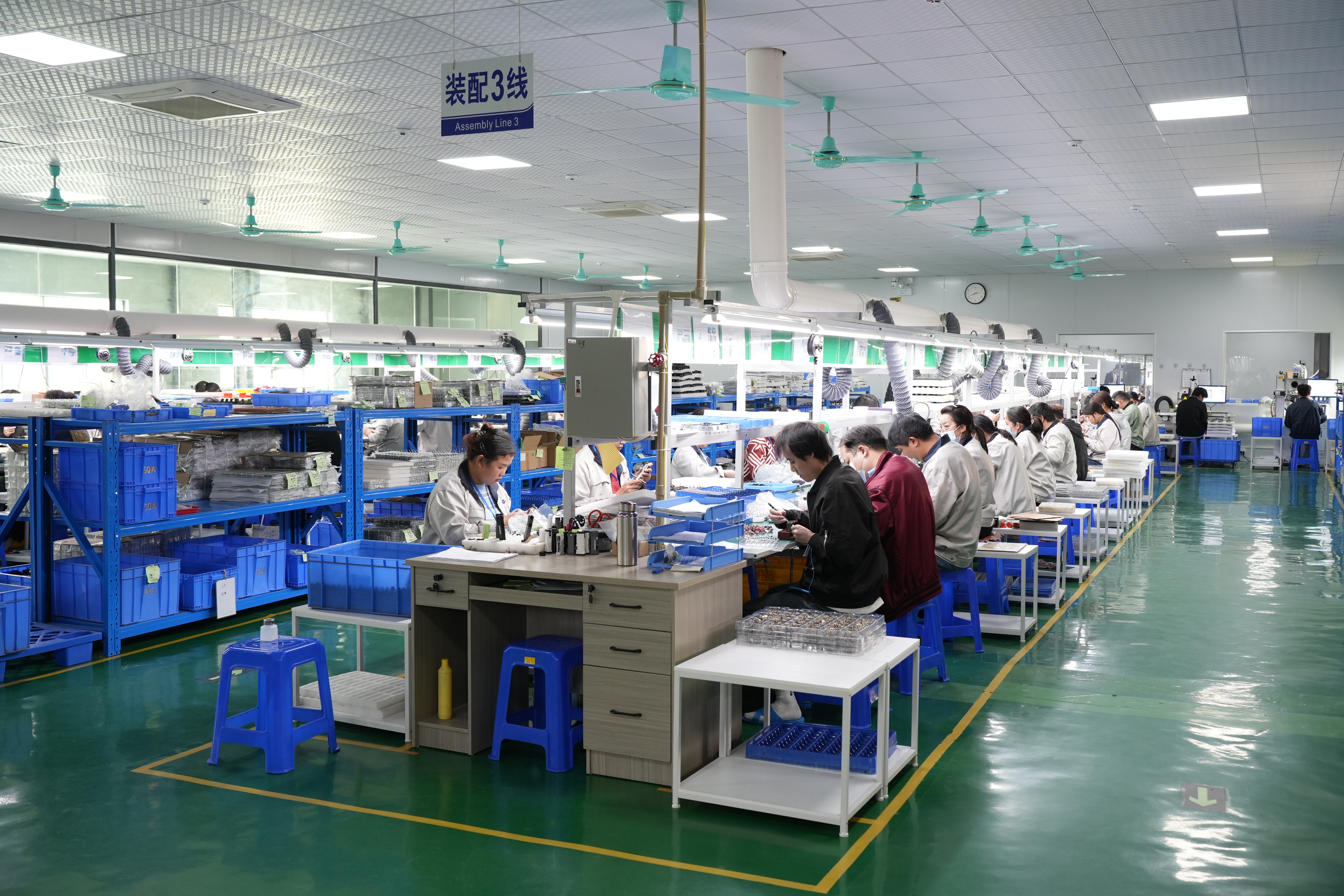
Greetings. Operating as a Chief Procurement Officer for extensive international hardware and retail chains, I continuously audit high-volume supply networks. Within the illumination sector, procurement directors frequently encounter a catastrophic operational paradox. A vendor may provide an initially flawless prototype, securing a massive purchase order. Yet, when the shipping containers finally arrive at domestic distribution centers, the yield rate of acceptable product plummets.
This disastrous inconsistency is not an anomaly; it is the mathematical certainty of fragmented, outsourced manufacturing. When retail brands commit capital without auditing a supplier's internal production infrastructure, they expose their entire quarter’s revenue to devastating Return Merchandise Authorization (RMA) costs and fractured consumer trust. This whitepaper systematically deconstructs the fatal failure points of mass production. By identifying the critical metrics of manufacturing consistency, we illuminate exactly why aligning with Shengqi Lighting’s scalable infrastructure remains the ultimate strategy for risk-free international procurement.
I. The "Golden Sample" Trap in Mass Production
The most severe liability when bulk buying flashlights is falling victim to the "Golden Sample" illusion. Trading companies and low-tier workshops will frequently hand-craft a single, perfectly toleranced prototype to secure a lucrative contract. However, because they lack strict Quality Management Systems (QMS), they cannot replicate this perfection at scale. When the mass production phase initiates, these intermediaries sub-contract the machining and assembly to the lowest bidding sweatshops.
This uncoordinated manufacturing instantly triggers a cascade of defects. Without centralized oversight, alloy grades are covertly downgraded, and critical waterproofing protocols are bypassed to accelerate output. To definitively neutralize this risk, procurement executives must mandate absolute vertical integration. A legitimate source factory does not outsource; it relies strictly on scalable in-house manufacturing muscle. By controlling the entire lifecycle from raw aluminum extrusion to final packaging, a premier manufacturer guarantees that unit number 100,000 operates with the exact optical and mechanical precision as the initial approved prototype.
II. Machining Muscle: The Secret to Batch Consistency
The Fallacy of Manual Assembly
When sourcing Wholesale LED flashlights, mechanical consistency determines hydrostatic survival. Hand-operated lathes and manual thread cutting might suffice for a dozen prototypes, but they introduce severe dimensional drift across massive production runs. Because O-ring compression relies on mathematically perfect trapezoidal threading, any microscopic deviation generated by a fatigued human operator will inevitably create capillary channels for water ingress, causing the device to flood during deployment.
Subtractive Automation
Unwavering batch consistency requires heavy capital expenditure. A top-tier facility eliminates human mechanical error by deploying massive advanced multi-axis machining facilities. These computer-controlled CNC centers carve solid aerospace aluminum billets into chassis with unrelenting, micron-level precision. Paired with fully automated Surface Mount Technology (SMT) lines that populate driver boards with robotic exactitude, this infrastructure ensures every single retail unit performs flawlessly, safeguarding your brand's integrity on the shelf.
III. Dust-Free Assembly and Optical Purity
A highly frequent source of post-sale customer complaints stems from visual defects. End-users often return products citing dark spots, asymmetrical artifact rings, or hazy impurities trapped within the beam profile. This optical degradation occurs because budget factories assemble sensitive optical modules in standard, unventilated warehouses. Because airborne particulate matter naturally settles on polished parabolic reflectors and LED dies prior to sealing, the intense photonic emission will inherently magnify these microscopic contaminants, destroying the beam's clarity.
To eradicate this aesthetic and functional failure, the integration of semiconductors and optical lenses must occur exclusively within optically pure dust-free assembly zones. By maintaining a positive-pressure, HEPA-filtered atmosphere, an elite manufacturer ensures that zero ambient debris penetrates the optical head. When combined with machine-vision robotic alignment, this sterile protocol guarantees that massive retail shipments arrive with pristine, mathematically perfect beam profiles.
IV. Scaling the ANSI/NEMA FL1 Standard
The high lumen flashlight wholesale sector is fraught with deceptive specifications. Unregulated assemblers frequently substitute inferior LED bins and degraded lithium-ion cells during mass production to widen their profit margins. Consequently, the actual luminous flux and runtime plummet far below the marketed claims. For large-scale distributors, selling products with fabricated metrics invites severe consumer protection liabilities and devastating class-action recalls.
To eliminate this "specification black box," procurement leaders must audit a factory’s internal metrology. An authoritative manufacturer scales quality control by embedding the ANSI/NEMA FL1 Standard directly into the mass production workflow. You must verify that the facility actively utilizes high-end Integrating Spheres to capture true out-the-front lumens on assembly line samples. Furthermore, their laboratories must deploy continuous salt spray corrosion testing and pneumatic drop-test platforms. By utilizing rigorous empirical data to validate every production lot, a true source manufacturer entirely removes guesswork from your global supply chain.
V. Maximizing Margins and TCO with Direct Sourcing
In wholesale procurement, obsessing strictly over the initial Bill of Materials (BOM) cost is a terminal strategic error. While an unverified broker might offer a superficially cheaper unit price, the subsequent financial blowback is immense. Because defective mass-produced batches trigger cross-border return freight costs, overwhelm customer service departments, and destroy brand trust, a "cheap" bulk order rapidly degenerates into a massive operational hemorrhage, severely inflating your Total Cost of Ownership (TCO).
Conversely, executing a direct sourcing strategy with Reliable Flashlight Suppliers in China dramatically optimizes enterprise profitability. By bypassing intermediaries, your firm secures authentic, highly competitive factory-direct pricing. More importantly, because you are partnering with an entity fortified by decades of deep-rooted engineering heritage, the defect yield rate approaches zero. This resulting "maintenance-free" retail lifecycle eradicates hidden post-sale liabilities, thereby maximizing your true commercial margins and allowing your brand to scale with absolute confidence.
VI. Expert FAQ: Mass Production Sourcing
Q1: When executing a large-scale procurement contract, how does an elite factory prevent massive lead time delays?
A genuine manufacturer does not rely on Just-In-Time (JIT) deliveries from unstable external vendors. By leveraging decades of deep-rooted engineering heritage, they maintain massive internal safety stocks of critical raw materials, such as aerospace aluminum billets and premium semiconductors. This heavy-asset insulation, combined with fully internalized production lines, guarantees that even bulk orders exceeding hundreds of thousands of units are fulfilled precisely on schedule.
Q2: How might a corporate buyer actively avoid the "Golden Sample" trap before authorizing mass production?
Never authorize mass production based solely on a hand-polished prototype. You must demand an unedited, live video audit of the supplier's active manufacturing floor. Instruct the auditor to verify the presence of massive advanced multi-axis machining facilities and to confirm that the supplier possesses the automated SMT lines required to replicate that prototype perfectly ten thousand times over.
Q3: How exactly is bulk Quality Control (QC) scaling managed to ensure hydrostatic waterproofing on every shipped unit?
Instead of relying on destructive water immersion tests that ruin the product, an advanced facility integrates pneumatic negative-pressure leak testing stations directly into the final assembly line. This automated dry-testing methodology utilizes highly sensitive barometric sensors to detect microscopic air leaks in milliseconds, enabling 100% non-destructive validation of O-ring compression across the entire bulk order.
Secure Your Wholesale Capacity Today
Do not allow fragmented assembly lines and fabricated specifications to compromise your retail margins. Scaling a global distribution network requires an uncompromising alliance with a fully integrated, heavy-asset manufacturing partner.
[ Initiate Factory Direct Sourcing ]
SHENGQI LIGHTING operates as an elite source manufacturer, delivering absolute consistency across massive production volumes. We formally invite retail procurement directors to consult with our industrial trade division. Request our empirical compliance data, secure your factory-direct wholesale pricing, and schedule a comprehensive facility audit today.