The High Cost of Fragility: Why Sourcing the Wrong heavy duty flashlight supplier is Destroying Your Industrial Budget
Greetings. I operate as a Senior Global Industrial Procurement Director. In the unforgiving sectors of commercial construction, subterranean mining, and high-voltage grid maintenance, an illumination tool is strictly classified as life-safety infrastructure. When supply chain managers prioritize low unit costs over verifiable structural engineering, they introduce severe operational liabilities onto the job site.
Procuring fragile, consumer-grade hardware disguised as industrial equipment invariably triggers a catastrophic cascade of failures. Lenses shatter, internal circuitry succumbs to vibration, and corrosive solvents dissolve the exterior housings. These rapid equipment casualties relentlessly hemorrhage your maintenance budgets and throttle worksite productivity. To insulate your enterprise against these preventable losses, you must establish an uncompromising vetting matrix. This whitepaper deconstructs the extreme metallurgical and testing thresholds required to identify an authentic, heavy-asset manufacturing partner, illustrating why empirical science is the only true shield for your supply chain.
I. The Fragile Truth: Why Standard Flashlights Fail in Heavy Industry
In the global sourcing arena, numerous vendors masquerade as a legitimate heavy duty flashlight supplier by merely wrapping standard consumer electronics in a rugged-looking black plastic shell. Because these tools lack a fundamentally sound internal architecture, they cannot withstand the kinetic reality of a heavy industrial worksite. A single drop from scaffolding onto a concrete shop floor may instantly sever the microscopic internal solder joints. Consequently, the tool fails when the operator requires it most, creating an immediate safety hazard.
To eradicate this vulnerability, a legitimate manufacturing partner must engineer their instruments from the ground up. True industrial illumination requires a design philosophy rooted entirely in structural mechanics and dedicated shock-proof design. By isolating the battery mass from the delicate printed circuit boards (PCBs) via dual-tension springs, and encapsulating the micro-components in hardened epoxy resin, a factory ensures the electronic brain survives violent deceleration. You must reject cosmetic ruggedness and demand verifiable kinetic survivability.
II. Armor for the Light: Aerospace Aluminum and CNC Precision
The Die-Casting Liability
To combat high-velocity physical impacts, cheap die-cast metals are fundamentally inadequate. Because the high-pressure die-casting process traps atmospheric gas bubbles within the molten alloy, the resulting metal matrix is riddled with internal micro-porosity. This renders the chassis highly brittle. Under severe kinetic stress, these microscopic voids act as stress concentrators, causing the metal to fracture and shear, which instantly destroys the tool's waterproof seal.
Subtractive Machining Supremacy
A competent heavy duty flashlight manufacturer circumvents this weakness by relying exclusively on advanced multi-axis CNC machining facilities. By carving the housing directly from solid, extruded billets of aerospace-grade aluminum alloy (such as 6061 or 7075), the continuous, flawless grain structure of the metal is perfectly preserved. This unibody construction provides the absolute tensile rigidity required to shield the core LED and delicate circuitry, ensuring the instrument behaves as an impenetrable vault during extreme violent use.
III. Chemical and Thermal Resilience: Engineering for the Extremes
An active industrial site is heavily saturated with aggressive contaminants, including caustic machine oils, alkaline solvents, and severe temperature fluctuations. If a procurement team issues equipment protected only by standard commercial paint or thin-layer anodizing, the surface will degrade rapidly. This exposure causes external buttons to stiffen, rubber seals to dissolve, and raw aluminum to succumb to rapid galvanic corrosion, paralyzing the tool's functionality.
Thus, when auditing an industrial flashlight manufacturer, you must ruthlessly scrutinize their surface passivation processes. Elite facilities deploy military-grade surface treatment lines to execute HA III (Hard Anodizing Type III). This intense electrochemical protocol grows a highly dense, ceramic-like oxide layer directly out of the aluminum substrate. Because this coating achieves a hardness exceeding 60 Rockwell C, it might effortlessly repel industrial chemicals and withstand severe abrasive friction, extending the operational lifespan of the hardware indefinitely.
IV. Proving the Toughness: ANSI/NEMA FL1 and Drop Tests
Supply chain executives constantly navigate the "quality black box." Vendors routinely offer emphatic verbal promises of "shockproof" and "waterproof" capabilities, yet the equipment shatters or short-circuits upon its initial field deployment. Because overseas buyers cannot physically evaluate mass-production batches prior to shipment, relying on unsubstantiated marketing claims introduces catastrophic financial risk to your procurement cycle.
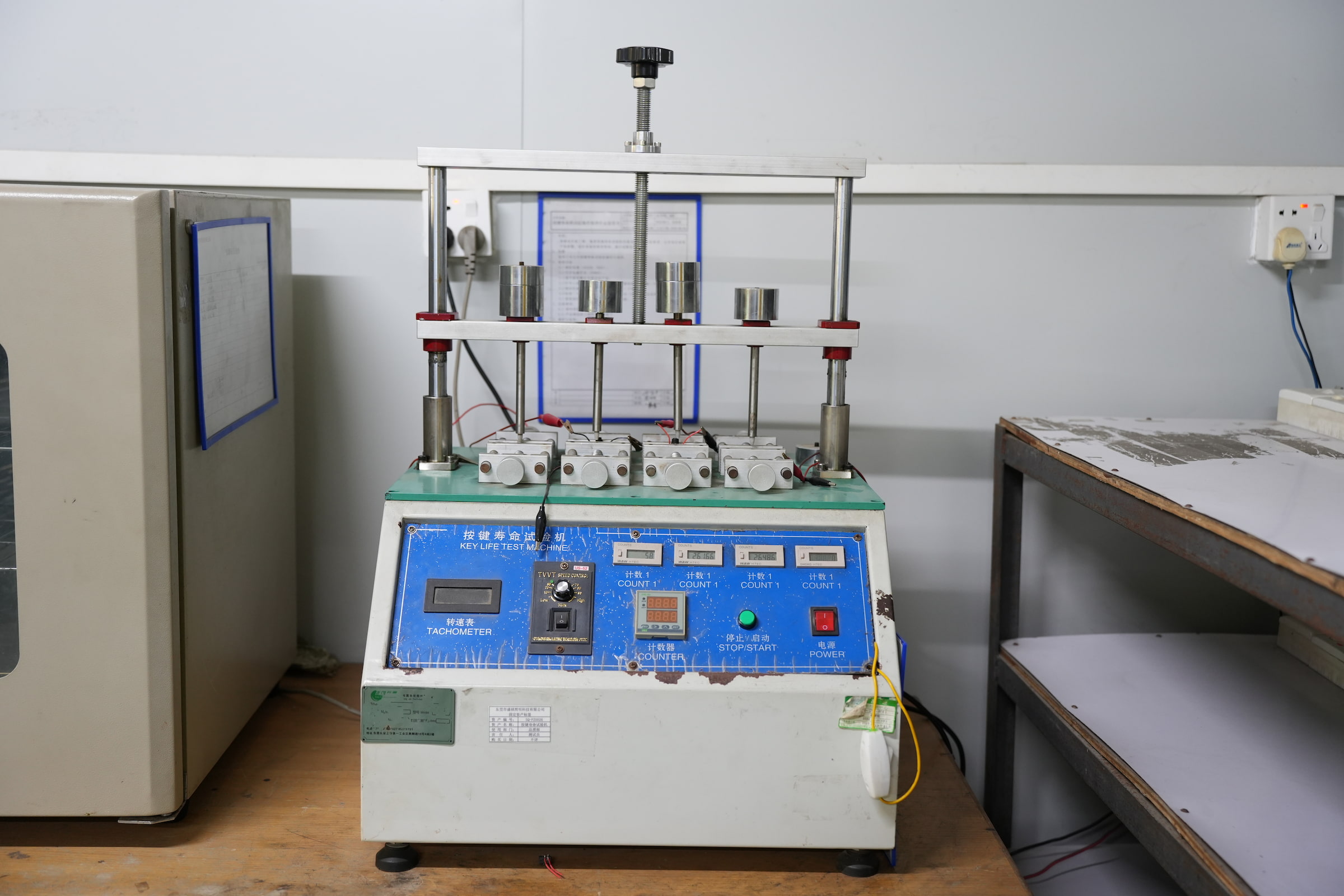
To definitively eliminate this costly uncertainty, the manufacturing facility must possess in-house harsh environment simulation labs. Before any bulk shipment is authorized for export, the hardware must endure brutal pneumatic drop tests and sustained mechanical vibration assessments strictly dictated by the international ANSI/NEMA FL1 standard. Because empirical, destructive test data cannot be faked, this relentless validation process completely eradicates the risk of cross-border procurement blind spots, guaranteeing that every unit delivered performs exactly as engineered.
V. Lowering TCO with Reliable Flashlight Suppliers in China
Calculating the true financial impact of an industrial asset requires looking far beyond the initial Bill of Materials (BOM) cost. When a procurement department saves a few dollars by sourcing fragile equipment, they invoke a massive, hidden financial penalty. Frequent equipment replacements, halted operational downtime, and the severe safety hazards caused by sudden illumination failures rapidly and aggressively inflate your Total Cost of Ownership (TCO).
Conversely, establishing a direct, strategic partnership with Reliable Flashlight Suppliers in China fundamentally restructures your commercial efficiency. By securing direct access to full-stack, shock-proof engineering and extreme testing infrastructure, you deploy tools designed for permanent survival. Because these heavily vetted, aerospace-grade instruments deliver exceptionally long operational lifecycles, you inherently minimize replacement costs, eliminate return logistics, and maximize the unhindered productivity of your industrial workforce.