Flashlight Battery and BMS Technology: The Ultimate Guide to Chemistry and Power Management
Flashlight Battery and BMS Technology: The Ultimate Guide to Chemistry and Power Management
An illumination instrument is fundamentally bound by the electrochemical potential of its power source. Regardless of how advanced the optical geometry or the LED semiconductor may be, catastrophic failure is inevitable if the energy storage and delivery systems are compromised. To ensure operational supremacy, engineers must possess a rigorous understanding of Flashlight Battery and BMS Technology.
This encyclopedic guide evaluates the complex electrochemistry governing lithium-ion cells, the degradation risks of legacy alkaline formats, and the highly sophisticated micro-electronics embedded within the Battery Management System (BMS). For procurement officers seeking a reliable 18650 Rechargeable Flashlight OEM, mastering these electrochemical and electronic principles is mandatory to navigate global shipping compliances, mitigate thermal runaway hazards, and deliver uncompromising reliability in extreme tactical theaters.
01. Battery Chemistry Breakdown: Electrochemistry in Illumination
Selecting a power source requires calculating the exact balance between volumetric energy density, discharge rates, thermal stability, and operational shelf-life. Different operational environments dictate highly specific electrochemical solutions.
Lithium-Ion (Li-ion) Configurations
Rechargeable Lithium-ion technology operates on a nominal voltage of 3.7V, delivering the high-amperage discharge currents required to drive modern LEDs to multi-thousand lumen outputs. The numerical designations for these cylindrical cells strictly represent their physical dimensions (e.g., an 18650 is 18mm in diameter and 65mm in length).
- 14500: Matches the exact dimensions of an AA battery but operates at 3.7V instead of 1.5V. Utilized in micro-EDC lights where weight reduction is paramount.
- 18650: The historical gold standard for tactical flashlights. It offers an exceptional equilibrium of capacity (up to 3500mAh) and slim geometry, perfect for weapon-mounted applications.
- 21700: The modern standard for extreme illumination. The slight increase in volume yields a massive increase in capacity (up to 5000mAh) and superior continuous discharge rates, making it indispensable for high-power searchlights.
- 26650: A heavy-duty cell deployed in large diving canisters or prolonged-use camping lanterns where physical bulk is a secondary concern to maximum runtime.
Cathode Chemistry: Ternary vs. LiFePO4
Within Li-ion cells, the cathode chemistry defines the operational parameters. Ternary Lithium (NCA/NCM) cells offer the absolute highest energy density, making them optimal for compact, high-output flashlights. Conversely, Lithium Iron Phosphate (LiFePO4) operates at a slightly lower nominal voltage (3.2V) but possesses phenomenal thermal stability and cycle life, virtually eliminating the risk of catastrophic thermal runaway under extreme physical stress.
Primary Lithium (CR123A): The Tactical Contingency
Primary lithium cells (such as the 3.0V CR123A) are non-rechargeable. However, they remain a strict requirement in military and extreme-survival procurement. Their specialized electrochemistry grants them an unprecedented 10-year shelf life with negligible self-discharge. Furthermore, they maintain operational integrity in extreme sub-zero temperatures (down to -40°C), an environment where standard rechargeable Li-ion electrolytes would freeze and fail. For preppers and tactical operators, the CR123A is the ultimate contingency power source.
Legacy Systems: NiMH and Alkaline Leakage Hazards
Standard 1.5V Alkaline and 1.2V Nickel-Metal Hydride (NiMH) batteries are utilized in civilian and medical penlights due to universal global availability. While NiMH is a highly stable, eco-friendly rechargeable option, standard alkaline batteries pose a severe chemical threat.
When alkaline cells are depleted or subjected to deep discharge, they generate hydrogen gas. This pressure eventually ruptures the steel canister, leaking highly corrosive potassium hydroxide. This caustic base will rapidly dissolve the flashlight's internal aluminum housing and permanently destroy the delicate driver circuitry. Professional operators must exercise extreme caution when storing alkaline-powered equipment.
02. Technical Parameter Matrix: Core Emitters
The following empirical matrix delineates the core operational differences between the three primary battery architectures utilized in modern tactical illumination engineering.
03. BMS Engineering: The Architecture of Protection
Lithium-ion cells contain densely packed, highly volatile reactive materials. Ensuring Tactical Flashlight Battery Safety requires the deployment of a highly sophisticated Battery Management System (BMS) or Protection Circuit Module (PCM).
SMT Precision and Component Integration
The BMS is a micro-electronic sentry permanently affixed to the anode or cathode of the lithium cell. Using highly automated Surface Mount Technology (SMT), microscopic components—such as dedicated protection ICs and ultra-low resistance MOSFETs—are soldered onto a rigid PCB substrate. These components continuously monitor voltage telemetry and interrupt the circuit in microseconds if electrical thresholds are breached.
Conformal Coating and Environmental Sealing
Marine operations and high-humidity subterranean explorations expose bare electronics to rapid galvanic corrosion. To mitigate this, advanced BMS modules undergo Conformal Coating (三防漆涂覆). This specialized polymeric film is applied over the entire PCB assembly. It acts as an impenetrable dielectric barrier, shielding the delicate micro-components from atmospheric moisture, condensation, and highly corrosive salt spray.
Potting and Dispensing for Kinetic Shock
Tactical flashlights are frequently subjected to violent kinetic events, such as being mounted to a high-caliber firearm or experiencing a 2-meter freefall onto solid concrete. Under these extreme G-forces, the microscopic solder joints of the BMS could shear completely off the board. Engineers resolve this through Potting and Dispensing (点胶加固). The entire BMS cavity is encapsulated in a shock-absorbing epoxy or silicone resin, physically binding the components into an indestructible, solid state that completely absorbs destructive mechanical resonance.
04. 2026 Testing, IATA 67 Compliance, and Aging Protocols
Global logistics networks and aviation authorities treat lithium-ion batteries as Class 9 hazardous materials. For OEM manufacturers, ensuring compliance with rigorous international standards, such as the IATA 67 (International Air Transport Association DGR 67th Edition), is a non-negotiable legal requirement for global distribution.
Mandatory Electronic Protections
To pass certification, the BMS must flawlessly execute several critical algorithms. OCVP (Over-Charge Voltage Protection) severs the connection if voltage exceeds 4.25V to prevent catastrophic thermal runaway. ODVP (Over-Discharge Voltage Protection) cuts power below 2.5V to prevent irreversible dendritic growth within the electrolyte. Finally, SCP (Short Circuit Protection) and OCP (Over-Current Protection) react in microseconds to prevent fires in the event of an external chassis short.
Internal Resistance and Quiescent Current
The BMS circuit itself must be highly optimized. Engineers meticulously measure internal resistance to prevent parasitic heat generation. Furthermore, the quiescent power consumption (the energy the BMS draws while the flashlight is turned off) must be strictly minimized to the micro-ampere scale to ensure the battery remains viable after months of tactical storage.
The Factory Aging Test
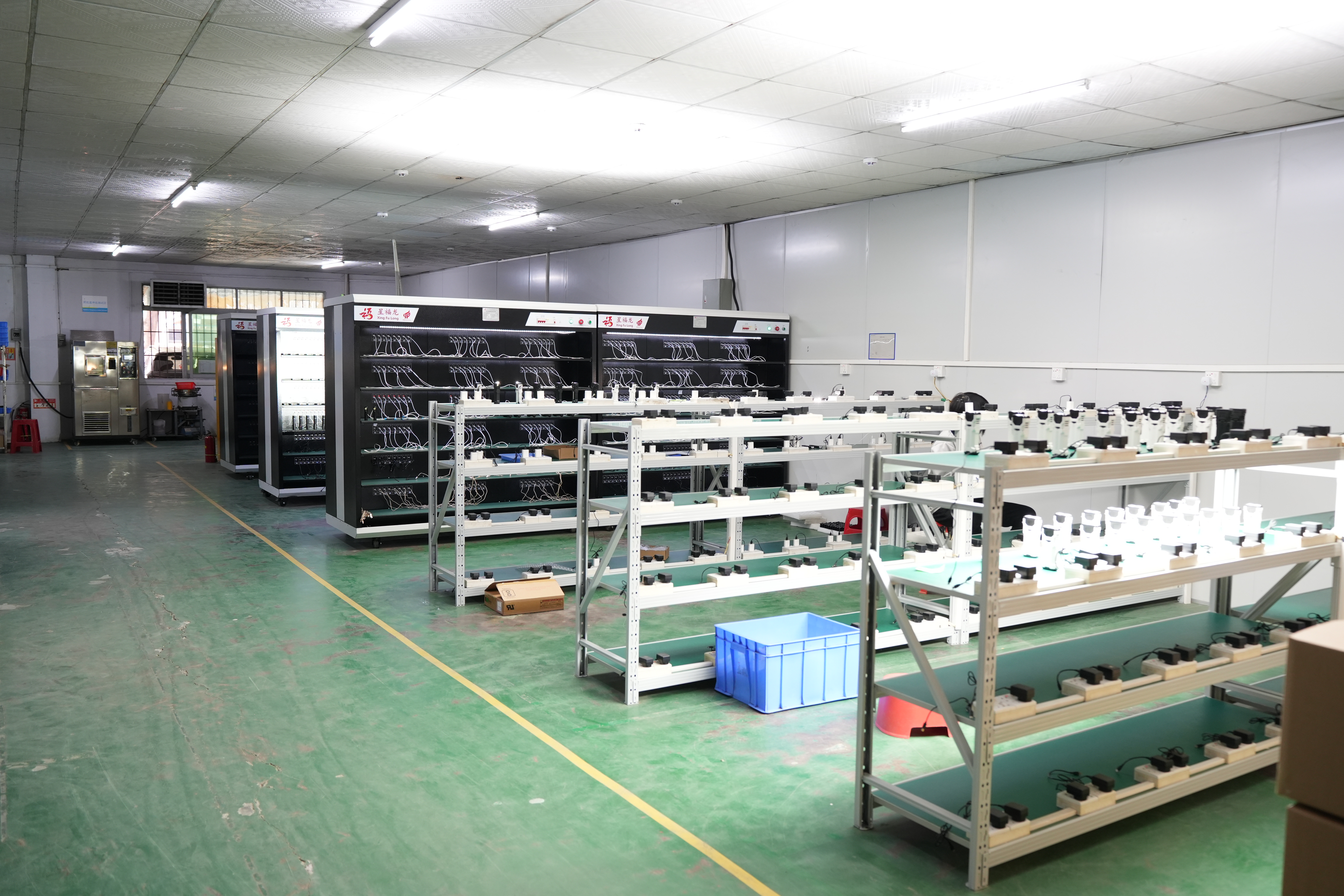
Compliance is proven through destruction testing. Before full-scale mass production, prototype power systems undergo rigorous Aging Tests (老化测试). Cells are subjected to extreme thermal chambers, repeated deep charge/discharge cycles, and intense vibrational stresses to empirically validate the stability of the BMS logic under sustained, simulated field conditions.
05. Driver Symbiosis: Constant Current Architectures
The lithium-ion battery and its BMS do not operate in a vacuum; they must achieve perfect electrical symbiosis with the optical driver board. A direct drive system relies on the raw voltage of the battery, meaning as the cell depletes from 4.2V down to 3.0V, the lumen output will severely decay.
To maximize the utility of advanced Li-ion cells, engineers specify a Constant Current Driver Flashlight. By utilizing sophisticated Buck or Boost switching regulators, the driver circuit continuously negotiates with the battery. As the battery voltage inevitably drops, the switching regulator draws slightly more amperage to mathematically sustain the exact wattage required by the LED. This ensures the operator receives perfectly flat, non-diminishing brightness output throughout the entire operational lifecycle of the charge.