Flashlight Design and Development: From Conceptual Geometry to Custom Optical Engineering
[ Engineering Abstract ]
Hello, I serve as the R&D Director at SHENGQI LIGHTING. In the highly competitive landscape of tactical and industrial illumination, executing rigorous Flashlight Design and Development is the only mechanism to differentiate a professional instrument from a generic consumer commodity. A flashlight is an exercise in multidisciplinary physics: it requires the meticulous synchronization of ergonomic metallurgy, thermodynamic dissipation, and photonic manipulation.
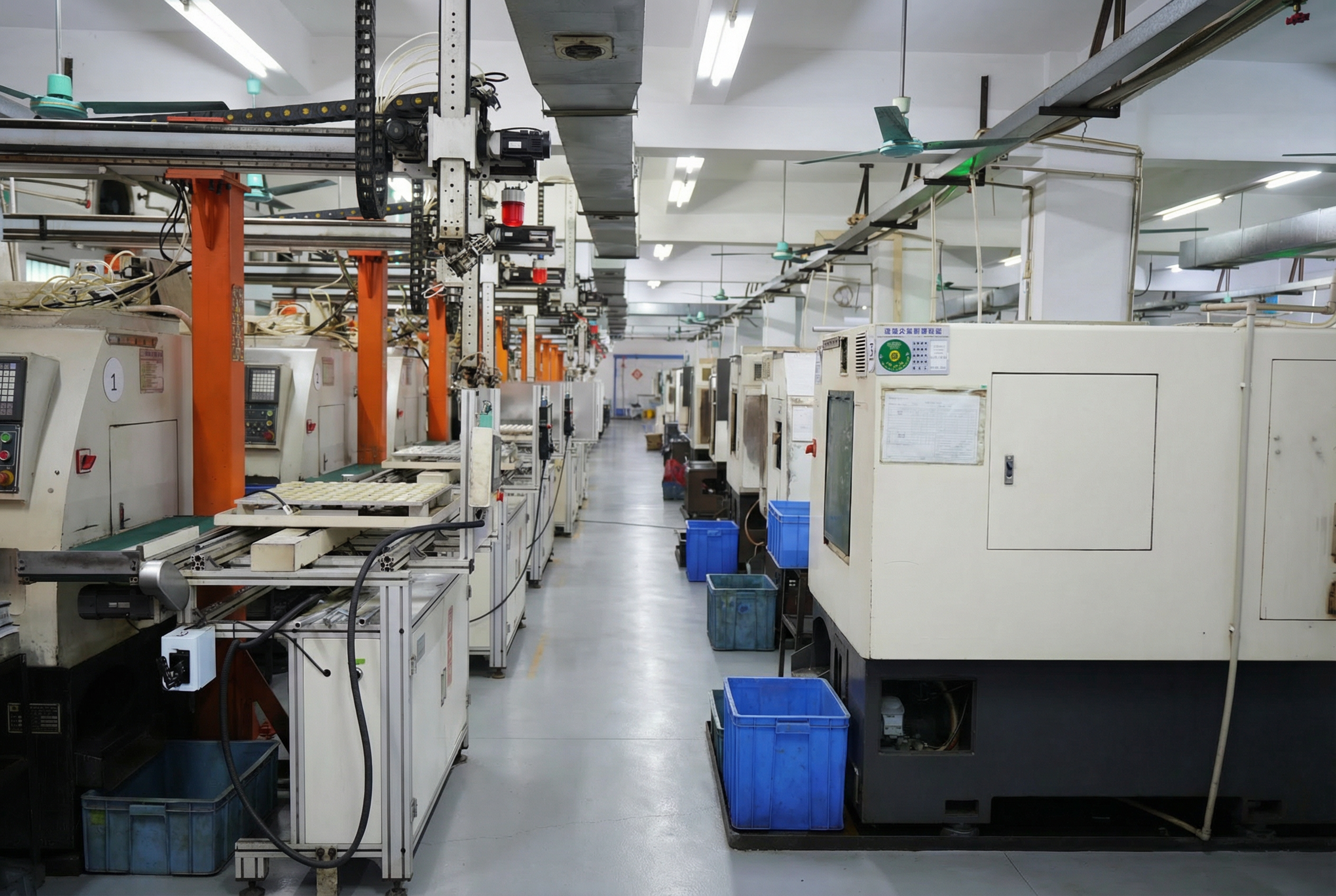
Backed by over 40 years of manufacturing pedigree, our laboratory routinely engineers bespoke illumination tools for global brands. This white paper deconstructs our exact Research & Development workflow. From the initial kinematic verification in rapid prototyping to the rigorous application of thermo-electric separation, procurement architects will discover the profound scientific parameters that dictate elite tactical and industrial lighting performance.
I. Phase 1: Industrial Design & Rapid Prototyping
The inception of an illumination tool begins with Industrial Design (ID). In tactical and industrial theaters, the geometric profile of the chassis dictates operational readiness. Form must strictly follow function.
Ergonomic Modeling & Kinematic Grip
When operating under sympathetic nervous system arousal (high stress), fine motor skills degrade. Therefore, the chassis must facilitate secure retention via gross motor interaction. Our ID engineers meticulously calculate the geometric knurling (e.g., diamond, pineapple, or square-cut patterns) to optimize the coefficient of static friction. We evaluate specific aerospace alloys (typically 6061-T6 or 7075) based on the client's requirements for yield strength versus mass, ensuring the center of gravity rests perfectly in the operator's palm.
Verification via Rapid Prototyping
Computer-Aided Design (CAD) models cannot confirm tactile feedback. To empirically validate the ergonomics and internal assembly structure, we execute intensive rapid prototyping. Utilizing industrial SLA (Stereolithography) 3D printing and 5-axis CNC machining, we generate precise 1:1 physical mockups within a strict 3 to 5-day operational window. This accelerated turnaround enables our B2B partners to physically verify hand-feel, pocket-clip tension, and battery compartment tolerances before committing to costly mass-production tooling.
II. Phase 2: Advanced Flashlight Optical Engineering
A raw Light Emitting Diode (LED) typically disperses photons in a 120-degree hemisphere. Without structural collimation, this energy is utterly useless. Flashlight optical engineering is the discipline of capturing and manipulating these photons to achieve a specific spatial distribution. We calculate and engineer three primary optical architectures:
SMO (Smooth Reflectors)
Engineered with a highly polished, mirror-like vacuum metallization, SMO reflectors rely on specular reflection. The parabolic curvature is precisely calculated to converge the maximum volume of photons into an intense central hotspot. This geometry is mandatory for weapon-mounted lights and Search & Rescue (SAR) tools where maximizing beam distance (throw) is the absolute priority.
OP (Orange Peel Reflectors)
For operations occurring within a 50-meter radius, a severe hotspot causes blinding ocular glare. OP reflectors feature a micro-textured, stippled surface. This induces diffuse reflection, intentionally scattering light rays to eliminate dark artifacts and smooth the transition from the hotspot to the peripheral spill. It is the optimal configuration for Everyday Carry (EDC) and broad-area work lights.
TIR (Total Internal Reflection) Optics
TIR optics replace hollow metallic reflectors with a solid-state polymeric lens (typically PMMA or Polycarbonate). They utilize both refraction (at the central lens) and total internal reflection (along the outer cone) to capture virtually 100% of the LED's emission. TIR lenses might be engineered for highly specific beam angles (e.g., 5°, 15°, 45°) while occupying a fraction of the volumetric space, making them vital for ultra-compact micro-flashlights and headlamps.
III. Phase 3: Custom LED Driver Design & Thermodynamics
Pushing multi-ampere currents through a microscopic semiconductor generates extreme thermal density. If this thermal load is not instantly evacuated, the LED die will rapidly incinerate. Successful R&D mandates a symbiosis of thermodynamic routing and micro-electronic logic.
Thermo-Electric Separation (DTP Copper)
Standard Aluminum PCBs utilize an organic dielectric layer to insulate the circuit, which creates a severe thermal bottleneck. To bypass this, we engineer Copper DTP (Direct Thermal Path) substrates. Through Thermo-Electric Separation (热电分离技术), the dielectric layer is entirely removed beneath the LED's central thermal pad. The semiconductor bonds directly to the pure copper core ($k \approx 385$ W/m·K), achieving instantaneous thermal transfer into the external aluminum chassis.
Advanced Custom LED Driver Design
A high-performance instrument requires a highly intelligent Microcontroller Unit (MCU). Our electronics division executes custom LED driver design, writing bespoke firmware to govern the User Interface (UI). This allows us to program specific operational logic—such as immediate strobe access for law enforcement or ultra-low "moonlight" modes for reading. Crucially, the MCU is integrated with an NTC thermistor to execute Advanced Temperature Regulation (ATR), continuously monitoring junction temperatures and dynamically stepping down the output current to prevent catastrophic hardware damage or operator burns.
[ Case Study Validation: Project "NightHawk" ]
The Engineering Challenge:
A premier North American defense contractor required a weapon-mounted illumination tool. The strict operational parameters demanded a verifiable ANSI beam distance of 1200 meters. However, due to rifle rail clearance constraints, the external diameter of the optical head could not exceed 45 millimeters. Achieving such extreme candela usually requires a massive 60mm+ reflector head.
The SHENGQI Solution & Empirical Result:
Our optical and electronic engineers initiated a concurrent development cycle. We sourced the OSRAM KW CSLNM1.TG emitter. Featuring a microscopic 1mm² flat die, this LED acts as a near-perfect point source. We engineered a highly specialized, hyper-deep SMO parabolic reflector specifically calculated to match the OSRAM's emission angle within the strict 45mm diameter constraint. To maximize output, our electronics division designed a custom Boost driver delivering a sustained 5 Amps.
Upon integrating these elements and measuring the prototype in our testing laboratory, the unit achieved an astounding 1350 Meters ANSI Throw—surpassing the client's rigid expectations by 12.5%. This exemplifies the uncompromising execution of tactical flashlight OEM manufacturing.
IV. Frequently Asked Questions (FAQ)
Q1: Why use DTP Copper instead of a standard Aluminum MCPCB?
Standard aluminum boards feature a dielectric insulating layer ($k \approx 1-3$ W/m·K) that restricts heat flow. DTP Copper completely removes this layer beneath the LED, allowing the heat to conduct directly into pure copper ($k \approx 385$ W/m·K), drastically reducing thermal resistance and allowing the LED to be driven at much higher amperages safely.
Q2: What is the primary difference between a TIR lens and an SMO reflector?
An SMO reflector uses a hollow parabolic mirror to reflect side-emitted light, creating a sharp hotspot and a distinct spill area. A TIR (Total Internal Reflection) lens is a solid polymeric optic that uses both refraction and internal reflection to capture almost all light from the LED, creating a much smoother, artifact-free beam transition within a smaller physical footprint.
Q3: How does ATR (Advanced Temperature Regulation) function?
ATR relies on a Negative Temperature Coefficient (NTC) thermistor mounted on the driver board. As the flashlight heats up, the thermistor's resistance changes. The MCU continuously reads this data, and if the temperature approaches a critical degradation threshold (e.g., 55°C external), it actively decreases the current to the LED to reduce heat generation.
Q4: Why is rapid prototyping critical in tactical flashlight development?
Digital CAD models cannot verify tactile ergonomics, pocket-clip tension, or structural balance. Producing physical 5-axis CNC mockups within 3 to 5 days allows engineers to physically validate the chassis design and identify kinetic assembly flaws before committing significant capital to mass-production steel injection molds.
Q5: Can the driver UI be customized for specific law enforcement protocols?
Absolutely. Through custom firmware programming, the MCU can be configured to meet strict departmental requirements, such as ensuring the flashlight always activates on High mode for tactical clearance, or dedicating a secondary switch exclusively to an instant-access defensive strobe.
Initiate Your Exclusive R&D Protocol
Procuring catalog hardware limits a brand's potential to the constraints of the generic market. Establishing industry dominance requires proprietary intellectual property and specialized engineering.
[ Design & Development Integration ]
SHENGQI LIGHTING operates a comprehensive R&D division tailored for enterprise clients. We invite global brands to collaborate on custom industrial design, bespoke TIR optical simulations, and proprietary PCB layouts. Bypass standard limitations and engineer your flagship model today.