Why the T20 Failed Our Drop Test: Inside the QA Labs of a Premier Tactical Flashlight Factory
[ Phase 01: The Myth of Perfection vs. Real Trust ]
Hello, I serve as the Senior Quality Control Director at SHENGQI LIGHTING. In the global B2B procurement sector, there is a dangerous illusion that manufacturing is flawless. When overseas brand directors search for Reliable Flashlight Suppliers in China, their primary fear is not that a prototype might fail. Their ultimate fear is that the factory will silently hide the failure.
Trading companies often promise a 100% yield rate without providing any empirical testing data. In tactical deployments, relying on these undocumented promises may lead to catastrophic field failures. We operate differently. Recently, after we sent a diagnostic report to a major North American client detailing a failure in their prototype, they replied:
"The strictness and high standards of your internal tests does justice to your brand’s quality... knowing you catch these things makes me feel even more safe to take decisions."
This document outlines exactly how a premier Tactical Flashlight Factory engineers trust. We will examine the real-world case of the T20 prototype, a device that failed our internal destructive testing, and reveal how our engineers dissected the flaw to guarantee absolute mass-production reliability.
I. The T20 Challenge: The ANSI FL1 2-Meter Drop
The T20 was conceptualized to be an uncompromising law enforcement duty light. The engineering specifications were incredibly demanding.
The Theoretical Parameters
We anchored the optical engine with a LUMINUS SST40 LED, designed to generate a blinding 2000 lumens and a highly concentrated 240-meter beam distance. The chassis was CNC-machined from 6063 aerospace aluminum to ensure a strict IP68 rating (waterproof up to 2 meters). On paper, the prototype was flawless.
The Moment of Failure
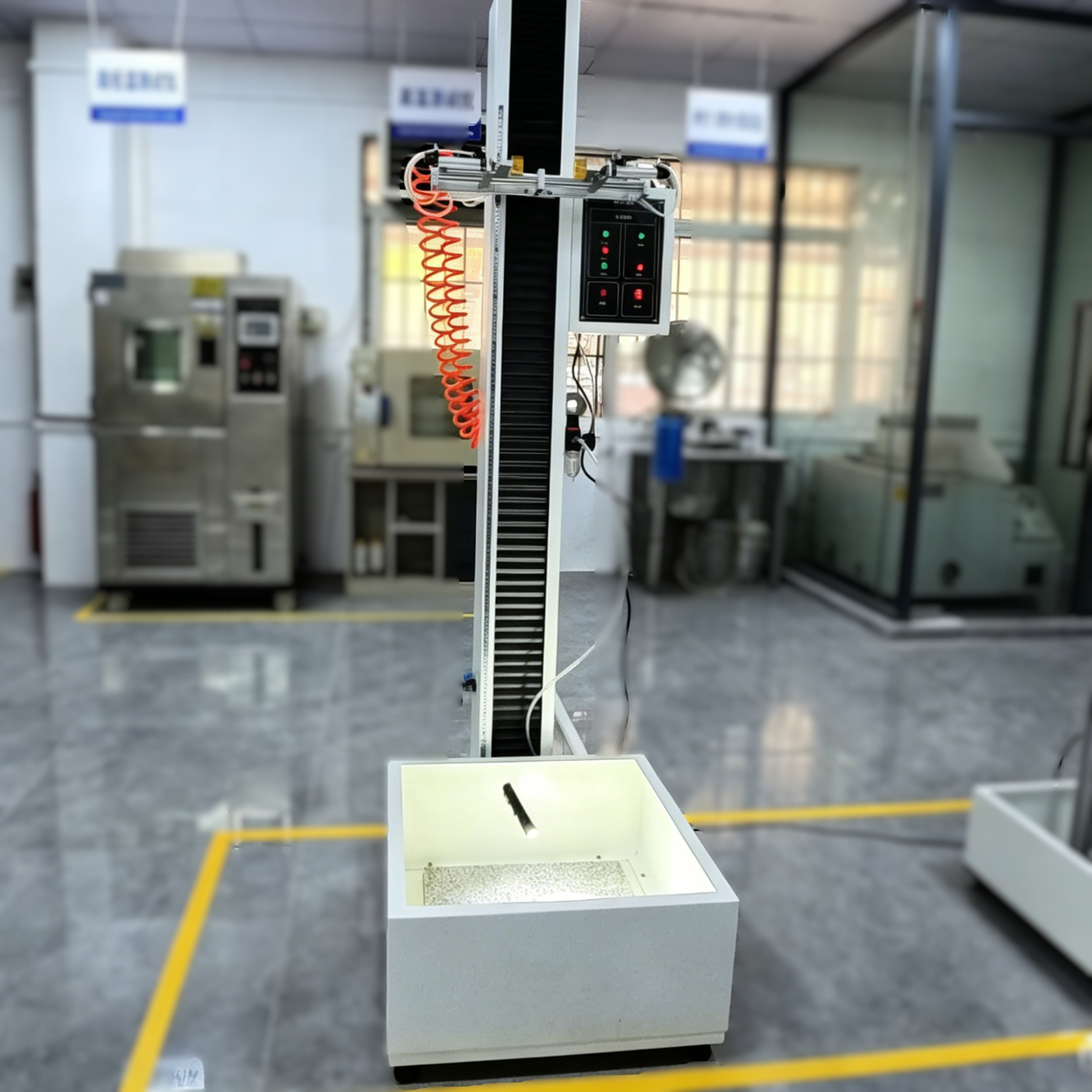
During the final pre-production validation phase, we subjected the T20 to the rigorous ANSI/NEMA FL1 2-meter impact resistance test. The device was dropped from exactly two meters onto a solid concrete block across all six structural axes. Upon the fourth impact—a direct strike to the tail-cap bezel—the T20 exhibited a severe malfunction. The light flickered for 400 milliseconds, and a microscopic shear stress fracture appeared along the internal aluminum threading. The prototype failed.
II. The Engineer's Scalpel: Root Cause Analysis
A standard assembly plant might have quietly lowered the testing parameter to 1 meter to achieve a superficial "Pass." As an elite OEM Tactical Flashlight Manufacturer, we immediately suspended all production preparations. Our structural engineers initiated a relentless root cause analysis.
Kinetic Resonance and Spring Tension
Utilizing digital 3D modeling and high-speed telemetry, we isolated the failure. The extreme deceleration G-force of the 2-meter concrete drop caused the heavy 18650 lithium-ion battery to compress the tail spring beyond its elastic limit. This kinetic resonance violently disrupted the electrical contact on the PCB, causing the 400-millisecond flicker.
Solving the Structural Deficit
Simultaneously, we placed the fractured aluminum thread under a metallurgical microscope. The CNC threading at the tail-cap was too aggressively pitched, creating a stress concentrator that could not absorb the kinetic shock.
Within 48 hours, our R&D division engineered the solution. We redesigned the tail-cap with a dual-stage, high-tension gold-plated spring to physically decouple the battery mass during impact. We completely reprogrammed the CNC lathes to cut trapezoidal threads with thicker walls, and we injected a superior grade of elastomeric PCB potting compound to cement the micro-electronics. The revised T20 prototypes were subjected to 100 consecutive 2-meter drops. The failure rate was zero.
III. Transparency as the Ultimate Supply Chain Asset
Inside our massive 130,000 square-foot facility, we operate 7 specialized testing laboratories. Brutal impact assessments, salt-spray corrosion baths, and prolonged thermal evaluations occur every single day.
As a responsible Heavy duty tactical flashlight supplier, we do not obscure our testing data. We boldly issue "Fail" reports to our B2B clients during the prototyping phase. A failed prototype is not a disaster; it is a critical diagnostic tool. It proves that our limits exceed those of the battlefield. By exposing and resolving these weaknesses before mass production initiates, we guarantee that the final instruments delivered to your distribution network are mathematically infallible. Transparency is the heaviest armor your supply chain could possibly wear.
IV. Expert FAQ: Quality Control in Action
Q1: As an overseas buyer, what is Shengqi’s standard protocol if an OEM custom project fails during the testing phase?
If a custom prototype breaches our ISO9001 quality thresholds, we enforce a strict 24-hour transparency protocol. You will receive a comprehensive engineering analysis report documenting the exact failure mode (complete with microscopic photography), accompanied by a definitive, timeline-bound structural or electronic rectification plan.
Q2: Beyond the drop test, what other rigorous ANSI FL1 evaluations must the T20 pass before mass production?
The T20 undergoes exhaustive metrology. We utilize pneumatic vacuum negative-pressure chambers to verify the absolute hermetic integrity of the IP68 waterproof seals. Furthermore, we deploy Integrating Spheres to capture continuous thermal light degradation data, ensuring the 2000-lumen output remains highly stabilized during prolonged burn-in tests.
Q3: Why is selecting a factory that admits testing failures safer than sourcing from a trading company that promises "zero defects"?
A "zero defect" promise in pre-production is a statistical impossibility masking a lack of testing infrastructure. Trading companies hide early issues to secure your deposit, pushing the risk onto the end-user. By exposing flaws early, a genuine manufacturer controls supply chain risk, decisively protecting your brand's long-term reputation and eliminating massive RMA return costs.
Secure Absolute Supply Chain Transparency
Do not entrust your brand's integrity to opaque assembly houses. Partnering with SHENGQI LIGHTING ensures your hardware is subjected to the most brutal engineering diagnostics available, guaranteeing flawless performance when it matters most.
[ Initiate OEM Partnership Protocol ]
We invite global brand architects and defense procurement directors to consult directly with our R&D and QA testing divisions. Experience total manufacturing transparency and initiate your next custom illumination project with absolute confidence.