Flashlight Optical Engineering: SMO, OP, and TIR Lenses
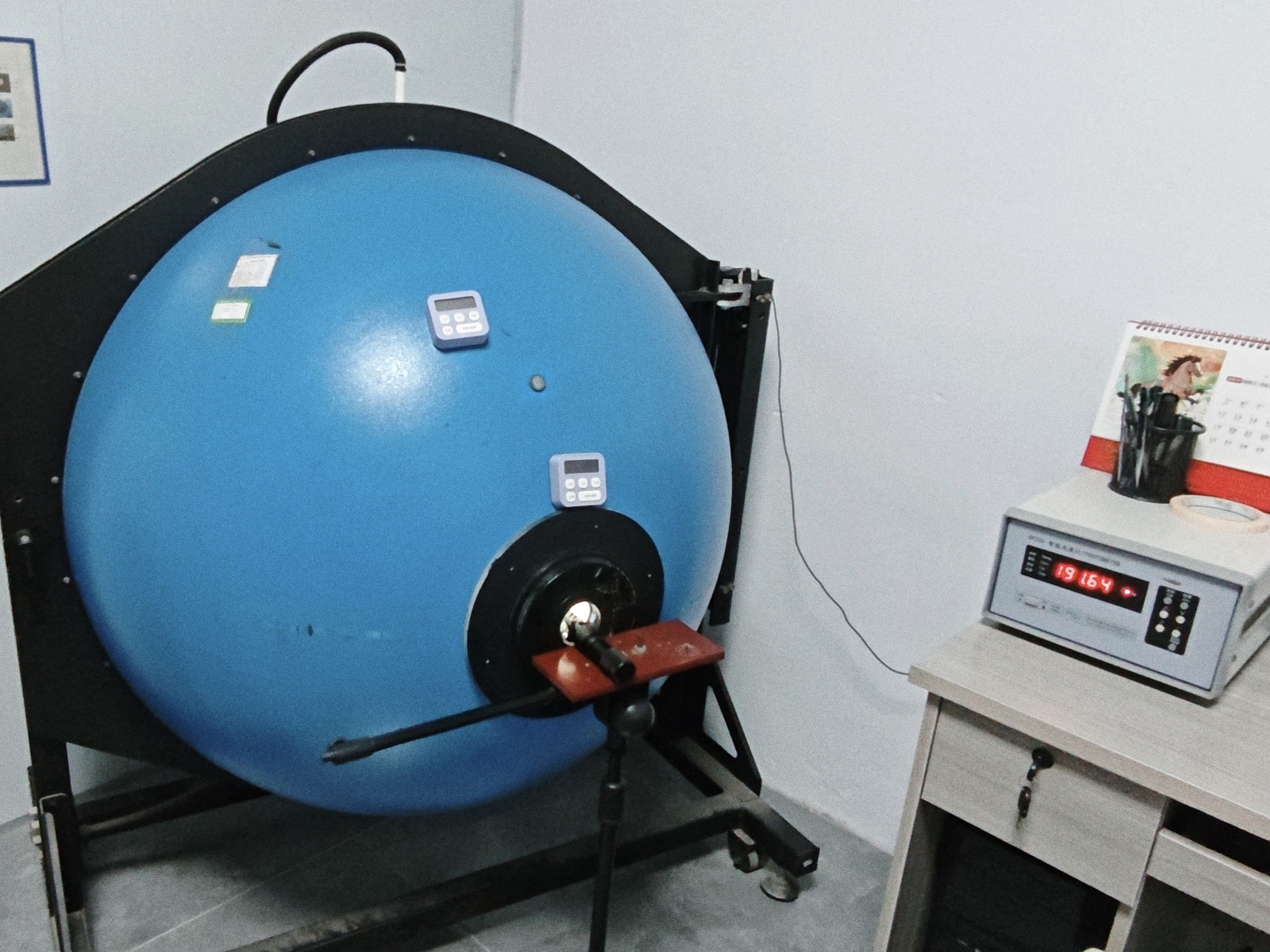
[ Executive Metrology: Taming the Light ]
Hello, this is your Senior Optical Engineer from SHENGQI LIGHTING. When B2B procurement managers evaluate an illumination tool, they frequently fixate exclusively on the raw lumen output of the semiconductor. They might source a premium LUMINUS SST40 capable of 2000 lumens and assume operational dominance will automatically follow. This is a profound engineering fallacy.
In physics, a raw Light Emitting Diode (LED) generates highly divergent, chaotic photonic emission across a 120-degree spatial curve. If you do not meticulously collect, guide, and focus this energy through precision optical devices, the photons will scatter uselessly into the atmosphere, rapidly dissipating according to the inverse-square law.
The selection of the optical system—the reflector or lens—acts as the ultimate behavioral command for the flashlight. It dictates whether the instrument becomes a piercing tactical sword capable of dominating a suspect at 600 meters, or a gentle, homogeneous lantern for close-quarters mechanical repair. This definitive buyer's guide deconstructs the geometry of SMO, OP, and TIR systems, empowering your brand to make mathematically sound sourcing decisions.
I. The Classics: SMO vs. OP Parabolic Reflectors
The parabolic reflector is the oldest and most reliable method of collimating light. By positioning the LED exactly at the focal point of a precisely calculated parabolic curve ($y = ax^2$), light rays strike the inner walls and are reflected forward. The texture of those walls defines the tactical application.
Smooth Reflectors (SMO)
A Smooth (SMO) reflector features a vacuum-metallized, mirror-like finish. It relies entirely on specular reflection to maximize light-gathering efficiency. It brutally forces the photons into a parallel trajectory, minimizing scatter.
The Optical Profile: An SMO reflector generates a highly concentrated, intensely bright center hotspot with sharp, distinct edges. It is the absolute, undisputed choice for long-range tactical throwers, perimeter security, and hunting operations. For instance, our T1-PRO model utilizes a deep-dish SMO reflector to push an astonishing 626-meter beam distance, allowing operators to pierce through pitch-black environments.
Orange Peel Reflectors (OP)
An Orange Peel (OP) reflector is heavily micro-textured, visually resembling the dimpled skin of an orange. Instead of acting as a continuous mirror, this texture induces diffuse reflection. It deliberately scatters a calculated percentage of the light rays.
The Optical Profile: This micro-scattering effectively erases dark spots, tint-shifts, and ugly artifact rings generated by multi-die LEDs. It creates a buttery, smooth transition from the center hotspot out into the wide spill. The OP reflector is the flawless solution for Everyday Carry (EDC) and close-range mechanical work, ensuring the user's peripheral vision is bathed in uniform, glare-free light.
II. Technical Parameter Matrix: Optical Architectures
Procurement teams might consult the following empirical matrix to align optical characteristics with specific tactical deployments.
III. The Modern Marvel: TIR Optics
Standard hollow parabolic reflectors suffer from inherent geometry waste. The photons that fly directly forward from the LED, completely missing the reflective walls, disperse into the environment uncontrolled.
Total Internal Reflection
TIR (Total Internal Reflection) optics resolve this loss. A TIR lens is a solid polymeric structure (often PMMA or PC). It brilliantly combines two physics principles. The center of the optic acts as a convex refractive lens, capturing and collimating the direct forward light. The outer conical body captures the wide side-emitted light; because the angle exceeds the critical boundary of the plastic-air interface, the light reflects internally with perfect efficiency.
Volumetric Superiority
By capturing nearly 100% of the emission, TIR achieves incredibly high light utilization. More importantly, TIR lenses accomplish this within a fraction of the depth required for a metallic reflector. This space-saving geometry is the reason TIR optics dominate the architecture of high-end micro-EDC tools (like our Y4 flat flashlight) and lightweight professional headlamps.
IV. The Invisible Shield: AR Coated Glass
The final barrier between the optical engine and the external environment is the protective glass lens.
Standard, untreated mineral glass naturally reflects roughly 4% to 8% of light back into the reflector housing, effectively destroying a portion of the lumens you paid for. To salvage this energy, elite manufacturers utilize AR (Anti-Reflective) Coated Glass. Applying microscopic dielectric layers to the glass generates destructive thin-film interference, which cancels out the reflected light waves.
Visually identified by a faint purple or blue tint, this coating pushes light transmittance to 98-99%. While budget facilities rely on cheap, easily scratched acrylic windows, we strictly equip our tactical devices with tempered AR-coated glass, ensuring maximum photonic delivery and kinetic shatter resistance.
V. Manufacturing Mastery: Precision Alignment
Theoretical optical designs collapse if execution is flawed. As a fully integrated Professional LED Flashlight Factory and a dedicated OEM Tactical Flashlight Manufacturer, we eliminate the human variable from optical assembly.
Dust-Free Integration
A single speck of airborne dust or a human fingerprint trapped beneath an AR-coated lens will severely distort a high-candela beam. At SHENGQI LIGHTING, mating the optic to the semiconductor occurs exclusively within positive-pressure, HEPA-filtered cleanrooms.
Micron-Level Machine Vision
If an LED is positioned even 0.1mm off-center relative to a TIR lens, the beam will permanently display a deformed "donut hole." We deploy high-resolution machine vision robotics to map the semiconductor's dead center. These automated arrays ensure absolute, micron-level coaxial alignment between the light engine and the aluminum housing on every unit produced.
VI. Expert FAQ: Optical Sourcing
Q1: As an overseas tactical brand, if I require extreme long-range performance, should I specify a large SMO reflector or a TIR lens?
To achieve absolute maximum throw (highest candela), you must specify a large-diameter, deep-dish SMO parabolic reflector paired with a "domeless" LED. While TIR lenses are incredibly efficient and compact, scaling a solid PMMA TIR lens to an 80mm diameter would render the flashlight unacceptably heavy. Hollow SMO reflectors provide the optimal physics for extreme distance geometry.
Q2: Why do cheap, inferior flashlights often project a "black hole" in the center of the beam or produce strange yellow/green tints?
This is the hallmark of non-existent optical engineering. A black hole occurs when the LED is mathematically out of focus—sitting too high or too low inside the reflector cavity. Unnatural green or yellow chromatic aberrations (tint-shift) are caused by poorly calculated parabolic curves bouncing light through the outer edges of the LED's phosphor layer, exposing inferior optical design.
Q3: Can SHENGQI design a custom TIR lens with a specific beam angle for our proprietary hardware?
Yes. As an authoritative China Tactical Flashlight Factory and Heavy duty tactical flashlight supplier, our R&D engineers utilize advanced 3D optical simulation software to calculate custom refraction angles. We may design private-mold TIR optics tailored to project the precise 15°, 30°, or 60° beam dispersion required for your specific operational deployment.
Secure Your Optical Architecture
Do not entrust your brand's optical performance to basic assembly houses. Engineering an artifact-free beam requires profound mathematical calculation, sterile cleanroom integration, and exact CNC machining tolerances.
[ Initiation of R&D Consultation ]
SHENGQI LIGHTING operates as a globally recognized manufacturing authority. We invite B2B procurement directors and tactical gear designers to collaborate directly with our optical engineering division to evaluate bespoke TIR lenses and advanced parabolic geometries.