Reverse-Engineering the HL2: 1700 Lumens of Tri-Core Supremacy
[ Mission Profile: The Descent ]
Imagine suspending yourself 300 feet deep within a subterranean limestone cave network, or hanging from a high-tension electrical grid tower during a torrential midnight squall. In these extreme theaters, ambient light is an absolute zero. You rely entirely on the instrument strapped to your forehead to dictate your reality.
Standard consumer-grade, single-emitter headlamps fail spectacularly here. They might punch a harsh, narrow spotlight directly ahead, but they leave your peripheral vision submerged in pitch-black shadows. When a missed foothold or an unseen frayed wire could prove fatal, a narrow optical field is an unacceptable liability. You require overwhelming situational awareness.
To dissect the solution to this phenomenon, we put the HL2 on the teardown bench. Engineered by an elite High Lumen Headlamp Manufacturer, this device completely abandons the single-diode paradigm. This is an objective, mechanical analysis of how Shengqi Lighting weaponizes light for the harshest environments on earth.
I. Reverse Engineering: The 3-Core Optical Engine
Generating raw power is easy; controlling it is the hallmark of true engineering. Removing the front bezel of the HL2 reveals a highly unconventional semiconductor layout.
The 5W × 3 Multi-Emitter Array
Rather than forcing 15 watts of current through a single, over-stressed LED die, the HL2 utilizes a synchronized 5W LED × 3 configuration. By distributing the electrical load across three distinct emitters, the driver circuit exponentially lowers the thermal density per chip. This architectural decision vastly improves the luminous efficacy (lumens-per-watt ratio) and dramatically extends the operational lifespan of the diodes.
The photometric result is a staggering 1700 LM (1700 lumens) output. But volume is only half the equation. The tri-core layout, paired with overlapping optical lenses, produces a massive, homogeneous wall of light. It effortlessly projects a 72-meter beam distance while simultaneously flooding your entire peripheral vision. This specific geometry succeeds in completely eliminating blind spots during complex tasks, matching the natural ultra-wide viewing angle of the human eye.
II. Thermodynamics & Armor: Surviving the Elements
Strapping an engine capable of 1700 lumens directly to a human forehead introduces severe thermodynamic and ergonomic hurdles. Plastic housings will rapidly deform under the heat, while heavy metals will induce agonizing neck fatigue.
Subtractive Metallurgy & Thermal Sinking
Weighing an astonishingly low 50.1g (Super Lightweight Body), the HL2 chassis feels like a ghost on the helmet. This is not achieved by utilizing brittle polymers. The housing is precision-machined from solid 6063 aerospace-grade aluminum alloy.
Leveraging our decades of deep-rooted engineering heritage, the entire aluminum unibody functions as a highly efficient primary heat sink. It draws thermal energy away from the tri-core PCB and dissipates it convectively into the ambient air. To protect this metal against abrasive canyon rock and caustic industrial fluids, it undergoes an electrochemical passivation process, resulting in a hardened anodized black finish.
Kinetic and Hydrostatic Defenses
A rugged chassis must seal the internal circuitry. Applying aerospace-grade micro-tolerances during the machining phase allows for perfect compression of the internal elastomeric O-rings. This guarantees an IPX5 Weather Resistant rating, ensuring the light ignores torrential downpours. Furthermore, the structural rigidity effortlessly survives repeated 1-meter impact drops onto solid rock.
III. Ergonomics & Power: The Seamless Extension
Power is a liability if the operator cannot intuitively harness it while suspended from a harness or balancing on scaffolding.
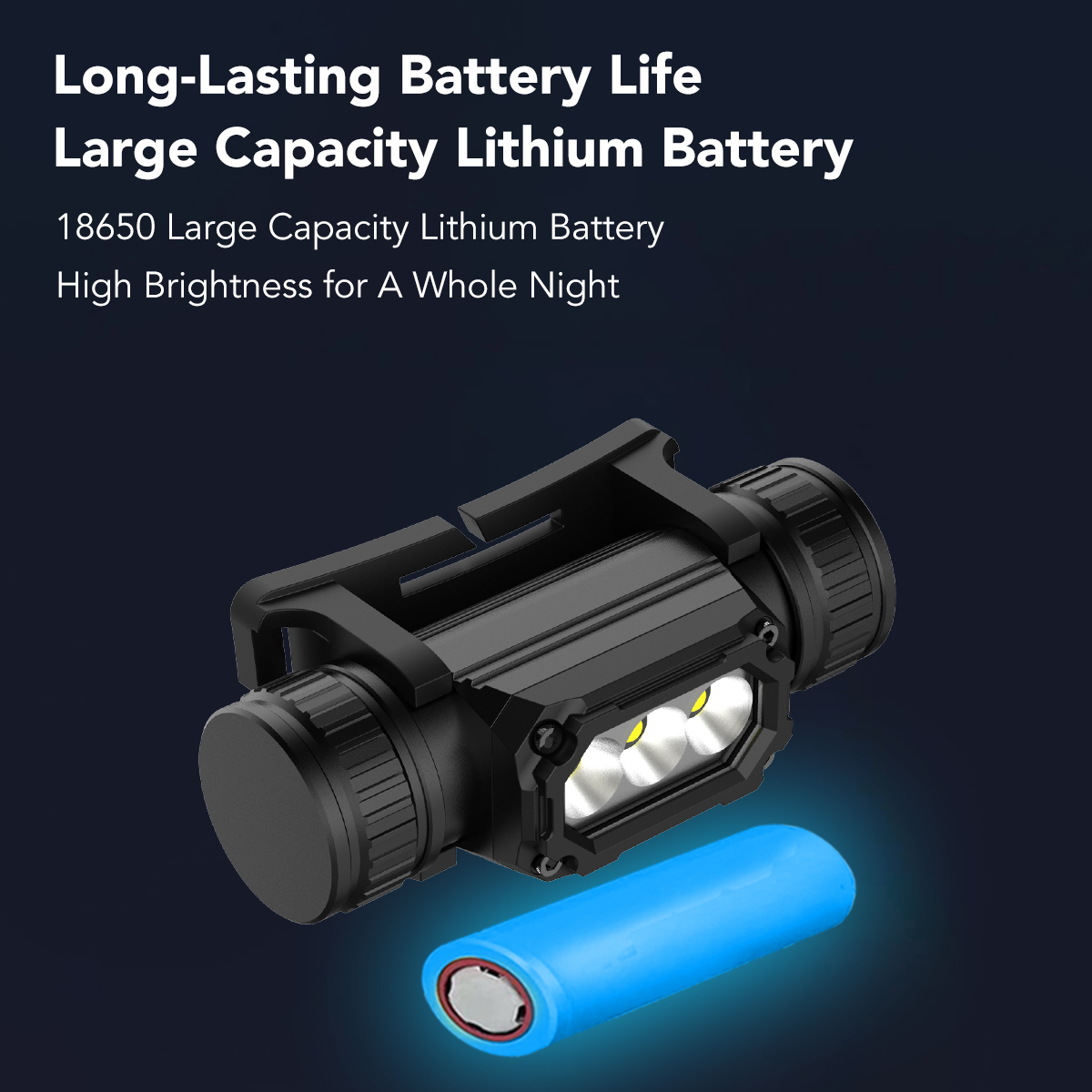
18650 Lithium Integration
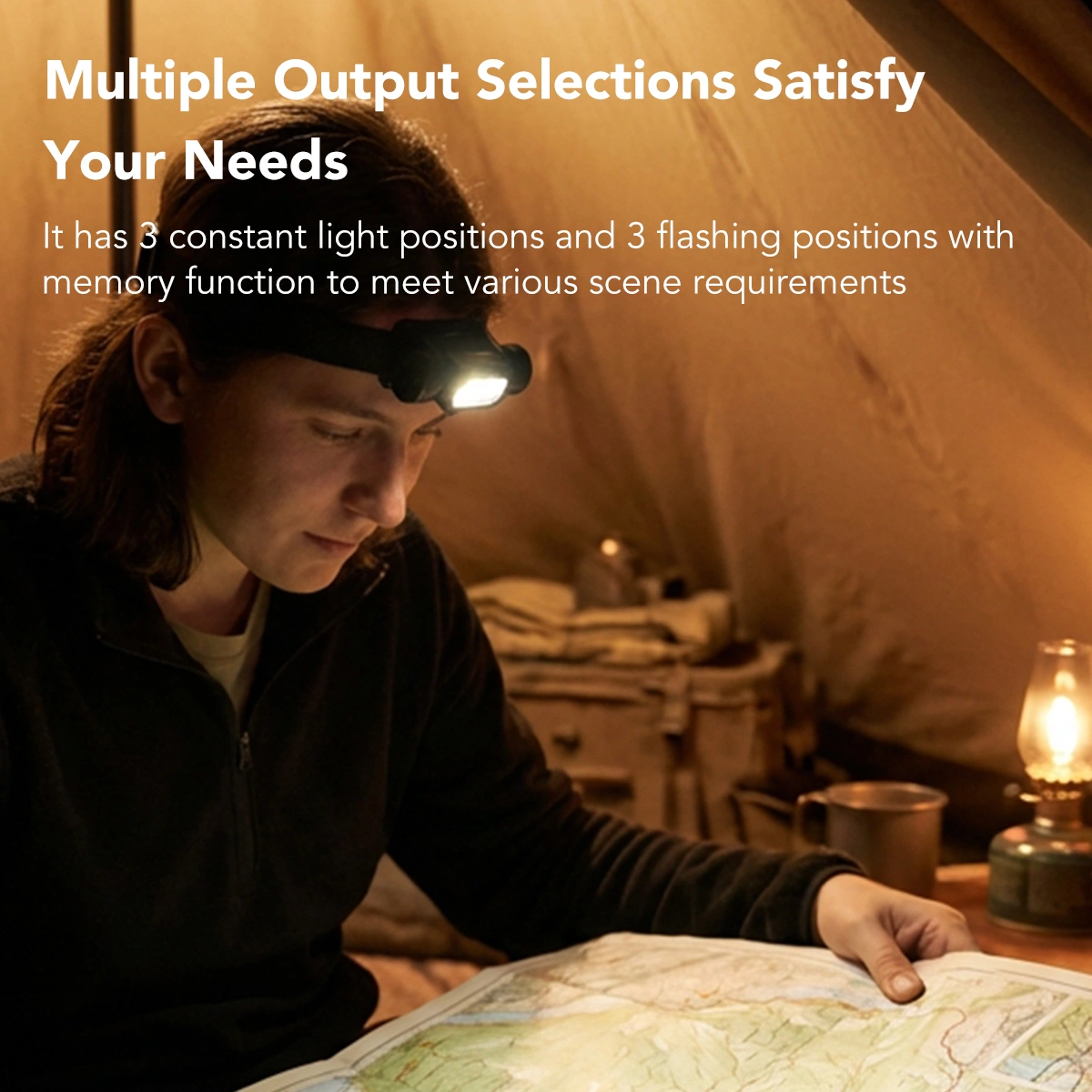
The HL2 is driven by a high-density 18650 Li-ion battery (1800mAh). A custom microcontroller unit (MCU) manages the discharge rate, providing the operator with 6 distinct output modes. This ranges from a covert 5LM moonlight mode (ideal for reading topographical maps without destroying night vision) up to the devastating 1700LM turbo setting for emergency signaling.
Kinematic Articulation
True hands-free capability requires mechanical adaptability. The HL2 features an adjustable lamp head tilt mechanism. Unlike cheap ratcheting plastic gears that strip over time, this mechanism utilizes precisely calibrated mechanical damping. It allows the operator to smoothly direct the beam down towards a wiring harness or up towards an overhanging cliff face, holding its position rigidly against intense physical vibration.
IV. Unconventional B2B FAQ: Technical Deep-Dive
Q1: With three 5W LEDs firing at full power, how does the HL2 manage thermal output to prevent burning the user's forehead?
Thermodynamics are strictly managed through hardware and firmware. The aluminum chassis rapidly wicks heat away from the PCB, acting as a highly efficient radiator. Concurrently, the internal MCU employs an intelligent thermal step-down logic; if internal sensors detect temperatures approaching the degradation threshold, the driver imperceptibly lowers the current, protecting both the semiconductor integrity and the user's skin.
Q2: As a Professional LED Flashlight Factory, how do you ensure the IPX5 waterproof rating remains viable at the rotating mechanical joint?
A rotating hinge is a prime vector for water ingress. We resolve this by combining aerospace-grade micro-tolerances on the aluminum hinge brackets with high-rebound, internally lubricated silicone O-rings. By assembling the chassis within optically pure assembly environments, we ensure no particulate matter compromises the seal, maintaining absolute IPX5 hydrostatic defense even while the head is actively being rotated.
Q3: For brands focusing on ultra-marathon runners or high-altitude linesmen, what is the biomechanical significance of the 50.1g net weight?
When a user wears a headlamp for 10+ hours, the moment arm created by a heavy protruding mass induces severe cervical spine strain. By aggressively milling the 6063 aluminum down to a 50.1g profile, the center of gravity is kept extremely tight against the forehead. This drastically reduces the kinetic pendulum effect during rapid movement, virtually eliminating musculoskeletal neck fatigue.
Engineer Your Custom Illumination Platform
Off-the-shelf plastic headlamps are unacceptable for serious operational deployments. Elevating your brand requires a manufacturing partner capable of executing extreme multi-core optics and precision metallurgy.
[ Initiation of R&D Co-Development ]
As a heavily sought-after Custom Headlamp Supplier and a dedicated Rechargeable Camping Hiking Torch OEM, SHENGQI LIGHTING invites global brand architects to engage our R&D division. Together, we might engineer the exact beam profile, chassis material, and UI firmware required to dominate your specific market sector.