Stop Bleeding Margins: The Ultimate Audit Guide for Vetting an led flashlight vendor
Hello. I operate as a Senior Global Retail Supply Chain Director. In the hyper-competitive landscape of global e-commerce and retail distribution, brand equity is intensely fragile. When procurement executives allocate capital to overseas operations, they frequently suffer from a severe operational blind spot. They believe they are negotiating directly with a heavy-asset manufacturer. In reality, the vast majority of these digital storefronts are merely intermediary trading companies.
Because these middlemen lack physical infrastructure, they inject massive volatility into your supply chain. When peak seasonal demand surges, these fragmented brokers lose complete control over lead times. Worse, batch quality drops drastically, triggering a tidal wave of negative consumer reviews that could permanently destroy your retail listings. To safeguard your net profit margins, you must implement a ruthless vetting protocol. This objective whitepaper systematically dismantles the supply chain "black box." By establishing strict infrastructural benchmarks, we demonstrate why securing decades of deep-rooted engineering heritage from Shengqi Lighting remains the ultimate strategy for retail dominance.
I. The "Vendor" Illusion: Separating Traders from True Manufacturers
The primary vulnerability in retail procurement is structural misidentification. An entity might aggressively market itself as a premier led flashlight vendor, yet behind the glossy website lies a small office utterly dependent on outsourced sub-contractors. When a trading company accepts your bulk order, they instantly fracture the production lifecycle. They might contract the aluminum housing to one workshop, the PCB soldering to another, and the final packaging to the lowest bidder.
This decentralization creates an uncontrollable liability. If a single sub-contractor experiences a material shortage, your entire delivery schedule collapses. To insulate your e-commerce channels against stockouts, you must partner with an entity that utilizes closed-loop, vertical integration. A true source factory internalizes every critical stage of production. By eliminating the middleman's margin and consolidating the manufacturing timeline, an authentic manufacturer guarantees absolute accountability and impenetrable lead-time security during major retail events.
II. Escaping the Public Mold: The Importance of In-House Optical R&D
Relying on basic assembly workshops traps retail brands in a perpetual, unwinnable price war. Because these low-tier facilities only offer "public molds"—generic, homogenized chassis designs available to anyone—your product instantly becomes indistinguishable from dozens of cheaper listings. Without a unique technological differentiator, your brand surrenders all pricing authority. Furthermore, as consumers demand higher lumen outputs, these generic workshops lack the thermodynamic expertise required to prevent catastrophic LED burnout.
To command a premium retail valuation, your hardware must evolve. Elite Flashlight OEM ODM Manufacturers function as a direct extension of your own engineering department. When you initiate a custom project, the facility must deploy dedicated Industrial Design (ID) teams and advanced Optical Engineering divisions. By simulating ray-tracing trajectories for deep-dish parabolic reflectors or custom TIR lenses, genuine manufacturers sculpt proprietary beam profiles. This full-stack R&D capability transforms a theoretical concept into an exclusive, highly profitable private mold, building an impenetrable moat around your brand.
III. Consistency is King: Why Assembly Environment Matters
Subtractive Precision Infrastructure
E-commerce retailers live and die by consumer reviews. If a customer receives a flashlight with gritty, binding threads or a misaligned battery tube, they will instantly return the product. To achieve flawless mechanical continuity across massive production batches, a factory must utilize massive advanced multi-axis machining facilities. By carving the chassis entirely from solid aerospace-grade aluminum, the metallurgical grain structure remains pristine. This guarantees micron-level threading tolerances, which is the foundational prerequisite for smooth operation and genuine O-ring compression.
Atmospheric Contamination Control
An impeccably machined exterior is completely negated if the internal optics are contaminated during final assembly. Because ambient dust particles settling onto a highly polished reflector will induce severe chromatic aberration and cast ugly dark spots within the beam profile, optical integration must occur exclusively within optically pure dust-free assembly zones. The implementation of positive-pressure, HEPA-filtered cleanrooms serves as the ultimate diagnostic metric, instantly separating an authoritative manufacturing powerhouse from low-end, unverified garages.
IV. Data Over Promises: The Role of ANSI/NEMA FL1 Standards
The retail lighting sector is heavily polluted with fabricated performance metrics. Unverified vendors routinely publish theoretical "emitter lumens" while entirely ignoring severe optical loss and thermal throttling. The result is a device that promises staggering output but delivers a dim, overheated beam within minutes. Because modern consumers are highly educated, they will rapidly expose these falsehoods online, generating a severe trust crisis that could permanently blacklist your brand.
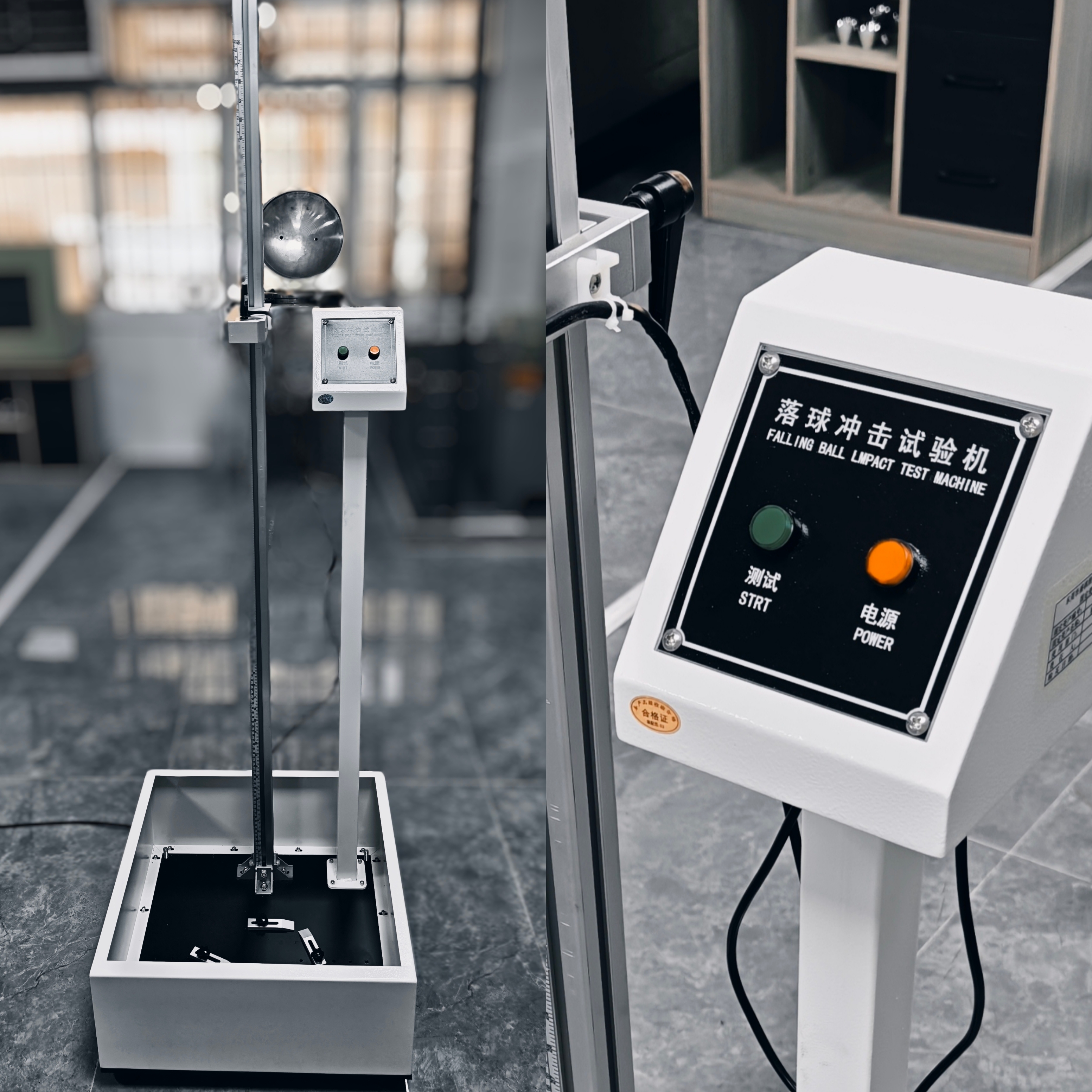
To eradicate these marketing illusions, a rigorous facility audit must demand physical proof of internal metrology. An authoritative manufacturer annihilates "fake lumens" by relying strictly on the internationally recognized ANSI/NEMA FL1 Standard. During your evaluation, you must verify the existence of physical Integrating Spheres for true luminous flux measurement, automated vacuum negative-pressure leak testing machines for hydrostatic integrity, and pneumatic drop-test platforms. A truly reliable supplier protects your retail margins by speaking exclusively through verifiable, hard laboratory data.
V. Protecting Your Margins with Wholesale LED flashlights
Inexperienced procurement managers frequently fixate on securing the lowest initial unit cost, a profound miscalculation that fatally ignores the Total Cost of Ownership (TCO). A marginally cheaper instrument procured from an unstable trading company ultimately incurs catastrophic hidden expenses. Because high defect rates precipitate expensive cross-border shipping for Return Merchandise Authorizations (RMAs), bloat your customer service overhead, and permanently devastate consumer trust, sourcing cheap hardware effectively becomes a massive financial hemorrhage.
Strategic retail resilience demands forging direct alliances with Reliable Flashlight Suppliers in China. By consolidating your procurement of Wholesale LED flashlights through a singular, heavy-asset source factory, you effortlessly bypass all middleman markups to secure genuine factory-direct pricing. More importantly, investing in a facility that enforces rigorous QA/QC protocols yields an exceptionally low defect rate. This resulting "maintenance-free" product lifecycle drastically reduces post-sale liabilities, fundamentally minimizing your TCO and securing long-term commercial profitability.
VI. Expert FAQ: Vetting Your Retail Supply Chain
Q1: How can an e-commerce brand verify if an led flashlight vendor genuinely controls their production schedule during Q4 peak seasons?
A legitimate manufacturer will demonstrate extensive raw material reserves and internal heavy-asset integration. You must request a live video audit focusing on their automated SMT lines and CNC turning centers. Because trading companies rely on fragmented external sub-contractors, they cannot physically control lead times during Q4 material shortages and will inevitably obfuscate when asked for real-time factory floor evidence.
Q2: Why might a retail brand face high RMA (Return) rates despite approving a flawless pre-production "golden sample"?
This catastrophic discrepancy is caused by a lack of atmospheric contamination control during mass production. A broker might assemble the prototype in a clean office, but the 50,000-unit bulk order is assembled in a dusty, unregulated workshop. Microscopic debris settles on the reflectors, causing dark artifacts in the beam that instantly trigger 1-star consumer reviews. This confirms why optically pure dust-free assembly zones are a mandatory vetting requirement.
Q3: How do elite Flashlight OEM ODM Manufacturers protect intellectual property when developing private molds for international brands?
An authentic source factory executes legally binding Non-Disclosure Agreements (NDAs) prior to any engineering exchange. Crucially, because they operate closed-loop, in-house manufacturing, your CAD blueprints and proprietary injection tooling never leave the facility. The private mold is securely archived internally, guaranteeing absolute market exclusivity and preventing your design from being sold to generic catalog competitors.