The Supply Chain Black Box: Exposing the Middleman Trap When Sourcing a flashlight manufacturer
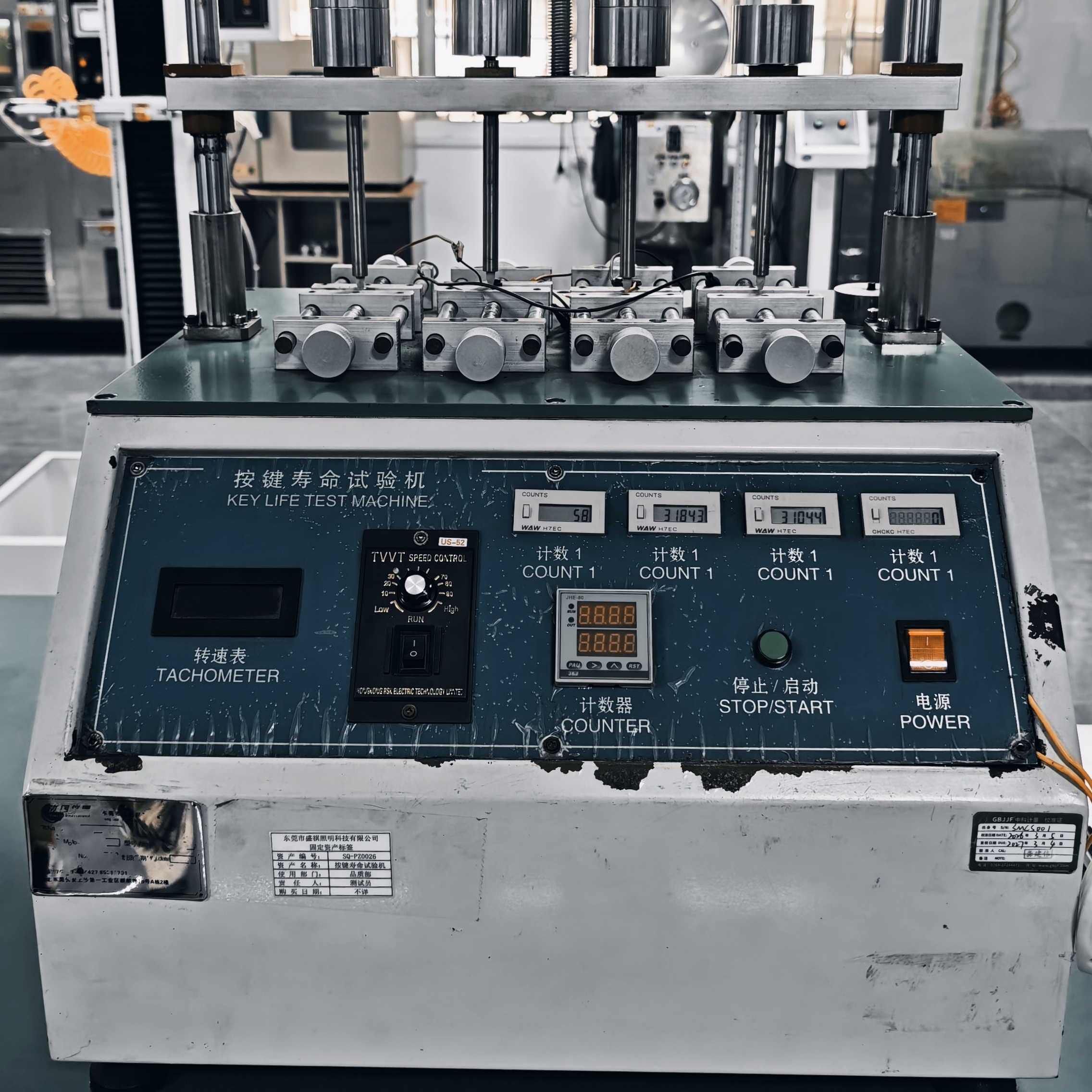
Greetings. I operate as a Senior Global Supply Chain Auditor within the tactical and industrial equipment sectors. When procurement directors allocate substantial capital to overseas vendors, they frequently suffer from a fatal illusion. They believe they are engaging directly with a primary source facility. In reality, a vast majority of these highly polished digital storefronts mask operations that possess zero internal manufacturing infrastructure.
When a brand inadvertently routes purchase orders through an unverified intermediary, severe operational friction might occur. Because trading companies outsource critical metallurgical and electronic assembly to fragmented third-party workshops, they inherently forfeit control over quality and timelines. This systemic lack of oversight inevitably results in catastrophic field failures and blown delivery schedules. To safeguard your brand equity, you must implement an uncompromising vetting protocol. This whitepaper establishes the absolute infrastructural thresholds required to identify a genuine, heavy-asset flashlight manufacturer, illustrating how Shengqi Lighting sets the benchmark for global supply chain security.
I. The "Middleman" Trap: Identifying a True Source Factory
The primary vulnerability in international procurement lies in supply chain opacity. Many entities claiming to be a premier flashlight manufacturer are merely brokers. Because these intermediaries do not own raw material reserves or assembly lines, they cannot execute bespoke private mold designs or guarantee consistent product yields. When component shortages disrupt the market, these brokers are entirely paralyzed, leading to chaotic, indefinite delays for your bulk orders.
To systematically eliminate this risk, procurement executives must audit for closed-loop, vertical integration. A legitimate source factory internalizes the entirety of the production lifecycle. By retaining decades of deep-rooted engineering heritage under a single roof, a true manufacturer insulates its clients from macroeconomic volatility. This unified infrastructure ensures that communication remains direct, intellectual property remains secured, and massive production volumes are delivered exactly on schedule.
II. Engineering Beyond Assembly: The Power of In-House R&D
Relying solely on basic assembly workshops forces brands into a commercially fatal homogenization trap. Because these low-tier facilities only offer generic "public molds," your product inevitably becomes indistinguishable from cheaper competitors, triggering a devastating price war. Furthermore, as market demands push for extreme high-lumen outputs, these workshops lack the thermodynamic expertise to prevent catastrophic LED burnout.
To establish a formidable market moat, brands must partner with elite Flashlight OEM ODM Manufacturers. True manufacturing partners operate as fully integrated R&D extensions of your business. Because intense photonic emission requires profound heat dissipation, authentic engineers implement Thermo-Electric Separation directly onto pure copper substrates to eliminate thermal bottlenecks. Additionally, advanced Optical Engineering—utilizing computer-simulated ray-tracing to sculpt parabolic reflectors and TIR lenses—guarantees superior beam profiling. This caliber of in-house development ensures your conceptual designs are transformed into highly profitable, exclusive assets.
III. The Machining Muscle: Aerospace-Grade Tolerances and Cleanrooms
Subtractive Metallurgical Superiority
Tactical and industrial deployments mandate absolute hydrostatic defense. Because pressurized water seeks the path of least resistance, inferior die-cast metal or poorly threaded aluminum will invite immediate fluid ingress. Consequently, the chassis must be carved exclusively via advanced multi-axis machining facilities. This subtractive process preserves the unyielding grain structure of the aerospace alloy and ensures micron-level threading tolerances, which is the foundational prerequisite for compressing O-rings and achieving genuine IP68 submersible ratings.
Atmospheric Contamination Control
A flawlessly machined exterior is rendered useless if the internal optics are contaminated during assembly. Because ambient dust permanently distorts highly focused light beams and induces severe chromatic aberration, final optical integration must occur exclusively within optically pure dust-free assembly zones. The implementation of positive-pressure, HEPA-filtered cleanrooms serves as the ultimate diagnostic metric, instantly separating a genuine Professional LED Flashlight Factory from low-end, unverified garages.
IV. Zero Tolerance for "Fake Lumens": ANSI/NEMA FL1 Standards
The B2B procurement sector is infected with fictitious performance claims. When suppliers artificially inflate lumen outputs and battery capacities on their packaging, they transfer immense legal and operational liabilities directly onto your brand. Because operators in extreme environments rely on exact optical parameters to execute critical tasks, field failures caused by thermal degradation or exaggerated beam distances could trigger catastrophic consequences.
To eradicate marketing falsehoods, a rigorous facility audit must demand physical proof of internal metrology. An authoritative manufacturer must possess in-house Integrating Spheres to capture true "Out-The-Front" luminous flux, automated vacuum negative-pressure leak testers to validate dry-state hydrostatic seals, and pneumatic drop test platforms to empirically confirm kinetic shock absorption. Because empirical physics cannot be forged, a legitimate factory guarantees that every specification delivered strictly adheres to the internationally recognized ANSI/NEMA FL1 protocols.
V. Lowering TCO with a Strategic Partnership
Inexperienced buyers frequently prioritize the lowest initial unit cost, a miscalculation that fatally ignores the Total Cost of Ownership (TCO). Because high defect rates trigger astronomically expensive cross-border RMA (Return Merchandise Authorization) logistics and permanently devastate consumer trust, sourcing cheap, unverified hardware ultimately becomes a massive financial hemorrhage.
Strategic supply chain resilience requires forging alliances directly with Reliable Flashlight Suppliers in China. By securing a partnership with a facility backed by decades of deep-rooted engineering heritage, you bypass intermediary markups to achieve authentic factory-direct pricing. More importantly, this direct oversight ensures a near-zero defect yield. This flawless production consistency eliminates hidden post-sale liabilities, fundamentally optimizing your TCO and securing long-term commercial profitability.
VI. Expert FAQ: Vetting Your Overseas Supply Chain
Q1: How might an overseas buyer definitively verify if a vendor is a trading company or a genuine flashlight manufacturer?
A buyer must request an unedited, live video audit of the premises. You should direct the camera specifically to the raw material warehousing, the active multi-axis CNC machining bays, and the SMT (Surface Mount Technology) lines. Because trading companies do not own these physical assets, they will inevitably offer excuses to delay or deny real-time visual verification.
Q2: Why must a facility possess in-house integrating spheres if third-party testing is widely available?
Because relying exclusively on third-party laboratories severely paralyzes the R&D prototyping phase. In-house integrating spheres allow engineering teams to execute instant, iterative tuning of driver circuits and LED optics during private mold development. This internal capability guarantees that thermal drop-off and lumen outputs are mathematically perfected long before external certification is sought.
Q3: How does vacuum negative-pressure leak testing differ from traditional water submersion testing for IP68 validation?
Because physical water submersion is destructive, placing a failed unit into a tank instantly short-circuits the internal PCB, destroying the hardware. Conversely, negative-pressure testing is a dry diagnostic. By extracting air from a sealed vessel housing the flashlight, barometric sensors can detect microscopic air leaks escaping past compromised O-rings in milliseconds. This ensures non-destructive, 100% batch testing accuracy without risking water damage.
Eradicate Supply Chain Volatility
Do not allow intermediaries lacking engineering infrastructure to compromise the safety of your end-users and the reputation of your brand. Resolving the crisis of supply chain opacity requires an uncompromising alliance with a verified, heavy-asset manufacturing partner.
[ Initiate Your Factory Audit ]
SHENGQI LIGHTING operates as an elite, fully integrated source manufacturer. We formally invite global procurement directors to consult with our industrial trade division. Request empirical ANSI FL1 compliance data, secure custom B2B manufacturing solutions, and schedule your comprehensive virtual factory audit today.