China vs. Vietnam for Flashlight Manufacturing: The Ultimate 2026 Sourcing Guide
China vs. Vietnam for Flashlight Manufacturing: The Ultimate 2026 Sourcing Guide
Quick Answer for 2026: If your flashlight project requires advanced technical capabilities, complex OEM/ODM customization, or massive scale, China remains the unmatched industry leader. If you are manufacturing simpler flashlight models and need to bypass steep US import tariffs, Vietnam is the premier "China+1" alternative, offering significantly lower labor costs.
The global flashlight industry is booming. Demand is surging across the outdoor recreation, emergency preparedness, and industrial safety sectors. For brands looking to manufacture flashlights—whether budget promotional giveaways or premium tactical-grade tools—two countries dominate the global sourcing conversation: China and Vietnam.
China has long been the undisputed king of flashlight production, boasting massive industrial clusters. Meanwhile, Vietnam has emerged as a compelling alternative, attracting billions in foreign direct investment (FDI) as companies adopt supply chain diversification strategies.
Which is right for your flashlight brand? This data-driven guide breaks down the pros and cons of manufacturing in China versus Vietnam to help you make the most profitable decision for your 2026 product roadmap.
Part 1: Flashlight Manufacturing in China
China accounts for approximately 30% of global industrial output. For flashlight production specifically, the country offers unparalleled advantages, alongside a few growing modern challenges.
✅ The Advantages of Chinese Factories
· The "Two-Hour" Supply Chain: China’s manufacturing ecosystem is completely vertically integrated. Hubs like Shenzhen (advanced electronics), Ningbo (high-volume exports), and Tianjin (ruggedized solutions) house nearly 90% of upstream suppliers within a two-hour radius, slashing component lead times.
· Advanced Manufacturing Capabilities: Chinese facilities lead the world in automation. They offer Surface Mount Technology (SMT) for PCB assembly, precision CNC machining for aerospace-grade aluminum housings, and automated IP-rated waterproof sealing.
· Massive Scale and Flexible MOQs: Factories can handle orders from single-unit prototypes to millions of pieces. Minimum Order Quantities (MOQs) scale effortlessly, from $0.19 budget promotional lights to premium $7.75+ tactical models.
· Deep OEM/ODM Customization: Suppliers offer extensive customization, including 6061-T6 aluminum, high-output LEDs (Cree, Nichia), advanced battery systems (built-in Li-ion with USB-C), and custom firmware.
· Skilled Engineering Talent: Chinese factories employ highly skilled engineers capable of solving complex thermal management and sophisticated driver circuit requirements.
❌ The Disadvantages of Chinese Factories
· Rising Labor Costs: Average factory worker wages have increased significantly over the last decade, impacting the margins on highly labor-intensive, budget-tier assemblies.
· Steep Import Tariffs: Depending on the target market (particularly the US), certain Chinese goods are subject to heavy duties, sometimes pushing total costs up by 25%.
· Environmental Compliance Costs: Stricter domestic environmental regulations require factories to invest in cleaner energy and waste treatment, adding to baseline production expenses.
· Quality Variability: The sheer size of the market means supplier quality varies wildly. Buyers must diligently request video audits, integrating sphere test reports, and sample evaluations to avoid substandard batches.
Part 2: Flashlight Manufacturing in Vietnam
Vietnam has rapidly become the darling of the "China+1" strategy, attracting US$20.5 billion in FDI for manufacturing and processing in 2024 alone.
✅ The Advantages of Vietnamese Factories
· Significant Labor Cost Savings: Vietnam offers average wages at approximately 70% of Chinese levels. A young, abundant workforce makes this highly attractive for labor-intensive, simpler flashlight assemblies.
· Favorable Tariff Access: Tariff differentials between China and Vietnam exports to the US can reach 20-25%. Combined with access to the EU-Vietnam FTA and CPTPP, the "Made in Vietnam" label offers massive duty relief.
· A Booming Industrial Ecosystem: With the government pushing manufacturing to 30% of the national GDP by 2030, heavy hitters like Samsung, Apple, and Foxconn are heavily investing in Vietnamese infrastructure.
· Government Investment Incentives: Vietnam offers attractive policies for foreign investors, including tax reductions for high-tech projects, land cost subsidies, and import duty exemptions for raw export materials.
· Strategic Geographic Proximity: Manufacturers frequently utilize a hybrid model, importing 60-70% of complex flashlight components from neighboring China for final, tariff-friendly assembly in Vietnam.
❌ The Disadvantages of Vietnamese Factories
· A Dependent Supply Chain: Vietnam lacks a deep, localized supply chain. Specialized LEDs, custom drivers, and precision-machined aluminum housings must still be imported from China, increasing logistics costs and overall lead times.
· Workforce Skill Gaps: While the workforce is eager, most workers hold only basic technical skills. Finding specialized engineers for complex quality control or sophisticated technical assembly remains challenging.
· Lower Labor Productivity: Vietnamese worker productivity is currently estimated at roughly 70% of Chinese levels, which can narrow the overall labor cost advantage when factored into high-volume runs.
· Infrastructure Limitations: Port congestion, slower customs clearance, and less developed road networks can extend lead times and complicate logistics compared to China's hyper-optimized export infrastructure.
Part 3: Head-to-Head Comparison
|
Sourcing Factor |
China |
Vietnam |
|
Supply Chain Maturity |
Complete ecosystem; incredibly fast sourcing |
Developing; reliant on imported components |
|
Technical Expertise |
High; advanced R&D and engineering |
Basic to intermediate; best for simple assembly |
|
Production Scale |
Massive; handles millions of units easily |
Growing; mid-sized factories are most common |
|
Lead Times |
Fast; predictable logistics |
Slower; vulnerable to infrastructure bottlenecks |
|
Labor Cost |
Higher, but offset by high productivity |
Lower (~70% of China), but lower productivity |
|
US Tariff Advantage |
Disadvantage; high duties on many products |
Advantage; lower duties and excellent FTA access |
|
Best Used For... |
Complex features, large volumes, tactical gear |
Tariff-sensitive exports, simple promotional models |
Part 4: Making the Right Choice for Your Brand
Choose Chinese Manufacturing If:
You need advanced technical capabilities like thermal optimization or complex firmware. It is also the best choice if you require rapid scaling from low MOQs to massive volumes, or if your primary sales markets are not severely impacted by US import tariffs.
Choose Vietnamese Manufacturing If:
Tariff avoidance is the critical pillar of your business model (especially for the US market). It is ideal if you are producing simpler everyday carry (EDC) or promotional flashlights, and you have the operational bandwidth to manage slightly longer lead times.
The Hybrid Approach (Best of Both Worlds):
Many top-tier flashlight brands now source complex components (LEDs, drivers, custom optics) from specialized Chinese suppliers, but perform final assembly in Vietnam. This secures favorable tariff treatment while maintaining high technical standards.
Part 5: Practical Sourcing Tips for 2026
· Verify Manufacturer Credibility: Always demand integrating sphere test reports for true lumen output, verify IP waterproof ratings, and ask for video walkthroughs of the production floor.
· Ensure Compliance: Confirm your products meet destination standards, including IEC 60598 (safety), RoHS (restricted substances), UN38.3 (lithium batteries), and FCC/CE marks.
· Start Small: Always begin with a trial order of 50-100 units to evaluate build quality, communication reliability, and logistics performance before committing to a mass production run.
Looking for the Perfect Manufacturing Partner?
The choice between China and Vietnam comes down to aligning factory capabilities with your specific business priorities.
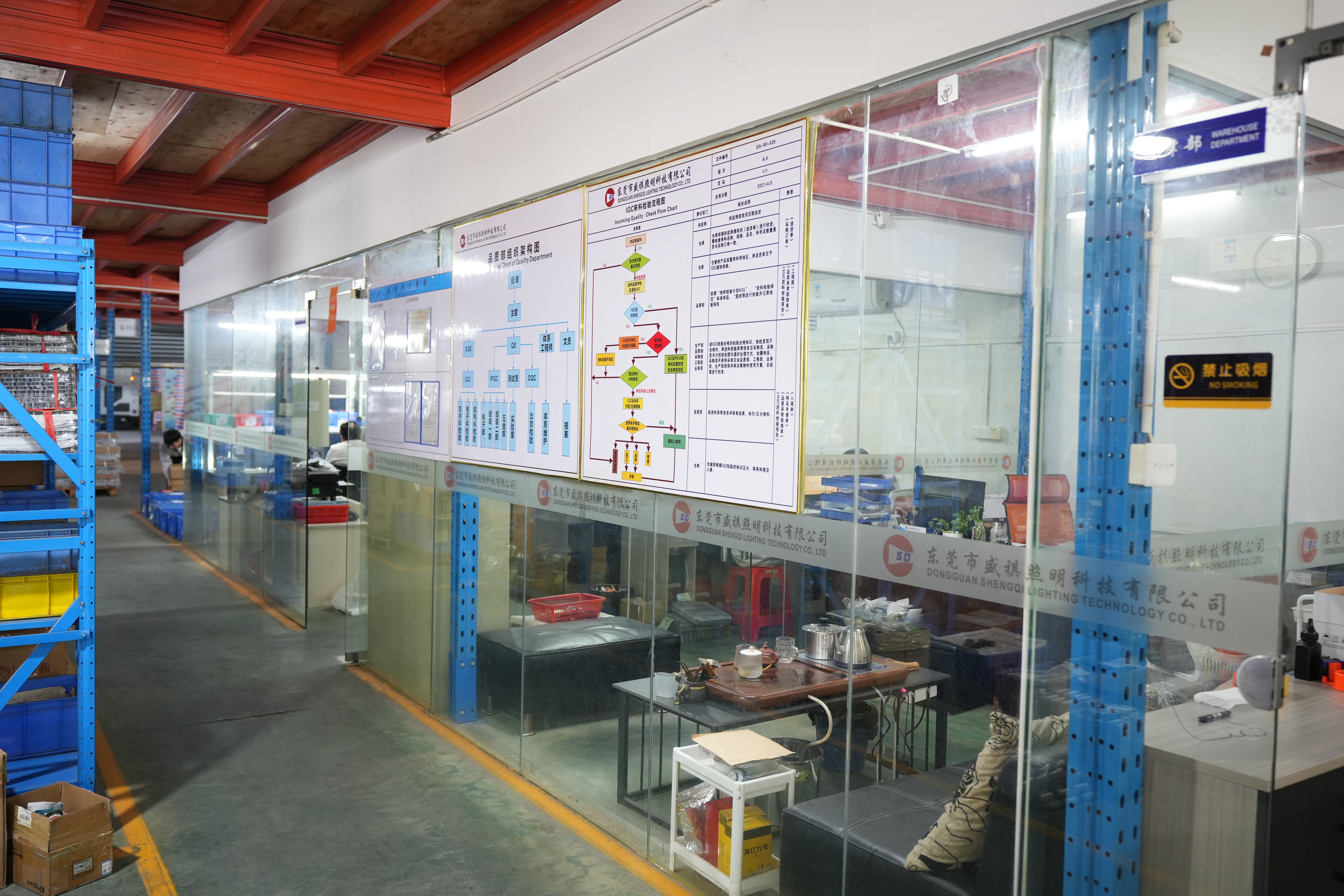
For industry-leading OEM/ODM manufacturing of flashlights, partner with Shengqi Lighting. We operate a state-of-the-art research and development center in Dongguan, China, paired with robust supporting factory resources in Vietnam. We offer the ultimate hybrid solution: solving your complex technical challenges while actively saving you money on assembly costs and cross-border tariffs.