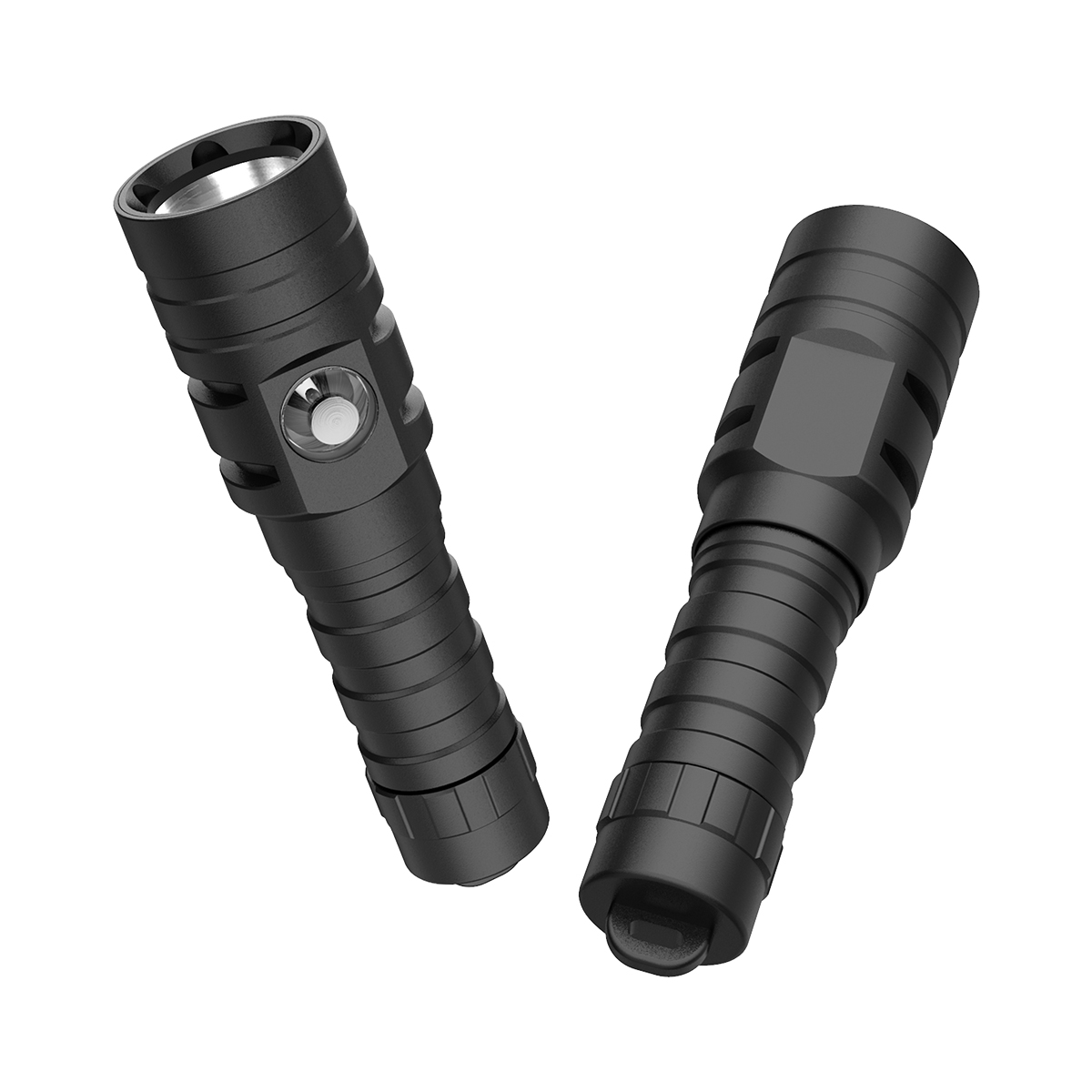
Flashlight Tech Guide: Understanding TIR Optics and Convex Lenses
Flashlight Tech Guide: Understanding TIR Optics and Convex Lenses
// Engineering Brief
As portable illumination evolves, the choice of optical components dictates the true performance of a flashlight. While traditional reflectors simply bounce light, modern lenses actively bend it. This technical glossary provides a comprehensive analysis of the Convex lens vs TIR debate, decodes the precise engineering behind the flashlight TIR lens, and evaluates critical flashlight optical lens material choices. Designed for B2B procurement managers and OEM designers, this guide from SHENGQI LIGHTING explores how refractive physics are manipulated to create the ultimate beam profile for tactical, EDC, and outdoor applications.
◈ The Physics of Refraction: What is a Lens?
To understand advanced flashlight optics, we must first separate lenses from traditional reflectors. Reflectors (such as SMO or OP cups) rely on reflection—bouncing photons off a mirrored surface to direct them forward.
A lens, however, operates on the principle of refraction. As light from the LED enters the dense medium of the lens (glass or plastic), its speed changes, causing the light path to bend. By precisely calculating the curvature and thickness of the lens, optical engineers can manipulate this bending effect to focus a scattered light source into a highly controlled, specific beam pattern.
◈ Convex & Fresnel Lenses: The Masters of Zoom
The Mechanics of Zoomable Flashlights
Convex lenses are thicker at the center and thinner at the edges, naturally converging light rays to a focal point. In the flashlight industry, convex lenses are the foundational component of zoomable flashlights (often called focus-adjustable torches). By designing a mechanical head that changes the physical distance between the stationary LED chip and the convex lens, users can switch smoothly and instantly between a tightly focused, long-range spot beam and a massive, wide-angle flood beam.
Fresnel Lenses: Thinning the Profile
Traditional large convex lenses can be heavy and bulky. To solve this, optical engineers utilize Fresnel lenses. A Fresnel lens uses a series of precision concentric grooves etched into a flat surface. These grooves mimic the curvature of a standard convex lens, allowing the optic to achieve large-area focusing while remaining exceptionally thin and lightweight.
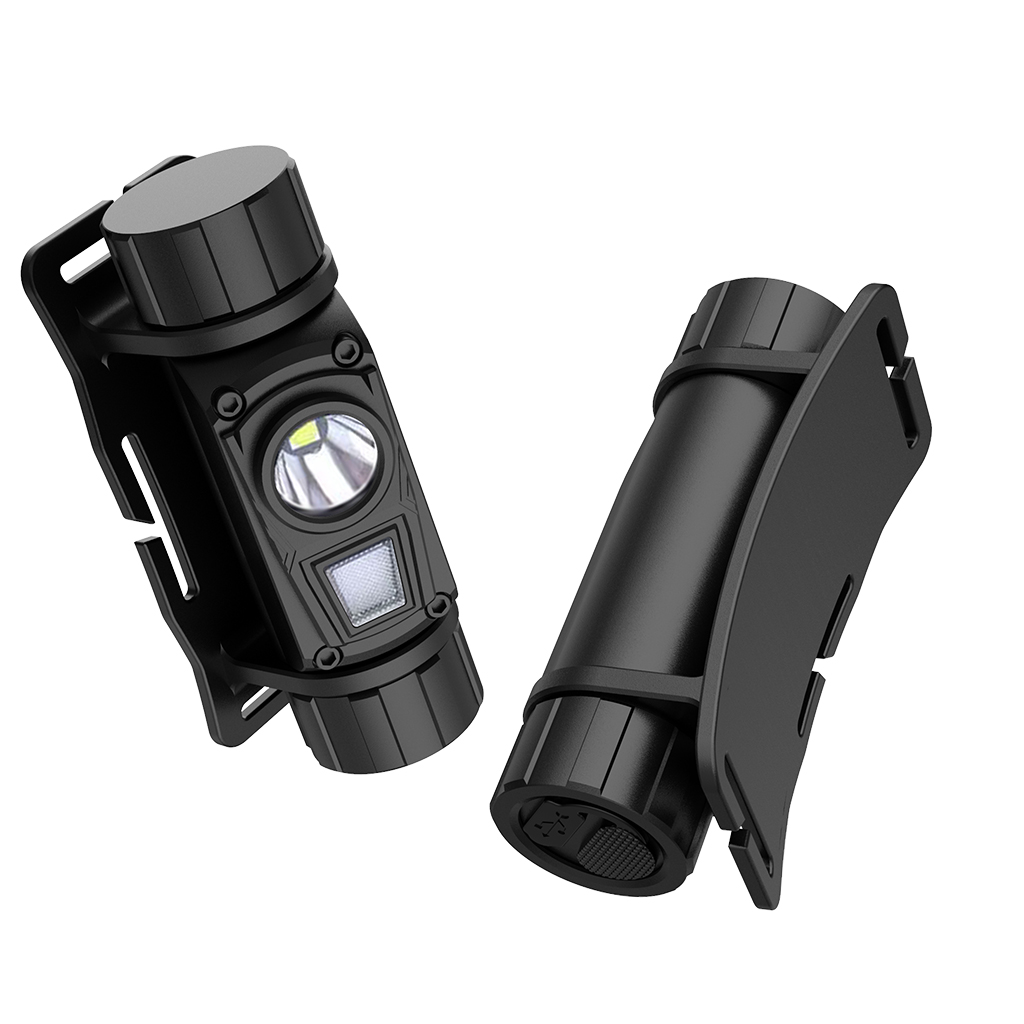
◈ TIR Optics (Total Internal Reflection): The Modern Standard
While convex lenses are excellent for variable focus, fixed-beam flashlights have seen a revolutionary shift toward the flashlight TIR lens. TIR stands for Total Internal Reflection.
A TIR optic is a masterpiece of optical engineering because it combines both reflection and refraction within a single solid structure. At the center of the TIR optic is a refractive lens that captures direct forward light. Surrounding it is a precisely angled conical body. This outer cone captures all the side-emitted light from the LED—photons that are normally wasted or lost as "spill" in a standard setup—and reflects them totally internally, pushing them straight forward.
Extremely High Light Utilization
By capturing and redirecting nearly 100% of the LED's output (including side-spill), TIR lenses boast unparalleled optical efficiency.
Flawless Beam Transition
Unlike the sharp, distinct edges of a reflector's hotspot, a TIR lens produces a highly natural, creamy beam transition with no hard edges or artifacts.
Compact Form Factor
TIR optics save a tremendous amount of space inside the flashlight head. This is why TIR is now the mainstream, dominant choice for premium headlamps and compact EDC flashlights.
◈ Flashlight Optical Lens Material: Glass vs. Plastic
The performance of an optical lens is heavily dependent on its substrate. When evaluating a flashlight optical lens material, engineers must balance light transmittance against durability and weight.
Optical Glass
Advantages: Glass offers superior optical clarity and exceptional light transmittance. It is naturally highly scratch-resistant, ensuring the lens remains clear even after prolonged exposure to abrasive environments (dust, sand).
Limitations: Glass is significantly heavier and inherently brittle, making it susceptible to shattering upon severe impact if not properly protected by a sturdy bezel.
Engineering Plastics (PMMA & PC)
Advantages: High-grade optical plastics like PMMA (Acrylic) or PC (Polycarbonate) are the standard for modern TIR lenses. They are dramatically lighter, safer, and highly drop-resistant compared to glass. They can also be injection-molded into highly complex geometric shapes with absolute precision.
Limitations: Without specialized hard-coatings, plastics are more prone to surface scratching over time.