Unmasking the Supply Chain: Exposing Trading Illusions When Sourcing an led torch factory
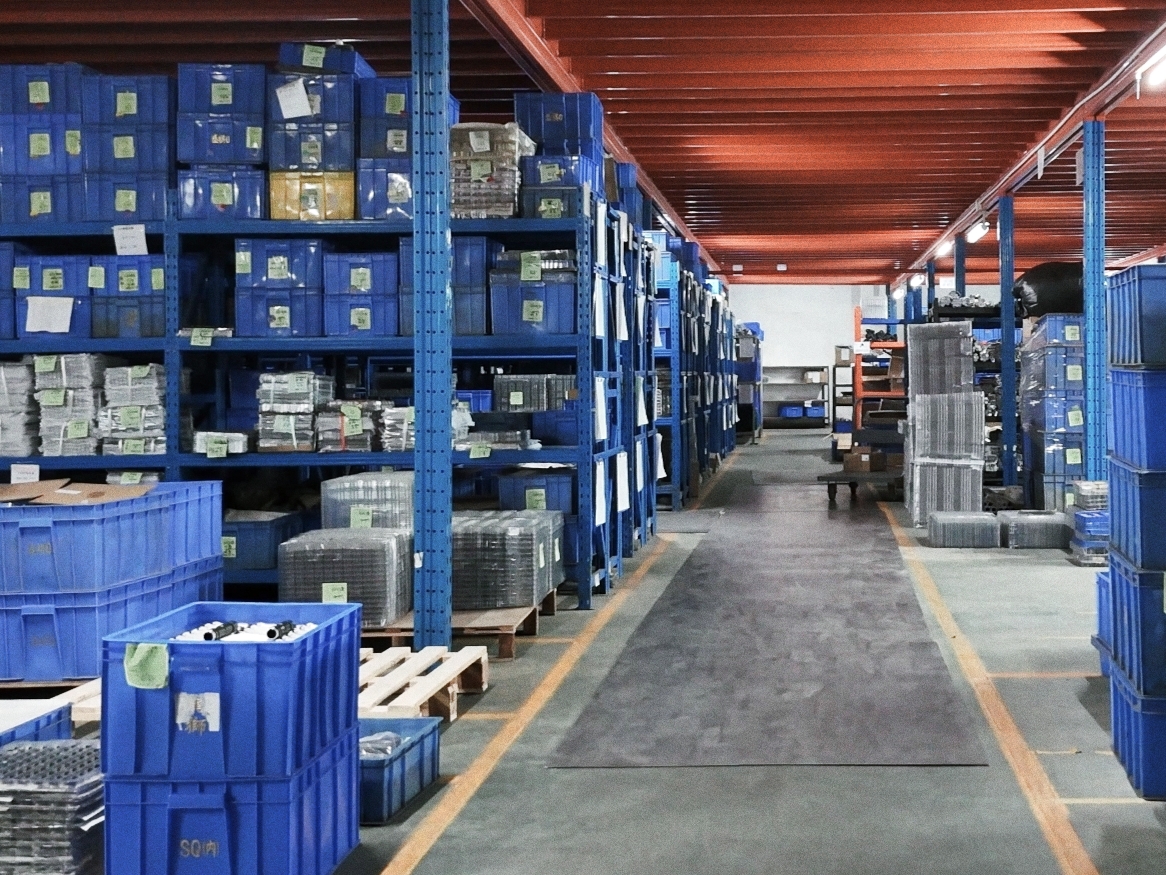
Greetings. Operating as a Senior Global Supply Chain Auditor within the European and Commonwealth markets, I consistently observe brands severely compromising their capital through blind overseas procurement. When procurement directors allocate vast budgets for professional outdoor and tactical equipment, they frequently fall victim to a digital illusion. They believe they are contracting a primary source manufacturer. In reality, a significant percentage of these polished digital storefronts mask operations that possess zero internal manufacturing infrastructure.
Because these intermediaries outsource every critical step of production, operational disaster becomes a mathematical certainty. Fragmented supply chains compound communication errors, induce severe metallurgical inconsistencies, and trigger catastrophic delays during peak retail seasons. To safeguard your brand equity, you must pierce this logistical facade. This document serves as the ultimate empirical vetting guide. We will dismantle the "black box" of international procurement, illustrating the absolute infrastructural thresholds that distinguish Shengqi Lighting’s decades of deep-rooted engineering heritage as the apex standard for industrial illumination manufacturing.
I. The "Middleman" Trap: Identifying a True Source Factory
The most profound vulnerability in international sourcing is misidentification. A vendor may heavily promote themselves as a premier led torch factory, yet behind the marketing veil lies a small office reliant on a precarious network of sub-contractors. When a trading company accepts your bulk order, they fracture the production process. Because they must outsource the aluminium machining to one facility and the circuit board integration to another, they surrender all control over the production timeline. Consequently, custom private mould requests become impossible to execute, and bulk order lead times spiral out of control.
To insulate your supply chain against macroeconomic shocks, you must partner with an entity that deploys closed-loop, vertical integration. A true source factory internalizes every stage of production—from the raw aerospace billet to the final diagnostic test. This centralization guarantees absolute accountability. By eliminating intermediary volatility, a manufacturer like Shengqi Lighting ensures that communication remains direct, intellectual property remains secured, and massive production volumes are delivered exactly on schedule.
II. Engineering Beyond Assembly: The Power of In-House R&D
Relying exclusively on basic assembly workshops traps brands in a perpetual cycle of homogenization. Because these low-tier facilities only offer "public moulds"—generic chassis designs available to any buyer—your product inevitably becomes indistinguishable from cheaper competitors. This triggers a devastating price war. Furthermore, as European outdoor markets demand extreme high-lumen outputs, these workshops lack the thermodynamic expertise to prevent catastrophic LED burnout.
To command premium market valuation, your hardware must evolve. An elite facility engaging in genuine torch light manufacture functions as an extension of your own brand’s engineering department. When you initiate a custom project, the facility must deploy dedicated Industrial Design (ID) teams. They must possess profound expertise in Optical Engineering to simulate ray-tracing trajectories for deep-dish parabolic reflectors. Crucially, they might mitigate extreme thermal bottlenecks by executing precise PCB Layouts, ensuring the semiconductor safely evacuates intense thermal loads. This full-stack R&D capability transforms a theoretical concept into an exclusive, high-margin asset.
III. The Machining Muscle: Aerospace-Grade Tolerances and Cleanrooms
Subtractive Precision Infrastructure
Tactical and industrial deployments inflict severe kinetic and hydrostatic stress upon equipment. Flimsy, die-cast components will inevitably fracture under pressure. To achieve true submersible defence and impact survivability, a factory must utilise massive advanced multi-axis machining facilities. By carving the chassis entirely from solid aerospace-grade aluminium, the metallurgical grain structure remains undisturbed. This guarantees micron-level thread tolerances, enabling perfect O-ring compression for unyielding submersible performance.
Atmospheric Contamination Control
An impeccably machined exterior is rendered useless if the internal optics are contaminated during assembly. Because ambient dust particles settling onto a highly polished reflector will induce severe chromatic aberration and structural dark spots within the beam profile, final optical integration must occur exclusively within optically pure dust-free assembly zones. The implementation of positive-pressure, HEPA-filtered cleanrooms serves as the ultimate diagnostic metric, instantly separating a genuine OEM torch light factory from low-end, unverified garages.
IV. Zero Tolerance for "Fake Specs": ANSI/NEMA FL1 Standards
The most pervasive fraud in global illumination procurement involves exaggerated performance metrics. Unverified vendors routinely publish theoretical "emitter lumens" while entirely ignoring severe optical loss and thermal throttling. The result is a device that promises staggering output but delivers a dim, overheated beam within minutes. Because operators in extreme environments rely on exact optical parameters to execute critical tasks, field failures caused by thermal degradation could trigger catastrophic consequences.
When auditing a manufacturing partner, empirical laboratory infrastructure must be validated. A legitimate manufacturer annihilates "fake lumens" by relying strictly on the internationally recognised ANSI/NEMA FL1 Standard. During your audit, you must verify the existence of physical Integrating Spheres for true luminous flux measurement, automated vacuum negative-pressure leak testing machines for hydrostatic integrity, and pneumatic drop-test platforms. A truly reliable supplier speaks exclusively through verifiable, hard data harvested from these torture labs.
V. Securing Wholesale Value with a Strategic Partnership
Inexperienced procurement managers frequently fixate on securing the lowest initial unit cost, a miscalculation that fatally ignores the Total Cost of Ownership (TCO). A marginally cheaper instrument procured from an unstable trading company ultimately incurs massive hidden expenses. Because high defect rates precipitate expensive cross-border shipping for RMAs (Return Merchandise Authorisations) and permanently devastate consumer trust, sourcing cheap hardware ultimately becomes an operational black hole.
Strategic supply chain resilience requires forging alliances directly with source manufacturers. When procuring Wholesale LED flashlights, aligning your enterprise with a factory supported by decades of deep-rooted engineering heritage allows you to bypass middleman markups. More importantly, investing in rigorous QA/QC protocols yields an exceptionally low defect rate. This resulting "maintenance-free" product lifecycle drastically reduces post-sale liabilities, fundamentally optimising your TCO and securing long-term commercial profitability.
VI. Expert FAQ: Vetting Your Overseas Supply Chain
Q1: How might a European buyer definitively verify if a vendor is a trading company or a genuine manufacturer?
Documentation alone is insufficient. You should demand a comprehensive, live video audit of the facility. Direct the camera specifically to the raw material warehousing, the active multi-axis CNC machining bays, and the SMT (Surface Mount Technology) lines. Because trading companies do not own these physical assets, they will inevitably offer excuses to delay or deny real-time visual verification.
Q2: Why must a facility possess in-house integrating spheres if third-party testing is widely available?
Relying exclusively on third-party laboratories severely paralyses the R&D prototyping phase. In-house integrating spheres allow engineering teams to execute instant, iterative tuning of driver circuits and LED optics during private mould development. This internal capability guarantees that thermal drop-off and lumen outputs are mathematically perfected long before external certification is sought.
Q3: When developing an exclusive private mould, how do elite OEMs protect our proprietary intellectual property (IP)?
An authentic OEM partner executes legally binding Non-Disclosure Agreements (NDAs) prior to any schematic exchange. Crucially, because true manufacturers control closed-loop production, your CAD files and proprietary tooling never leave the facility. The private mould is securely archived, guaranteeing absolute market exclusivity and preventing your design from appearing in a generic wholesale catalogue.
Eradicate Substandard Supply Chains
Do not allow intermediaries lacking engineering infrastructure to compromise the safety of your end-users and the reputation of your brand. Resolving the crisis of supply chain opacity requires an uncompromising alliance with a verified, heavy-asset manufacturing partner.
[ Initiate Supply Chain Evaluation ]
SHENGQI LIGHTING operates as an elite, fully integrated source manufacturer. We formally invite global brand procurement directors to consult with our industrial trade division. Request our empirical compliance data, schedule your comprehensive video factory audit, and secure your customised partnership proposal today.