The Science of Flashlight Thermal Management: Conduction, Materials, and Advanced Cooling
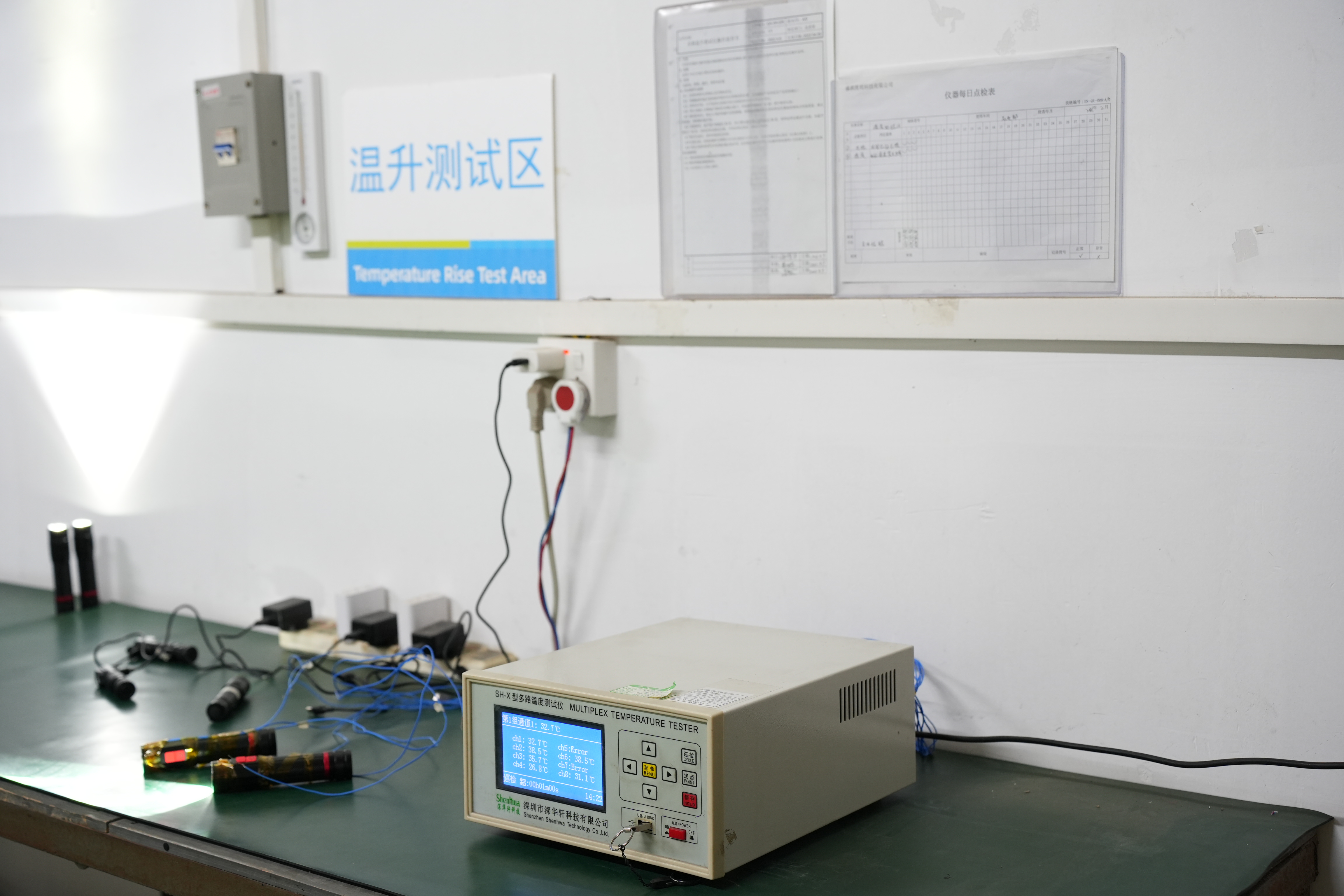
[ Failure Analysis: The Heat Cost of High Lumens ]
Hello, this is your Senior Thermal Engineer from SHENGQI LIGHTING. In the modern tactical illumination market, procurement officers are frequently misled by astronomical lumen claims. A buyer might procure a "5000-lumen" device, only to discover that within 60 seconds of activation, the flashlight becomes dangerously hot to the touch and aggressively dims to a mere 800 lumens.
This rapid degradation is not a battery failure; it is a catastrophic failure in high lumen flashlight thermal design. The underlying physics are inescapable: while Light Emitting Diodes (LEDs) are highly efficient, they still convert a massive percentage of their electrical input into raw thermal energy. If this localized heat is not instantly evacuated from the semiconductor junction, the internal thermistor will trigger an Advanced Temperature Regulation (ATR) protocol, artificially choking the electrical current to prevent the diode from incinerating itself.
Therefore, sustained optical performance is strictly a byproduct of superior Flashlight Thermal Management and Heat Dissipation. To solve the problem of thermal throttling, we must engineer a flawless thermodynamic pathway from the microscopic LED core to the ambient atmosphere.
I. The Physics of Evacuation: Three Modes of Dissipation
The core engineering objective is rapid thermal evacuation. To achieve this, the device must leverage three distinct thermodynamic processes simultaneously.
1. Thermal Conduction
Conduction is the transfer of heat through solid materials via atomic vibration. In our application, this is the critical first stage. The heat must physically travel from the microscopic LED chip, through the solder joints, into the circuit board substrate, and finally diffuse into the heavy metal of the external flashlight housing. If the materials in this path possess low thermal conductivity, conduction halts, creating a fatal thermal bottleneck.
2. Thermal Convection
Once thermal energy saturates the exterior metal housing, it must be transferred to the surrounding fluid (ambient air or water). This is convection. As the atmospheric air immediately adjacent to the flashlight heats up, it expands and rises, naturally drawing cooler, denser air over the metal surface to continuously extract heat.
3. Thermal Radiation
Radiation is the emission of thermal energy in the form of electromagnetic infrared waves directly from the flashlight's surface into the environment. While less dominant than convection in standard environments, engineers can significantly optimize radiation by applying specific surface treatments, such as Mil-Spec Hard Anodizing, which increases the surface emissivity of the aluminum.
II. Material Science: Substrate Metallurgy
The velocity of thermal conduction is strictly governed by the selected metallurgy. When analyzing aluminum vs copper flashlight cooling, procurement managers must evaluate the trade-offs between thermal dynamics, total mass, and manufacturing costs.
6061-T6 Aerospace Aluminum Alloy
With a thermal conductivity ($k$) of approximately 167 W/m·K, 6061-T6 aluminum serves as the undisputed industry standard for flashlight housings. It provides the absolute perfect equilibrium between rapid heat dissipation, structural rigidity, and lightweight portability. For 95% of tactical and EDC applications, aluminum offers the most efficient thermal routing without burdening the operator with excessive weight.
Pure Copper Integration
Copper boasts a vastly superior thermal conductivity of nearly 385 W/m·K. It acts as an aggressive thermal sponge, absorbing extreme transient heat spikes far faster than aluminum. However, copper is incredibly dense, rendering a solid copper flashlight unmanageably heavy for tactical carry. Furthermore, raw copper oxidizes rapidly. Consequently, expert engineers reserve pure copper strictly for internal components—such as the LED mounting pill or the DTP substrate—where maximum thermal extraction is critical.
Thermally Conductive Plastics
Advanced polymers infused with metallic fillers offer high injection-molding formability. However, their thermal conductivity remains inherently low (typically 1 to 10 W/m·K). These materials must be strictly limited to low-power auxiliary lighting where substantial heat is not generated, as they cannot support high-lumen tactical diodes.
III. Under the Hood: The Internal Thermal Path
Transporting heat from the semiconductor to the external housing requires bridging several distinct physical layers. If any of these layers act as an insulator, the entire cooling system fails. As a dedicated MCPCB flashlight OEM, we deploy two critical technologies to enforce a flawless thermal path.
TIMs (Thermal Interface Materials)
When two flat metallic surfaces meet (such as the base of the PCB and the internal aluminum shelf of the flashlight), microscopic imperfections create tiny voids. These voids trap atmospheric air. Because air is a catastrophic thermal insulator ($k \approx 0.026$ W/m·K), these microscopic gaps will block heat transfer. We utilize precisely metered Thermal Paste or highly compressible Thermal Pads (TIMs) to fill these voids, establishing a continuous, highly conductive physical bridge between the components.
MCPCB (Metal Core Printed Circuit Board)
Standard fiberglass circuit boards (FR-4) will instantly incinerate under the thermal load of a high-power LED. Therefore, LEDs must be reflow-soldered onto an MCPCB. These specialized boards utilize a solid Aluminum or Copper base layer. For extreme-output models, we employ Direct Thermal Path (DTP) technology, which removes the dielectric insulating layer directly beneath the LED, allowing the semiconductor to physically contact the bare copper core for zero-resistance thermal evacuation.
IV. External Engineering: Unibody & Cooling Fins
Once the internal components have effectively routed the thermal energy to the exterior, the geometric design of the chassis dictates the final rate of convective dissipation. Every high-end tactical light acts as a custom LED flashlight heat sink.
- Unibody Metal Housing: By CNC machining the optical head and the primary body from a single, continuous billet of aluminum, we eliminate structural seams. Threaded joints introduce thermal resistance. A unibody construction allows the thermal energy to flow smoothly down the entire longitudinal axis of the device, utilizing the mass of the battery tube to assist in cooling.
- Precision Cooling Fins: Radiating outward from the optical head, engineers cut deep, parallel grooves. These cooling fins exponentially increase the exposed geometric surface area of the metal. A larger surface area maximizes the boundary layer where thermal convection occurs, drastically accelerating the rate at which heat is exhausted into the ambient air.
- The Passive Cooling Imperative: You might ask: why not just install a micro-fan? While active cooling (fans) is occasionally used in massive 50,000-lumen searchlights, professional duty gear must rely strictly on Passive Cooling. Fans introduce moving parts that fail, require ventilation ports that destroy IP68 waterproof ratings, and suck abrasive dust into the circuitry. Passive cooling is solid-state, silent, and structurally invincible.
V. Technical Parameter Matrix: Substrate Evaluation
The empirical data below illustrates the distinct engineering trade-offs between the primary substrates utilized in thermodynamic management.
Secure Your Thermodynamic Engineering Partner
Procuring high-lumen equipment without verifying the underlying thermal management architecture is a severe supply chain liability. Standard trading agencies cannot solve thermodynamic bottlenecks. As a specialized manufacturing authority, SHENGQI LIGHTING operates an advanced R&D laboratory capable of engineering bespoke DTP copper substrates and precision CNC cooling geometries.
[ OEM Procurement Protocol ]
We formally invite global tactical brands, law enforcement suppliers, and industrial distributors to consult with our thermal engineering division. Whether you require a custom aluminum unibody design or an ultra-efficient MCPCB integration, we will execute your vision without compromising sustained output.