
What is a lightweight rechargeable pocket flashlight?
A lightweight rechargeable pocket flashlight is a compact portable light designed for everyday carry, using a rechargeable battery platform while keeping the body small enough for pockets, keychains, travel kits or emergency backup. This product category needs to balance brightness, size, weight, battery capacity and heat behavior. High lumen output can support short task lighting, but it should not be judged separately from battery system and mode planning. E5 is a 1500LM, 14500 lithium battery, 27.6g without battery EDC flashlight case. B2B buyers should evaluate user scenario, charging structure, housing material, mode logic, packaging language and production consistency before developing this type of compact flashlight.
Why Lightweight High Output Matters in Everyday Carry
Many EDC users want a flashlight they can actually carry every day. A larger flashlight may offer more battery capacity or a more substantial grip, but it is often left at home, inside a bag or in a vehicle when users do not expect to need it.
Small lights solve the carry problem, but they can feel weak if the output is too limited. This is where compact high-output design becomes attractive for brands, distributors and gift product lines. The challenge is that high output in a small body must be managed carefully because heat, battery capacity and user expectations all affect real satisfaction.
A 1500 lumen EDC flashlight should not be treated only as a headline number. For a compact product, lower modes, battery planning, charging structure, housing material and honest packaging language are just as important as maximum output.
What Makes a Lightweight Rechargeable Pocket Flashlight Different?
A lightweight rechargeable pocket flashlight is defined by carry comfort and practical readiness. If the product is small but uncomfortable to carry, too weak to solve common tasks or confusing to recharge, the compact size alone does not create lasting value.
Rechargeable design changes how users maintain the product. Instead of replacing disposable cells frequently, users expect the charging structure to be convenient, protected and easy to understand. For compact high-output products, the battery platform, charging area, output modes and user instructions must be planned together.
Aluminum body structure can improve product feel and durability perception compared with very basic disposable-looking small lights. Concealed charging design can also support a cleaner, more integrated appearance for pocket and keychain carry.
A lightweight rechargeable pocket flashlight is successful when users carry it often and trust it for real tasks. The goal is not only to make the light smaller, but to balance brightness, battery, structure, weight and everyday usability.
E5 Case Study: A 1500LM Lightweight Rechargeable Pocket EDC Flashlight
E5 is an EDC flashlight positioned as a lightweight rechargeable pocket flashlight, 1500 lumen EDC flashlight, compact rechargeable EDC light and pocket keychain flashlight for daily carry, pocket lighting, keychain lighting, backpack lighting, travel lighting, vehicle emergency, household backup, compact outdoor backup, gift product lines, distributor EDC product lines and civilian ODM flashlight projects.
The 1500LM high mode supports short-duration bright supplemental lighting and temporary open-area visibility in a small EDC body. Medium 650LM, Low 150LM and Moon 20LM are important because many daily tasks do not require maximum brightness.
The 117 meters maximum range fits pocket-level, travel backup and compact outdoor backup scenarios. It should not be overstated as a professional long-range searchlight. For this product category, practical readiness and carry comfort are central to the value.
The 14500 750mAh lithium battery supports compact rechargeable EDC positioning. The concealed charging port on the lamp body helps maintain a more integrated product appearance and supports convenient charging without adding a visually exposed charging feature.
The 6063 aluminum alloy body and anodized black finish give this mini rechargeable flashlight a stronger product feel. IPX4 is suitable for daily splashing and light outdoor exposure, not diving or deep-water use. The 1-meter impact resistance fits ordinary daily carry risk rather than heavy industrial protection.
How Should Buyers Think About 1500LM in a Compact EDC Body?
High output in a compact body should be treated as task-based brightness. A small high lumen pocket flashlight can provide a strong burst of useful light, but user expectations must match the body size and battery capacity.
Lower modes are important because many daily tasks happen at close range. A 20LM moon mode can support nighttime checks, bag searching, room navigation and low-glare use where maximum brightness would be unnecessary or uncomfortable.
B2B buyers should avoid writing unrealistic runtime claims without formal testing. Packaging and manuals should clearly explain how High, Medium, Low, Strobe and Moon modes are intended to support different everyday carry tasks.
Why Concealed Charging Design Matters for Pocket Flashlights
Charging convenience matters for rechargeable EDC products. Users expect a compact rechargeable flashlight to be easy to maintain, but they also expect the body to look clean and suitable for daily carry.
An exposed or poorly protected charging area may affect daily wear perception, especially when the light is carried with keys, tools, pocket accessories or travel items. A concealed charging port can support a cleaner integrated look and help the product feel less like a disposable gadget.
For B2B product planning, concealed charging should be evaluated with sealing design, user access, charging instructions, storage guidance and packaging explanation. The product should make charging understandable while preserving the visual and structural identity of a compact pocket flashlight.
Lightweight Rechargeable Pocket Flashlight vs Full-Size EDC Flashlight
Both lightweight pocket lights and full-size EDC lights can be valuable. The better choice depends on carrying habits, expected output, battery needs, retail positioning and the product role within a brand line.
| Selection Factor | Lightweight Rechargeable Pocket Flashlight | Full-Size EDC Flashlight | Buyer Takeaway |
|---|---|---|---|
| Carry comfort | Designed to reduce pocket burden and support frequent carry. | May feel more substantial but can take more space. | Choose by how often users will actually carry the light. |
| Pocket readiness | Suitable for pockets, keychains, travel kits and compact backup use. | Often better for users willing to carry a larger tool. | Readiness depends on size, weight and user habit. |
| Output expectation | High output should be positioned as task-based brightness. | Can support broader output positioning depending on body and battery design. | Maximum brightness should be matched with product size. |
| Battery capacity | Usually limited by compact size and lightweight body goals. | Can use larger battery systems depending on form factor. | Battery claims should match the physical design. |
| Heat behavior | Requires careful output and mode planning in a small body. | May have more body mass for heat spreading depending on structure. | Do not separate output claims from heat expectations. |
| Mode planning | Moon, low and medium modes are very important for daily use. | May support more mode variety depending on electronics. | Useful lower modes improve real EDC value. |
| Charging structure | Concealed charging can support a cleaner integrated appearance. | Charging structure may be easier to access because body space is larger. | Review access, sealing and user instructions. |
| Retail positioning | Fits gift lines, compact EDC retail, travel accessories and distributor assortments. | Fits users who accept more size for more substantial flashlight capability. | The retail story should match the product category. |
| Emergency backup value | Useful because it is easy to keep nearby in daily life. | Useful when users intentionally store or carry a stronger flashlight. | Backup value depends on availability and suitability. |
| B2B product positioning | A compact high-output option for civilian ODM flashlight projects. | A broader platform for larger-capacity or more specialized EDC lines. | Neither type is automatically better for every market. |
What Should B2B Buyers Ask Before Developing a Lightweight Rechargeable Pocket Flashlight?
B2B buyers should not choose a lightweight rechargeable pocket flashlight only because it is small and bright. A successful product should match real carrying habits, battery capacity, heat behavior, charging structure, mode logic, packaging language and retail positioning. These eight questions help structure a custom EDC flashlight project before production.
Is the product meant for pocket, keychain, travel or gift use?
Different scenarios require different product stories. A keychain light, travel backup light, gift item and distributor EDC product line may need different packaging, size emphasis and mode explanation.
What output is realistic for the body size?
Compact high-output products need careful positioning. A 1500 lumen EDC flashlight can be attractive, but the copy should explain how high output fits short task lighting and compact backup use.
Does the battery capacity match user expectations?
The 14500 750mAh lithium battery supports compact rechargeable positioning. Buyers should align battery capacity, body size, output modes and user instructions before writing product claims.
Are lower modes useful for daily tasks?
Many daily tasks need controlled brightness rather than maximum output. Medium, low and moon modes can support practical use in bags, rooms, vehicles, campsites and travel kits.
How is the charging port protected or integrated?
Charging structure affects appearance, user access and daily wear perception. A concealed charging port should be reviewed for access, sealing, assembly tolerance and instruction clarity.
Is the housing material suitable for repeated carry?
A pocket light may rub against keys, bags and accessories. Aluminum body material and anodized finish can improve product feel, but buyers should still review real carry conditions.
How should packaging explain compact high-output limitations?
Packaging should explain intended applications, output modes, charging guidance and product limits clearly. This reduces user misunderstanding and protects the product line from overpromising.
Can the manufacturer give ODM feedback before production?
An ODM partner should review user scenario, compact structure, output planning, battery capacity, charging-port design, aluminum body manufacturing, packaging expression and manufacturability before production decisions are locked.
How SHENGQI LIGHTING Supports Lightweight EDC Flashlight ODM Projects
SHENGQI LIGHTING is the brand of Dongguan Shengqi Lighting Technology Co., Ltd., with manufacturing roots dating back to 1981. Dongguan Shengqi Lighting Technology Co., Ltd. was formally established in 2008. The company focuses on flashlights, portable lighting products and OEM/ODM manufacturing services.
The company’s product portfolio includes EDC flashlights, pen lights, outdoor flashlights, tactical flashlights, headlamps, camping lights, hunting lights, diving lights, tooling lights, accessories and OEM products. For lightweight rechargeable pocket products such as E5, the value is not only production capacity. The value is the ability to connect user scenario, compact structure, high-output planning, battery capacity, charging-port design, aluminum body manufacturing, packaging explanation and repeatable production.
The company supports OEM/ODM services including Industrial Design, Optical Engineering Design, Electronic Design, Packaging Design, Manufacturing and Testing. Its factory capabilities include about 130,000 square feet of manufacturing space, 75 CNC machines, one fully automated SMT production line, two welding production lines and eleven dust-free assembly lines.
CNC machines support aluminum body manufacturing and dimensional consistency. The automated SMT line supports electronic assembly, while welding lines and dust-free assembly lines support production control. Testing resources help evaluate switch life, vibration, drop, luminous performance, temperature behavior, high- and low-temperature behavior, waterproof performance and battery behavior. The ISO9001 quality management system supports organized manufacturing management for civilian portable lighting projects.
Frequently Asked Questions
1. What is a lightweight rechargeable pocket flashlight?
A lightweight rechargeable pocket flashlight is a compact everyday-carry light designed to provide practical backup illumination while staying small enough for pockets, keychains, bags, travel kits or vehicle emergency storage. It uses a rechargeable battery platform instead of relying only on disposable batteries. This type of product should balance output, body size, weight, battery capacity, charging structure, heat behavior and user expectations. For B2B buyers, the category is useful for EDC gear lines, travel accessories, gift programs and distributor compact lighting assortments.
2. Is 1500 lumens enough for an EDC flashlight?
Yes, 1500 lumens can be enough for an EDC flashlight when the product is positioned for short-duration high-brightness support and compact backup lighting. Maximum output should not be judged alone. In a small body, lower modes may be more useful for everyday tasks because they reduce glare and match close-range use. The E5 also includes Medium 650LM, Low 150LM and Moon 20LM, which help support more practical daily carry situations. B2B buyers should match lumen claims with battery, body size and user instructions.
3. What battery does the E5 flashlight use?
The E5 flashlight uses a 14500 750mAh lithium battery. This battery platform supports compact rechargeable EDC product positioning and helps keep the body small while allowing useful output modes. It should not be described as using AA, AAA, 18650, 21700 or other battery formats based on the product data used for this article. For product development, buyers should evaluate battery capacity, body size, output mode logic, charging instructions and user expectations together before creating packaging or sales copy.
4. What is the concealed charging port used for?
The concealed charging port is used to support convenient charging while helping the flashlight maintain a cleaner and more integrated body appearance. For pocket and keychain products, charging-port design affects user experience, visual quality and daily wear perception. A concealed charging structure can make the product look more refined than a visibly exposed charging area. B2B buyers should still review user access, sealing design, charging instructions, storage guidance and assembly consistency before launching a compact rechargeable flashlight product.
5. Is the E5 waterproof?
The E5 is specified with an IPX4 waterproof grade in the product data used for this article. IPX4 is suitable for daily splashing and light outdoor exposure, which can match many pocket lighting, travel backup, household backup and compact outdoor backup uses. It should not be described as IPX8, IP67, IP68, diving-rated or suitable for deep-water use. Buyers should review sealing structure, charging-port protection, assembly consistency and packaging explanation before positioning the product for a specific outdoor market.
6. What should buyers check when sourcing compact high-output EDC flashlights?
Buyers should check the intended use case, body size, weight, output modes, battery capacity, charging structure, housing material, waterproof grade, impact resistance, packaging explanation and production consistency. For compact high-output EDC products, heat behavior and battery expectations are especially important because the body is small. Buyers should avoid writing runtime, charging interface or certification claims unless confirmed by formal product data. A sourcing review should also include user instructions and retail positioning.
7. How can brands develop a custom lightweight EDC flashlight with SHENGQI LIGHTING?
Brands can begin by defining the target user, carry method, brightness goal, battery platform, concealed charging structure, aluminum body design, waterproof expectations, packaging instructions and production requirements. SHENGQI LIGHTING supports custom EDC flashlight and lightweight rechargeable pocket flashlight ODM projects through Industrial Design, Optical Engineering Design, Electronic Design, Packaging Design, Manufacturing and Testing. Product managers and OEM/ODM sourcing teams can use the contact page for project discussion.
Choose Lightweight EDC Products by Carry Value and Real Use
A lightweight rechargeable pocket flashlight solves the balance between frequent carry and high-brightness backup lighting. It should not be evaluated by weight or lumen output alone.
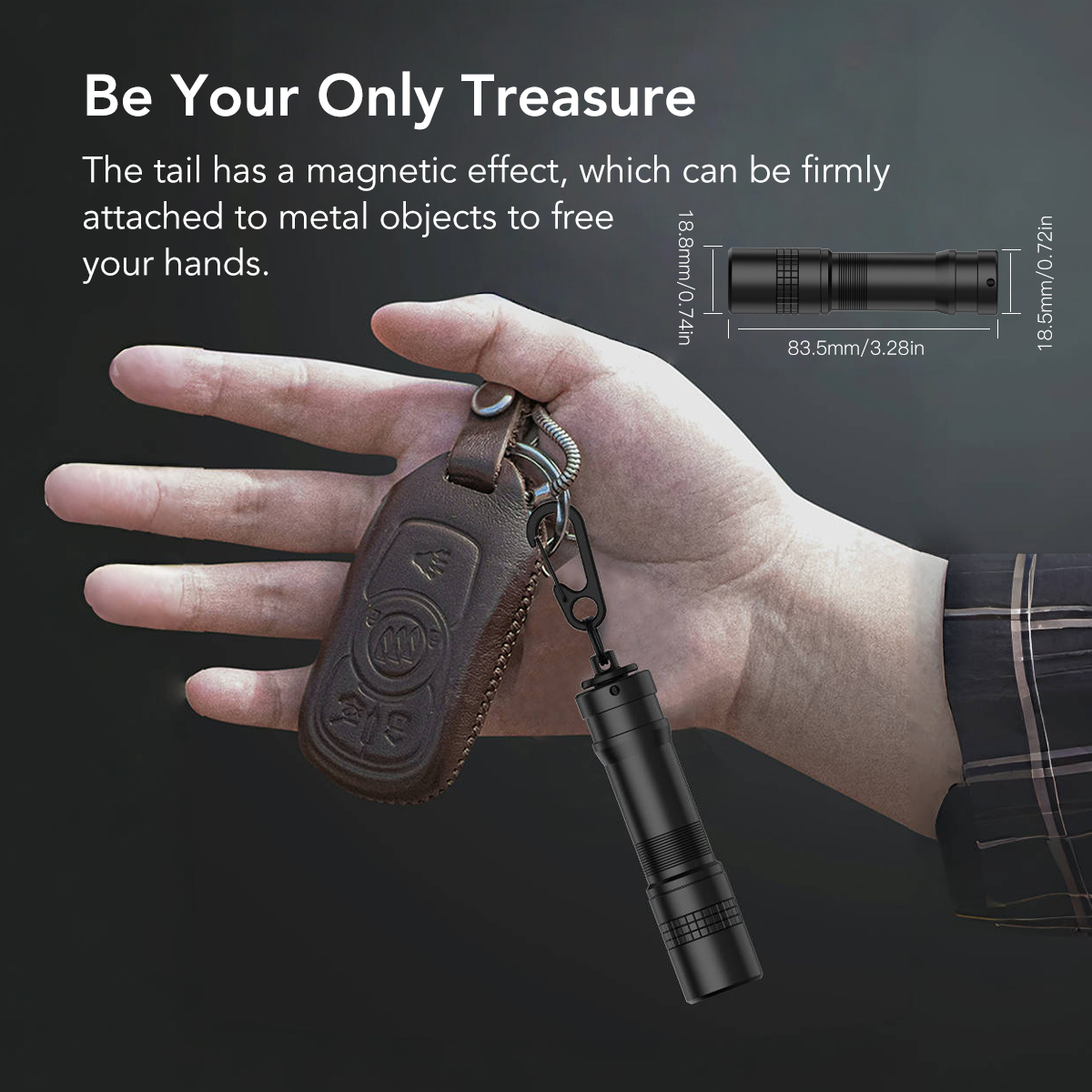
E5 demonstrates this direction through 1500LM high output, a 14500 750mAh lithium battery, concealed charging port, 6063 aluminum alloy construction, anodized black finish, 83.5mm × 18.8mm size and 27.6g without battery lightweight body.
Users should evaluate size, weight, brightness, modes, battery capacity, heat behavior, charging structure and real application before choosing a compact rechargeable EDC flashlight. B2B brands developing lightweight high-output EDC products should review user carrying habits, battery expectations, heat behavior, packaging expression and mass-production consistency. SHENGQI LIGHTING can support lightweight EDC flashlight ODM development, manufacturing and testing for civilian product lines.
Develop Compact High-Output EDC Flashlight Projects Around Real Carry Needs
EDC gear brands, outdoor product brands, travel accessory brands, automotive emergency kit brands, promotional gift brands, distributors, importers, product managers and OEM/ODM sourcing teams can discuss lightweight rechargeable pocket flashlight projects, compact high-output EDC development, concealed charging structure, 14500 battery system selection, aluminum body design, packaging and user instructions, ODM development, manufacturing and testing with SHENGQI LIGHTING.
For project communication, you may also contact the team by email at [sales@shengqilight.com](mailto:sales@shengqilight.com).