Revolutionizing EDC & Work Lights: The Y1 Flat Flashlight Engineering Brief
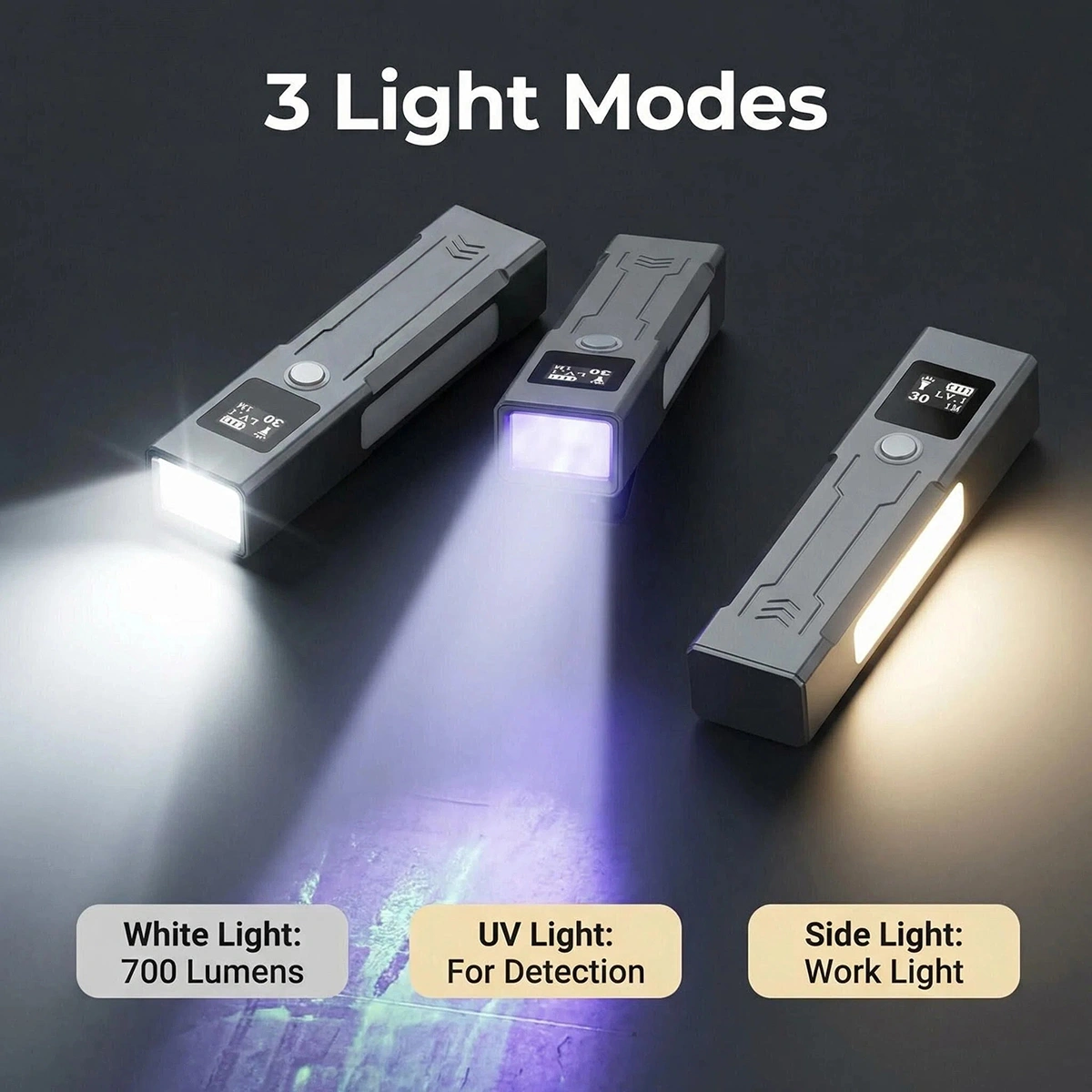
Within the rigorous disciplines of automotive diagnostics, forensic investigation, and Everyday Carry (EDC) logistics, the traditional cylindrical illumination tool presents severe geometric and operational limitations. A cylinder, by its very physical nature, possesses a uniform radius that guarantees uncontrolled kinetic rolling on inclined or vibrating surfaces. Furthermore, combining standard white-light illumination with specialized ultraviolet (UV) and localized flood capabilities typically requires an operator to carry three separate, distinct devices.
This technical dossier deconstructs the engineering solution to these persistent industry challenges. We analyze the exact metallurgical and electronic architecture of the SHENGQI Y1—an uncompromising Flat EDC Flashlight engineered to consolidate a high-intensity primary beam, an NDT-grade UV emitter, and an area-flood COB into a single, pocket-optimized chassis. As a premier 2026 Canton Fair flashlight supplier, SHENGQI LIGHTING is releasing this documentation to equip global distributors and forensic procurement directors with the empirical data necessary for critical sourcing decisions.
[ Operational Analysis: The Cylindrical Deficit ]
The ubiquitous cylindrical flashlight body is a byproduct of legacy battery manufacturing (specifically, the housing of round alkaline cells). While cost-effective to turn on a standard lathe, a cylinder is a catastrophic shape for an industrial work environment. When an automotive mechanic places a cylindrical flashlight on a sloped vehicle chassis, the low coefficient of static friction and the absence of flat retaining edges cause the device to roll instantly into the engine bay or onto the concrete floor, resulting in optical misalignment or shattered lenses.
In the context of EDC, a 30mm diameter aluminum cylinder creates severe ergonomic displacement (bulging) when stored in tactical trousers or an inspection vest. This uneven weight distribution causes premature fabric wear and limits the operator's physical mobility. The solution requires abandoning the cylindrical paradigm entirely and adopting a rectangular, planar extrusion powered by advanced lithium-polymer chemistry.
01. Structural Engineering: The Flat EDC Chassis
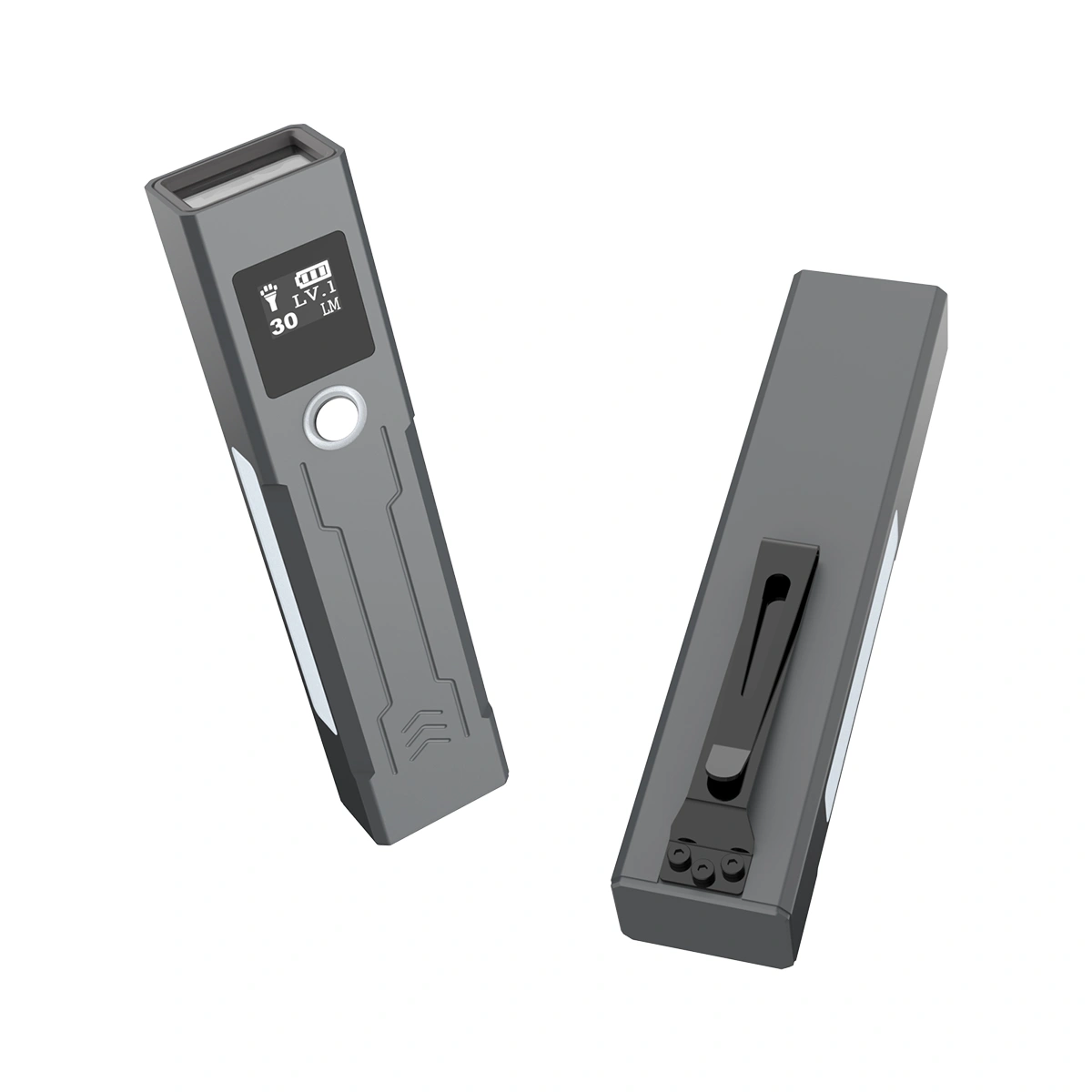
To rectify the geometric flaws of legacy illumination tools, the SHENGQI Y1 is engineered with an ultra-slim, rectangular planar topography. This is the definitive architecture for a modern Flat EDC Flashlight.
Precision Dimensional Tolerances
The Y1 is strictly confined to a dimensional footprint of 138mm (length) x 30.5mm (width) x 20.5mm (thickness), with a total operational weight of merely 133g. Unlike cylindrical bodies that are rapidly turned on a lathe, achieving these tight rectangular tolerances requires multi-axis CNC milling. The aerospace-grade aluminum billet must be continuously repositioned to carve out the internal cavities for the flat battery, the side-emitter array, and the dual-button interface, ensuring maximum structural rigidity with minimum wall thickness.
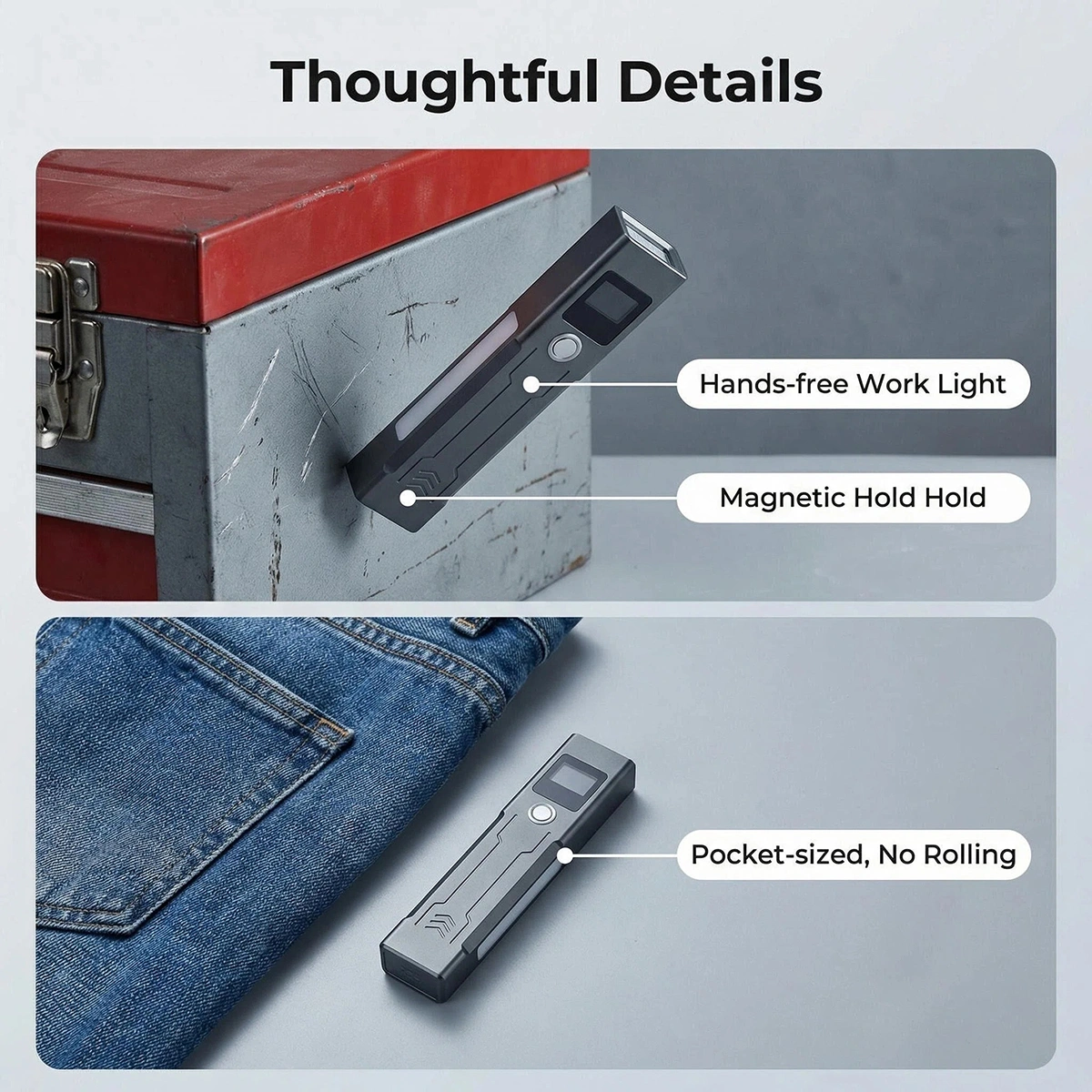
The Anti-Roll Imperative: The flat, rectangular profile intrinsically eliminates the risk of kinetic rolling. The device boasts a static coefficient of friction that ensures it remains securely anchored on inclined engine blocks, inclined roofing, or uneven tactical surfaces. When slipped into a pocket, the 20.5mm thickness lies completely flush against the operator's leg, delivering unparalleled, zero-print ergonomic concealment.
02. Multidisciplinary Optics: Primary, UV, and COB Integration
The Y1 establishes a new paradigm in optical consolidation. It operates as a highly integrated 3-in-1 UV Magnetic Pocket Light, effectively replacing three specialized tools. This requires sophisticated printed circuit board (PCB) layouts to isolate the driver currents for three entirely different semiconductor emitters.
Primary Emitter: Tactical White Light
The primary optical pathway houses a high-efficiency LED delivering a 700-lumen Turbo burst. This provides immediate, piercing illumination for threat identification or long-distance scanning.
Conversely, the driver utilizes advanced constant-current regulation to step down to a highly stable 10LM Moonlight mode. This sub-lumen setting is mathematically calibrated to prevent ocular fatigue when reading maps or inspecting close-up wiring in absolute darkness, preserving the operator's natural night vision.
Forensic Emitter: 365nm-370nm UV
Standard commercial ultraviolet lights use cheap 395nm diodes that emit a blinding purple visible glare, masking faint fluorescent reactions. The Y1 integrates a professional-grade 365nm-370nm UV LED.
This exact wavelength triggers peak fluorescence (Stokes shift) in specific chemical phosphors while emitting almost zero visible light. It is an absolute necessity for law enforcement counterfeit currency detection, CSI forensic biological fluid investigation, and HVAC/automotive refrigerant leak detection (NDT).
Area Illumination: COB Side Light & Magnetic Base
Embedded into the lateral face of the rectangular chassis is a high-density COB (Chip-On-Board) LED array. Unlike directional reflectors, COB technology provides a perfectly uniform, 180-degree hemispherical floodlight without multiple shadow artifacts.
To maximize utility, the Y1 features a heavy-duty neodymium magnetic tail base. By snapping the high-flux magnet onto a car hood, server rack, or ferrous pipeline, the operator instantly transforms the Y1 into a highly stable, hands-free area work lamp.
03. Micro-Electronics: Li-Po Power & Telemetry
Achieving an ultra-slim 20.5mm profile precludes the use of standard 18650 or 21700 cylindrical lithium-ion cells. The Y1 is powered by a high-discharge, built-in 1000mAh Lithium Polymer (Li-Po) pouch cell. This chemistry allows the battery to perfectly mold to the rectangular internal cavity of the chassis, maximizing energy density per cubic millimeter. It features a standardized Type-C charging port for rapid power replenishment.
OLED Display Integration
Operating in critical environments requires precise power management; guessing remaining battery life via simple indicator LEDs is unacceptable. The Y1 integrates a high-contrast OLED display screen directly into the aluminum chassis. Driven by an advanced Microcontroller Unit (MCU), the display provides real-time telemetry data to the operator, including exact battery voltage percentages, active lumen output settings, and estimated remaining runtimes. This sophisticated digital interface ensures absolute operational predictability.
04. Technical Parameter Matrix
The following empirical matrix demonstrates the vast engineering advantages of the Y1 flat chassis compared to traditional cylindrical EDC flashlights.
Sourcing Authority: SHENGQI LIGHTING at Canton Fair 2026
The Y1 series is not a static product; it is a modular platform. As a premier Rechargeable Tooling Light OEM, SHENGQI LIGHTING offers unparalleled customization protocols to global brand agents and forensic equipment distributors.
[ Customization Matrix ]
- » Advanced UI Programming: We can engineer specialized firmware variants, such as the PT-Y1 model, incorporating distance measuring logic or Color Correlated Temperature (CCT) stick functions directly into the OLED interface.
- » Brand Identity: Comprehensive laser engraving on the flat chassis and fully bespoke, drop-tested retail packaging.
- » Industrial Scale: Manufactured within our 130,000 sq. ft. ISO9001 facility, backed by over 40 years of metallurgical and electronic engineering expertise.
As the leading 2026 Canton Fair flashlight supplier, we invite procurement directors to Booth 16.4G18.
SCHEDULE VIP MEETING & REQUEST SAMPLES07. Frequently Asked Questions (FAQ)
Q1: How does a flat CNC machined chassis dissipate heat compared to a cylinder?
While a cylinder offers radial symmetry, the Y1's flat chassis features a massive planar surface area. This allows the internal copper heat sink to distribute thermal energy rapidly across the wide aluminum faces, resulting in highly efficient convective cooling.
Q2: Why is the 365nm UV wavelength specifically required for forensic use?
Standard 395nm UV LEDs emit a heavy violet visible light that masks faint fluorescence. The 365nm-370nm spectrum used in the Y1 outputs virtually zero visible light, allowing the investigator to see pure, high-contrast fluorescent reactions from bodily fluids or security dyes in total darkness.
Q3: What communication protocol does the OLED display use?
The integrated OLED screen interfaces with the primary Microcontroller Unit (MCU) via $I^2C$ (Inter-Integrated Circuit) or SPI protocols. This allows for rapid, low-latency telemetry updates regarding voltage drops and active lumen modes.
Q4: Is a Li-Po pouch cell safe inside a flashlight body?
Yes. The 1000mAh Li-Po cell is governed by a dedicated Battery Management System (BMS) integrated into the PCB. This enforces strict Over-Charge Voltage Protection (OCVP), Over-Discharge Voltage Protection (ODVP), and Short Circuit Protection (SCP), all shielded by the rigid aluminum exterior.
Q5: Can the PT-Y1 variant calculate distance?
Yes. Depending on the exact OEM specification requested, the firmware and hardware layout can be adapted to integrate laser-ranging modules or specific CCT (Correlated Color Temperature) tuning logic, displaying the precise metrics on the OLED screen.