Flashlight Housing Material Comparison for OEM Buyers
Direct answer: there is no universally best flashlight housing material. Aluminum alloys usually offer the most balanced combination of weight, heat spreading, machinability, finishing options and cost. Titanium can suit premium, corrosion-sensitive or weight-conscious designs, while stainless steel is useful where wear resistance and a substantial feel matter more than minimum mass. Engineering polymers can reduce weight, isolate electrically and enable complex molded geometry. The correct choice depends on the application, housing process, finish, tolerances and evidence behind the specified grade.
A useful flashlight housing material comparison must therefore go beyond “stronger” or “more premium.” Buyers should compare complete systems: material grade and condition, wall thickness, joint design, heat path, manufacturing route, surface treatment, sealing interfaces and production controls. A well-designed aluminum housing may outperform a poorly detailed titanium one, and a polymer body can be the rational engineering choice for applications that do not need a metal shell.
01.Start With the Operating Requirement
Housing selection begins with what the flashlight must survive and how it will be used. A compact everyday-carry light prioritizes mass, pocket comfort and finish durability. A duty light may prioritize impact resistance, grip, switch protection and repeatable battery access. A work light may need broad heat-dissipating surfaces and magnetic or articulated features. A marine or chemically exposed product adds corrosion and material-compatibility questions.
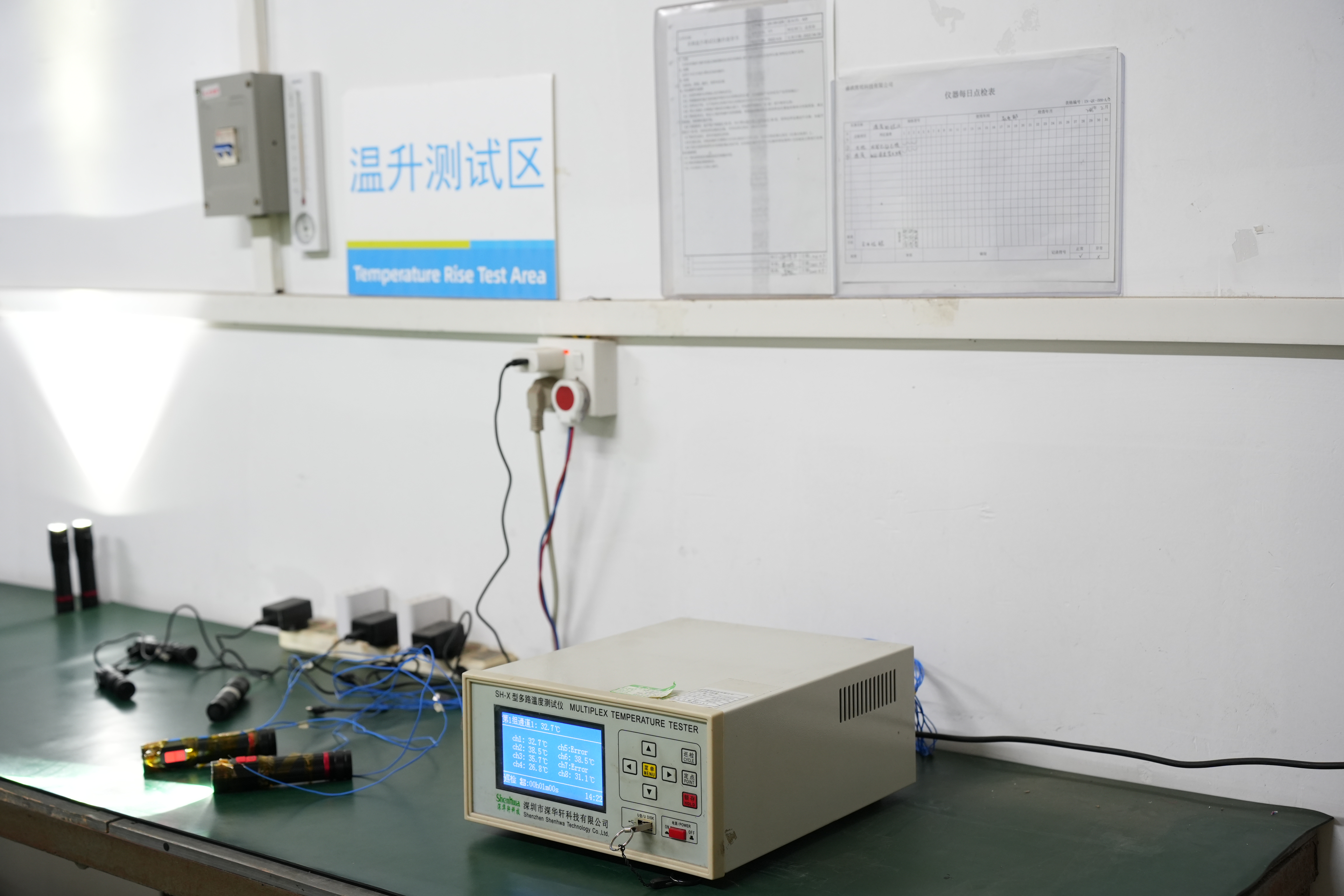
Thermal behavior deserves special attention. The housing is often part of the heat path from the LED assembly to the environment. Material conductivity matters, but it is only one variable. Contact area, interface quality, wall geometry, surface area, airflow, driver regulation and operating mode can matter just as much. Buyers should ask for stabilized output or thermal validation for the finished design instead of inferring performance from the alloy name alone.
The general flashlight range and tactical flashlight category illustrate why one portfolio may contain different housing formats. Category context is useful, but the model specification remains the controlling source.
02.Housing Material Comparison
| Material family | Typical advantages | Design cautions | Common decision context |
|---|---|---|---|
| Aluminum alloys | Low density, useful heat spreading, broad machining and finishing options | Grade, temper, wall thickness, threads and finish must be controlled | Balanced portable-lighting designs |
| Titanium alloys | High strength-to-weight potential, corrosion resistance, distinctive premium appearance | Higher material and machining cost; less effective heat spreading than aluminum; galling risk at threads | Premium or corrosion-sensitive niches |
| Stainless steel | Wear and corrosion resistance, strong threads and impact-tolerant feel | Higher mass and lower thermal conductivity than aluminum; machining can be slower | Bezels, clips, wear parts or compact premium bodies |
| Engineering polymers | Low mass, electrical insulation, corrosion resistance and molded design freedom | Heat path, creep, UV exposure, additives, inserts and sealing geometry need validation | High-volume, lightweight or electrically isolated designs |
These are tendencies, not specifications. “Aluminum,” “titanium,” “stainless” and “plastic” each describe broad material families. A purchase document should name the grade and condition where they are critical, plus permitted alternatives and the approval process for any substitution.
03.Aluminum: 6061, 7075 and the Design Around Them
6061-series aluminum is widely considered when a project needs a practical balance of machinability, corrosion behavior, structural performance and anodizing response. 7075-series aluminum can provide higher strength in an appropriate temper, but that does not make it automatically superior for a flashlight. Material cost, machining behavior, corrosion protection, availability and the actual load case all affect the decision.
The selected grade cannot compensate for an undersized thread, abrupt stress concentration, weak impact geometry or inadequate thermal contact. Conversely, a carefully designed 6061 housing may deliver more than enough structural performance while simplifying sourcing and finishing. If the product uses a mixed-metal clip, bezel or fastener, galvanic compatibility and environmental exposure should also be reviewed.
Anodizing is a conversion layer, not paint applied over an unchanged surface. Alloy chemistry, surface preparation, coating process, geometry and sealing influence appearance and performance. Color variation may occur between lots or components, and a cosmetic requirement should define the acceptable reference and inspection lighting. “Hard anodized” should be supported by the project’s finish specification and test criteria rather than used as an undefined sales phrase.
Failure modes a material name will not prevent
Housing failures often begin at details that a catalog material label does not describe. Thin walls can dent or distort; sharp internal transitions can concentrate stress; poorly supported threads can strip; incompatible metal pairs can corrode in a wet electrolyte; and finish buildup can change the fit of threads or seal grooves. A heavy housing may still fail an impact event if its lens, battery contact or switch support moves under shock. A strong alloy can also transmit more force to a fragile internal component.
This is why prototype and validation plans should represent the completed flashlight. Dimensional inspection of the empty housing is necessary, but it does not replace assembled tests under the intended battery mass, temperature, closure condition and operating mode. When the application includes repeated drops, salt exposure, abrasive wear or frequent battery changes, the test plan should reproduce those use conditions as closely as the project risk requires.
04.CNC Machining, Die Casting and Molded Housings
CNC machining is often suitable for prototypes, lower-to-medium volumes, cylindrical bodies and designs that need controlled threads or frequent revisions. It can create precise features, but cycle time, material removal, tool access and setup affect cost. Surface marks and edge conditions still require defined acceptance criteria.
Die casting can support higher-volume metal parts with integrated ribs, bosses and complex geometry. It requires tooling investment and design-for-casting decisions such as draft, parting lines, ejection and machining allowances. Porosity, dimensional stability and secondary machining need controls appropriate to the sealed or structural features. A cast housing should not be assumed weaker or cheaper without the specific design and volume context.
Injection molding enables polymer housings with integrated grips, ribs, snap features and overmolded interfaces. Resin grade, reinforcement, moisture conditioning, shrinkage, knit lines, inserts and long-term creep can affect performance. When a polymer shell participates in sealing or supports fasteners, the joint must be validated after environmental conditioning and repeated use.
An OEM program may also combine processes: a machined aluminum heat-spreading core, molded outer grip, stainless wear components and an elastomeric switch interface. SHENGQI LIGHTING’s manufacturing page provides company-level context, while the exact process route and subcontracted operations should be confirmed in the model-level project record.
05.What OEM Buyers Should Put in the Specification
Grade, temper or resin designation; source document; approved alternative process.
Threads, seal grooves, wall limits, mating interfaces and inspection method.
Process, appearance reference, protected areas and measurable acceptance criteria.
Impact, thermal, corrosion, ingress or wear tests relevant to intended use.
A useful supplier review also asks how incoming material is identified, which dimensions are critical, how finish lots are approved and how engineering changes are controlled. The quality overview can support the discussion, but buyers should still request records tied to the exact SKU and production lot.
For a new private-label design, the material decision belongs inside the wider OEM and ODM development process. Final selection should follow requirements review, design feasibility, prototype evaluation and agreed verification—not a material-name shortcut.
06.Frequently Asked Questions
Review the Housing Plan for Your OEM Project
Share the application, target volume, weight, finish and environmental requirements so the material and manufacturing route can be reviewed as one system.
Contact the Engineering Team