The Ultimate Pocket Tool: Sourcing the Y1 3-in-1 Flat EDC Flashlight
[ Operational Analysis: The Cylindrical Deficit ]
The fundamental architecture of portable illumination has remained largely stagnant for a century. The cylindrical housing, initially designed to accommodate the linear stacking of alkaline dry cells, introduces severe geometric and ergonomic limitations in modern professional environments. For a forensic investigator mapping a crime scene or an automotive technician inspecting a complex transmission bay, a cylindrical tool acts as an unstable liability. Placed on any inclined or vibrating surface, a cylinder obeys the laws of kinetic physics: it rolls, loses optical alignment, and frequently falls, resulting in mechanical damage.
Furthermore, the volumetric profile of a cylinder creates severe ergonomic displacement. When an operator secures a 30mm cylindrical flashlight into a tactical trouser pocket or a standard laboratory coat, the circular geometry generates a centralized focal point of pressure. This not only creates an unsightly, prominent bulge but also accelerates fabric wear and restricts the operator's physical mobility in confined spaces. The professional sector requires an entirely new structural paradigm.
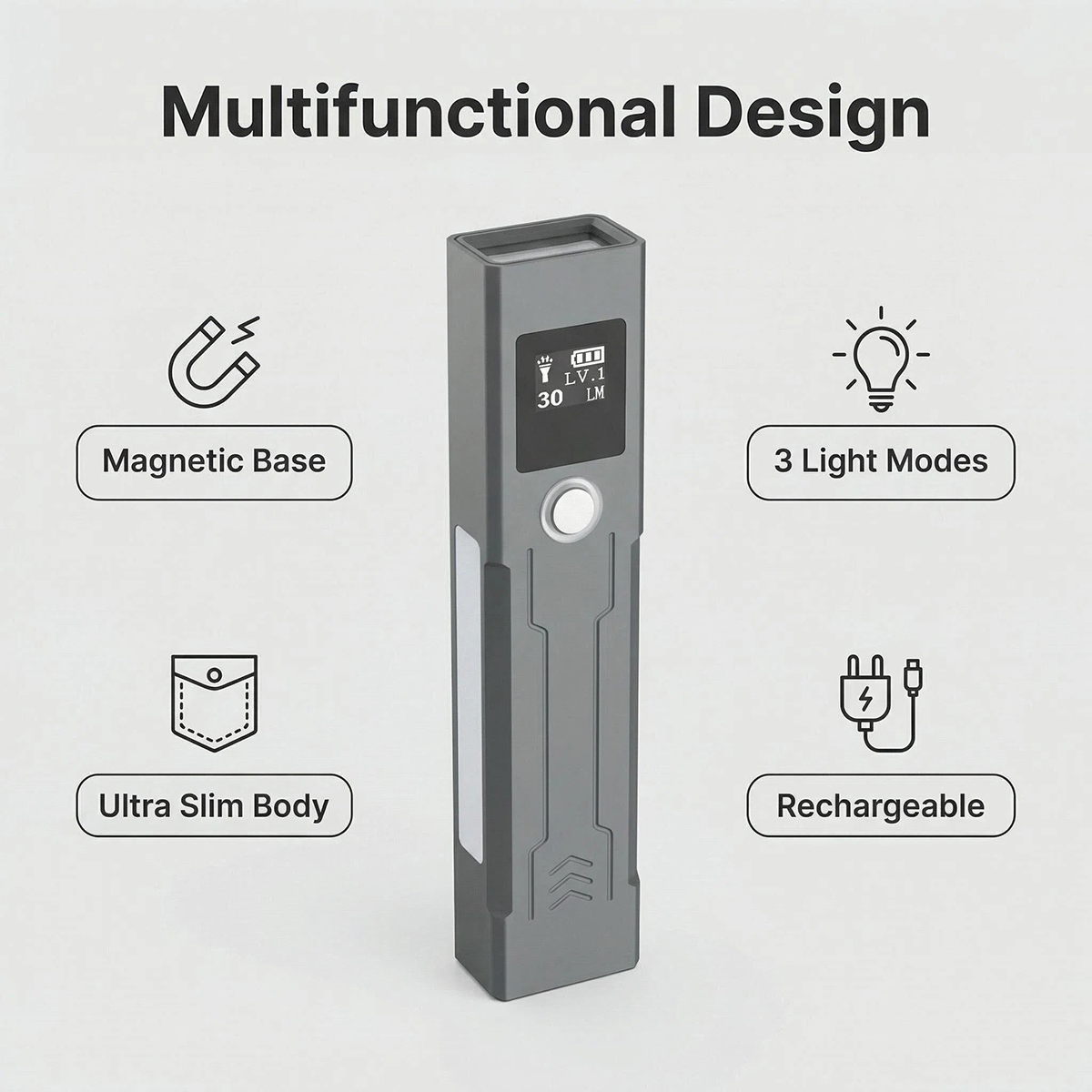
To resolve these operational deficits, engineers at SHENGQI LIGHTING have entirely abandoned rotational symmetry. The result is the Y1—a highly specialized, multidisciplinary instrument. By engineering a deeply integrated 3-in-1 UV Magnetic Light within an ultra-slim planar chassis, the Y1 resolves the geometric flaws of legacy tools while consolidating three distinct optical functions. This technical dossier dissects the exact mechanical, optical, and thermodynamic parameters of the Y1, providing B2B procurement managers with the objective data necessary to source this revolutionary instrument.
I. Structural Engineering: The Rectangular Revolution
Overcoming the legacy of the cylinder requires precision subtractive manufacturing and a complete reimagining of internal component mapping. The Y1 represents an absolute paradigm shift, adopting a highly compressed rectangular flat body.
Dimensional Optimization and the Anti-Roll Imperative
The physical footprint of the Y1 is strictly confined to macroscopic dimensions of 138mm in length, 30.5mm in width, and a mere 20.5mm in thickness. This ultra-slim rectangular geometry introduces an immediate, critical physical advantage: absolute kinetic stability. The flat surface area ensures that when the device is placed on an automotive dashboard, a sloped structural beam, or a vibrating server rack, it remains entirely stationary. This "anti-roll" capability eliminates the primary cause of accidental equipment damage in industrial settings.
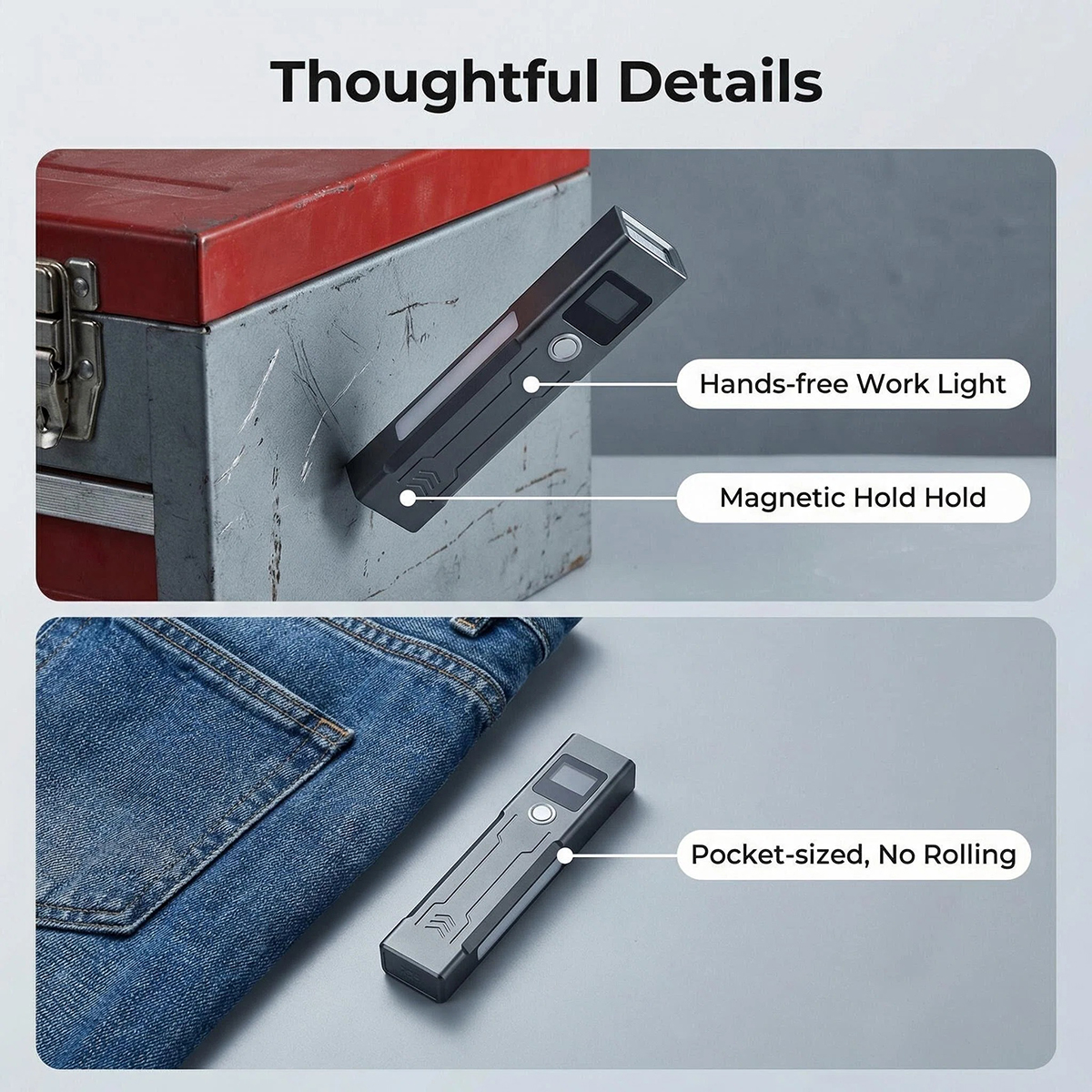
Simultaneously, the engineering team prioritized an extreme power-to-weight ratio. Despite housing multiple optical arrays and a dense metallic chassis, the Y1 achieves a total operational mass of exactly 133g. This low mass, combined with the 20.5mm planar thickness, guarantees that the instrument slides perfectly and seamlessly into a shirt pocket, heavy-duty work apron, or tight tactical backpack webbing. It lies completely flush against the operator's body, eliminating the obtrusive bulge associated with legacy gear.
II. Triple-Source Optical System: Multidisciplinary Emission
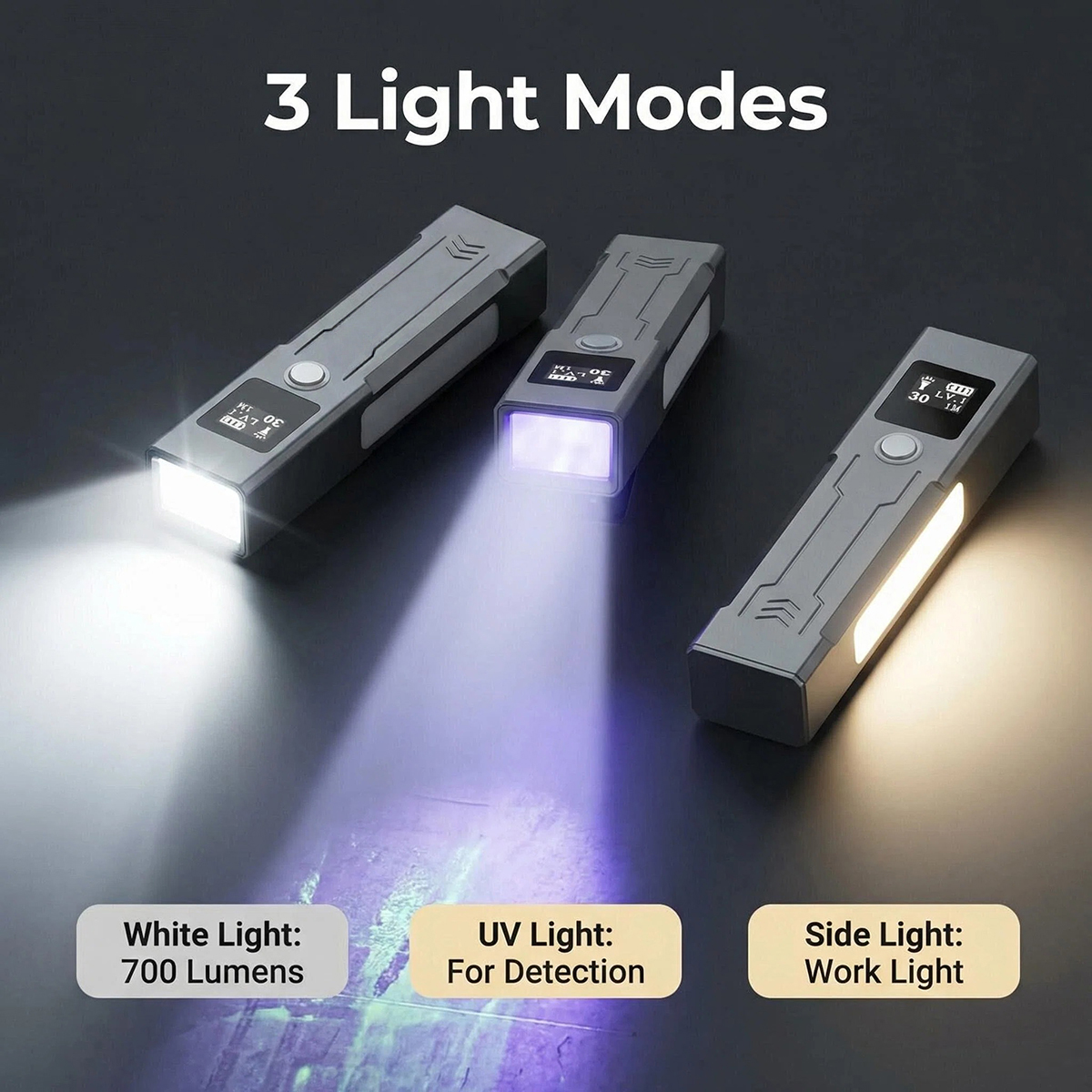
A professional operator navigating a complex environment rarely requires a single, monolithic beam profile. The Y1 is engineered with a highly sophisticated Triple-Source Optical System, completely isolating the driver circuits for three distinct semiconductor emitters.
Primary Illuminator: White LED Array
The primary optical pathway houses a high-efficiency white LED generating a maximum 700-lumen output in Turbo mode. This produces a piercing, highly collimated beam necessary for long-distance perimeter scanning or identifying deep structural anomalies.
However, true engineering brilliance is found in the micro-current regulation. The driver is precisely calibrated to step down through multiple intervals: 400LM (High), 200LM (Mid), and 30LM (Low). Crucially, the system features a dedicated 10LM Moonlight mode.
In physiological optics, the human eye relies on rhodopsin (visual purple) in the rod cells for dark adaptation. Exposure to high-lumen bursts instantly bleaches this protein, destroying night vision for up to 30 minutes. The 10LM Moonlight mode provides exactly enough photonic energy to read a topographical map, inspect close-up wiring, or navigate a cramped tent without triggering rhodopsin bleaching, preserving the operator's natural night vision. Thus, the Y1 serves as the perfect 700LM Rechargeable Pocket Torch for both tactical blinding and covert inspection.
Specialty Optic: Professional 365nm-370nm UV LED
Standard commercial ultraviolet tools frequently deploy cheap 395nm diodes. These emit a heavy, visible violet glare that visually overpowers and masks faint fluorescent reactions. The Y1 completely discards this flawed technology, integrating a highly specialized 365nm-370nm UV LED.
This exact ultraviolet wavelength sits perfectly at the absorption peak of most commercial and biological phosphors. It triggers a profound Stokes shift—absorbing the invisible UV energy and re-emitting bright, visible, high-contrast fluorescence—while emitting virtually zero visible light of its own. This makes the Y1 an indispensable, professional-grade diagnostic instrument for counterfeit currency verification, forensic biological fluid analysis (blood/semen tracking), and industrial Non-Destructive Testing (NDT) such as identifying fluorescent refrigerant leaks in complex HVAC systems.
Auxiliary Optic: Side Flood LED
To address the requirement for wide-area, shadow-free illumination, engineers embedded a specialized Side Flood LED into the lateral face of the rectangular chassis. Covered by a frosted polymeric diffuser, this array operates on the principle of Lambertian reflectance, scattering photons evenly across a 180-degree hemispherical radius. This eliminates the harsh central hotspot inherent to the primary forward optic, providing a soft, highly uniform field of light optimal for localized workstation illumination.
III. Kinematic Anchoring: Hands-Free Magnetic Utility
A tool that requires a human hand to maintain its position is fundamentally compromised during complex maintenance procedures. True industrial utility requires absolute hands-free kinematics.
The structural base of the Y1 integrates a high-flux, heavy-duty tail magnet (typically utilizing Neodymium $Nd_2Fe_{14}B$). This magnetic core possesses immense pull-force, vastly exceeding the 133g mass of the aluminum chassis.
The true genius of this design is realized when the tail magnet is combined with the Side Flood LED. An automotive technician can firmly snap the base of the Y1 horizontally onto the inside of a steel car hood, or an electrician can anchor it vertically inside a ferrous circuit breaker panel. The device instantly converts from a handheld pocket torch into a rigidly fixed, wide-area hands-free work lamp. The flat, rectangular chassis further ensures the magnetic contact patch is perfectly seated, preventing the device from twisting or vibrating loose during high-torque mechanical repairs.
IV. Thermodynamics and Micro-Power Management
Sustaining 700 lumens inside a 20.5mm thick cavity presents severe thermodynamic hurdles. The metallurgical substrate and power delivery systems must operate in perfect symbiosis.
6063 Aluminum & Anodic Oxidation
The Y1 abandons the fragile injection-molded plastics common in civilian EDC gear. It is precision CNC-machined entirely from 6063 aerospace aluminum alloy. This specific metallurgy provides an exceptionally high thermal conductivity coefficient. The entire flat chassis acts as a unified heatsink, rapidly drawing thermal energy away from the LED substrates to prevent thermal throttling.
To protect this metal, the exterior is subjected to an electrochemical Anodized Black finish. This process grows a thick, ceramic-like aluminum oxide layer ($Al_2O_3$) on the surface, pushing the hardness up to tactical specifications. This guarantees extreme resistance to pocket abrasion, key scratches, and chemical corrosion from industrial lubricants.
Built-in 1000mAh Lithium Power
A cylindrical 18650 or 14500 battery creates unavoidable geometric waste inside a flat, rectangular housing. To maximize energy density per cubic millimeter, the Y1 utilizes a custom-engineered, Built-in 1000mAh Rechargeable Lithium polymer pouch cell.
This advanced chemistry perfectly contours to the internal cavity of the chassis. Managed by a dedicated Battery Management System (BMS), the micro-electronics execute strict Over-Charge and Over-Discharge Voltage Protection algorithms. This intelligent power management guarantees consistent, stable current delivery across all three optical emitters, ensuring prolonged operational viability between charges.
V. Technical Parameter Matrix: Geometry & Optics
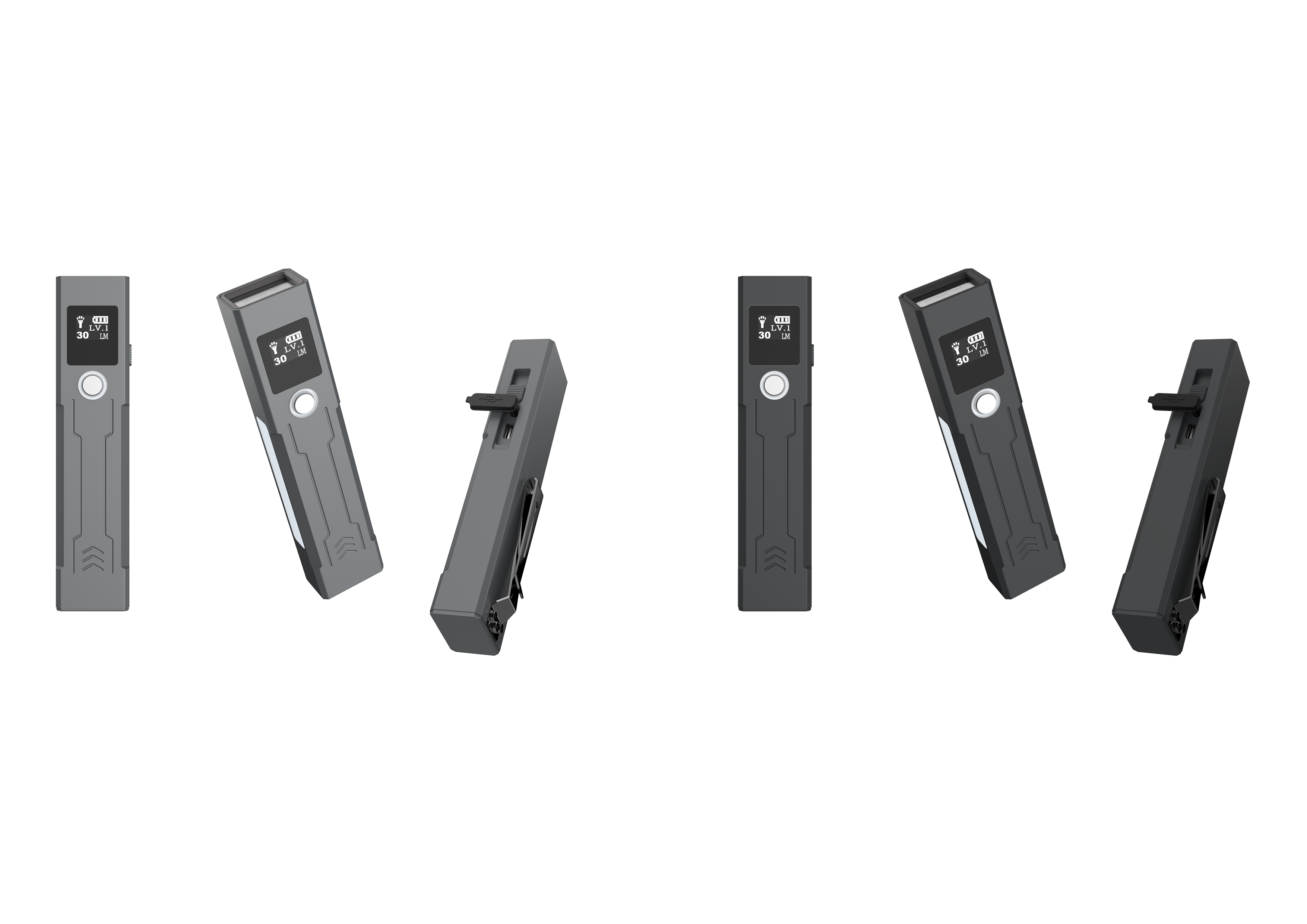
The empirical data below illustrates the definitive engineering advantages of the Y1's rectangular architecture compared to legacy cylindrical EDC formats.
Validate Your Supply Chain: Procurement Protocol
The Y1 is a meticulously engineered precision tool. For B2B hardware sourcing managers and tactical gear distributors, procuring from a generic assembly house introduces severe quality liabilities. As an elite Rectangular Pocket Flashlight Manufacturer with over 40 years of metallurgical and electronic engineering expertise, SHENGQI LIGHTING offers absolute manufacturing authority.
[ Initiation of OEM Partnership ]
We formally invite global brand architects to engage with our dedicated Flat EDC Flashlight OEM division. We provide comprehensive wholesale quotes, sample evaluation units, and highly bespoke laser engraving protocols to ensure your brand's exclusive market dominance.